The 7-Step PPE Inspection Checklist I Use at Every Facility Audit
-
Step 1: Map every hazard zone before you order anything
-
Step 2: Verify respiratory protection against the hazard and NIOSH approval
-
Step 3: Check hearing protection specs, not just the brand name
-
Step 4: Inspect eye protection for the Z87+ mark
-
Step 5: Confirm fire extinguisher signs are visible and unobstructed
-
Step 6: Keep lookalike products off the PPE inventory
-
Step 7: Document, track, and reorder before you hit zero
-
Common Mistakes That Will Cost You More Than the Product
Every month I walk a facility with the same clipboard. The checklist on it has been revised more times than I can count, usually because something failed that I didn't expect. This is that checklist, with the notes. If you're the person who approves PPE purchases or manages facility safety, this is written for you.
Seven steps, about 20 minutes on a good day. The order matters. I learned that the hard way when I skipped Step 1 and paid for it in rush shipping fees.
Step 1: Map every hazard zone before you order anything
Walk each work area and write down what's actually in the air, on the floor, or in the noise. Not what the last audit said. What's there today. Hazards change when processes change, and nobody updates the paperwork as often as they update the machines.
- Noise at or above 85 dB — hearing protection required
- Particulate, dust, fumes — respiratory protection required
- Chemical splash or airborne debris — eye protection required
A facility I audited in Q1 2024 spent $3,100 on half-mask respirators with organic vapor cartridges for a metal shop. The actual hazard was fine metallic dust. They'd bought the right brand but the wrong filter class, and it took a week and $700 in reorders to fix it. The spec sheet had been approved by someone who never walked the floor.
Step 2: Verify respiratory protection against the hazard and NIOSH approval
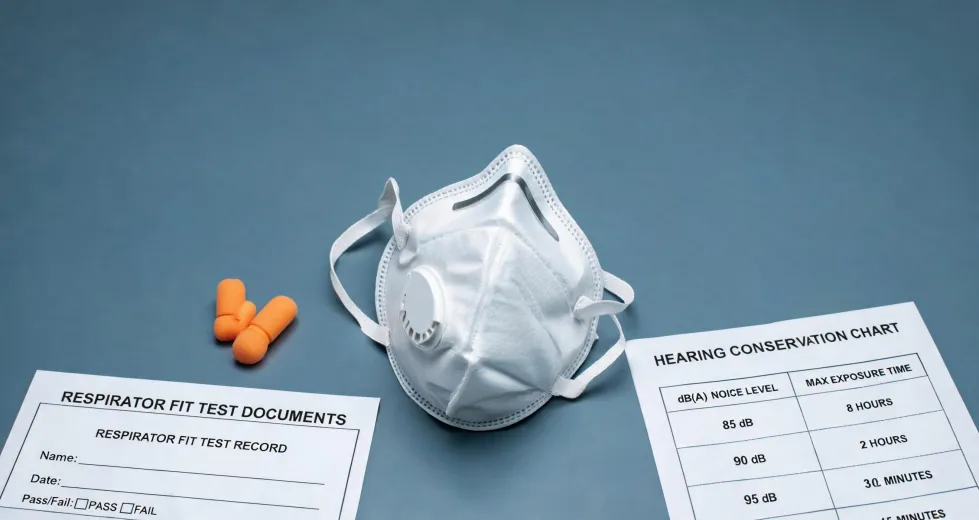
The keyword is approval, not "tested" or "certified-grade." For particulate respirators, NIOSH approval is the only number that matters. Look for the TC-84A prefix on the package — that's the designation NIOSH assigns to approved particulate respirators. If the TC number is missing, unreadable, or doesn't match the NIOSH Certified Equipment List, reject the batch.
For the Moldex 2200 N95, I check three things on every delivery:
- Approval mark: TC-84A followed by the correct approval number on both the box and the product itself
- Storage condition: respirators that have been crushed, folded, or stored under heavy boxes often fail the user seal check
- Fit check: a user seal check takes 15 seconds. Cover the front of the respirator, inhale sharply, and feel for air leaks around the edges
The 2200 is a cup-shaped N95 — it holds its shape better than flat-fold styles, which makes the seal check more reliable. But I still do the check on a sample from every batch. Sampling three units out of a 50,000-unit order takes ten minutes and has caught two bad shipments so far.
Step 3: Check hearing protection specs, not just the brand name
Noise reduction rating (NRR) is a lab-tested number, and you want the spec to drive the decision — not the catalog photo. The Moldex SparkPlugs corded earplugs 6654 carry an NRR of 33, which is at the top end of what foam earplugs can achieve. If someone hands you an earplug with an NRR above 33, you're being handed a lie.
I once saved $116 on a case of earplugs from a broker who swore they were "equivalent to the name brand." The NRR printed on the package was 28, not 33. At 100 dB on the floor, that difference is the line between safe and borderline. Replacing that order with rush shipping cost $380. Saved $116, spent $380. That's the kind of math I keep a spreadsheet of.
On the corded question: the 6654 is corded, and that's a feature, not an accident. In real work environments, workers pull out earplugs for conversations and breaks. The cord means the plugs don't hit the floor, don't get contaminated, and don't get lost in a machine. An uncorded plug on a factory floor is a health risk waiting to happen.
Also check the foam. Roll-down foam earplugs that don't expand back quickly have likely degraded. I've seen two-month-old "disposable" plugs that were still in someone's pocket. That's not cost savings — that's an ear infection and a failed audiogram.
Step 4: Inspect eye protection for the Z87+ mark
Lab safety glasses need to carry the Z87+ mark on the frame or the lens. The plus sign means the lens passed high-impact testing — without it, you're wearing a fashion accessory that happens to look like safety gear.
Check for scratches. It sounds trivial, but scratched lenses are the #1 reason workers take their glasses off in a lab. Once they're off, the anti-fog coating, the side shields, and the impact rating are all equally useful: zero. A $3 pair of replacement glasses is cheaper than any incident report.
Also check side shields. I worked with one facility that had "safety glasses" with removable side shields, and the shields had been removed by everyone in the building. The glasses looked fine from the front. They were not fine.
Step 5: Confirm fire extinguisher signs are visible and unobstructed
This step is the one most safety walkthroughs skip. You spend all your time on PPE and forget that the fire extinguisher is also part of the safety system.
Walk the path between the work area and each extinguisher. If a pallet, a barrel, or a stack of boxes blocks the view, move it. NFPA 10 requires extinguishers to be readily accessible, and the fire extinguisher sign — the red and white one — has to be visible where the extinguisher itself isn't immediately recognizable.
A fire extinguisher behind a door is not a fire extinguisher. It's a story waiting to happen. I found one last year that had been behind a shelving unit for so long that the sign had peeled off. Nobody had noticed, because nobody walked the route from the far corner of the shop to the extinguisher.
Step 6: Keep lookalike products off the PPE inventory
This is the step that makes you look paranoid — until someone gives you a reason to be.
I get asked a lot lately whether are body armor drinks good for you is a relevant question in a workplace safety context. The answer is: they're a sports drink. They hydrate. Some have electrolytes and vitamins. But they are not protective equipment, and they have no place on a PPE inventory sheet. The word "body armor" in the brand name confuses people, especially new-hire orientation groups who are already overwhelmed with acronyms.
Per FTC guidelines, products can't claim benefits they can't substantiate — and the same logic applies to your internal procurement. If a product claims to be "protective" or "safety-rated" but doesn't carry a NIOSH number, an ANSI mark, or a recognized certification, it doesn't go in the bin. It goes back to the vendor.
Step 7: Document, track, and reorder before you hit zero
The best inspection sheet in the world does nothing if you run out of PPE and the emergency order goes to whoever ships fastest.
I use a simple tracking sheet: product name, model number, quantity received, certification number, date of inspection, next inspection date. For a Moldex product like the 2200 N95, that means recording the lot number — respirators have lot numbers for a reason, and lot-specific issues are documented on the NIOSH website.
Reorder when you hit your safety stock level, not when the bin is empty. If your crew goes through 500 pairs of earplugs a month, order when you have 250 left. That gives you a buffer for shipping delays, damaged boxes, or a suddenly needed fit-testing session.
Common Mistakes That Will Cost You More Than the Product
These are the patterns I see across nearly every audit, and they're all expensive in different ways.
Buying on unit price instead of total cost. The "cheaper" earplug that fails fit testing costs you $180 an hour in downtime to replace. The budget safety glasses that scratch in two weeks get thrown away, and then workers don't wear anything. Total cost of ownership is the only honest number.
Skipping fit testing. An N95 that doesn't seal is a cloth mask with a filter attached. OSHA requires fit testing for a reason. I've seen facilities skip it because it was "just a one-day job." That one-day job takes two hours with the right equipment.
Letting stock sit for years. Disposable respirators have a shelf life. I inspected one warehouse where the N95s were five years old and the elastic had gone stiff. They passed the visual check. They failed the fit check.
Trusting a sales rep over the label. Certifications are printed for a reason. If a rep says "it's the same thing as NIOSH-approved, just without the paperwork," that's not a discount. That's a liability in a cardboard box.
Dodged a bullet on that one last quarter. Almost approved a quote for 5,000 "equivalent" P100 filters from a sub-broker. Double-checked the TC number on the packaging photo — it belonged to a different product line entirely. One phone call saved me from explaining that one to senior management.
If I could redo one thing in my own early years, I'd have documented every inspection from day one instead of starting in my third year. At the time, the spreadsheet felt like busywork. Now it's the first thing I ask a facility for, and the absence of it tells me more than the presence of any certificate.

Jane Smith
I’m Jane Smith, a senior content writer with over 15 years of experience in the packaging and printing industry. I specialize in writing about the latest trends, technologies, and best practices in packaging design, sustainability, and printing techniques. My goal is to help businesses understand complex printing processes and design solutions that enhance both product packaging and brand visibility.