Moldex N95 Mask, Face Fit Testing Kit, Loop Earplugs, and Hard Hat Lights: A PPE Buyer's Guide
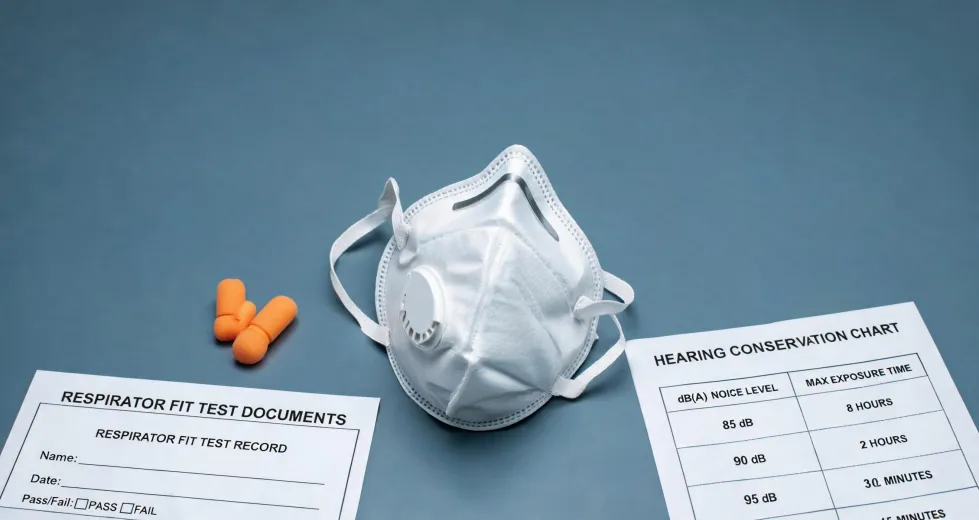
First, a confession: there's no universal PPE list
Ask three safety managers what to buy first and you'll get three different answers. One will say a NIOSH-approved N95 mask. Another will insist on hearing protection. The third will ask if you've ever worked a night shift without a hard hat light. All three can be right. PPE is scenario-driven, not brand-driven.
I'm the person who signs PPE purchase orders at a mid-sized industrial company. Over the past six years, I've tracked roughly $180,000 in cumulative safety spending, compared quotes from more vendors than I can remember, and made my share of 'that seemed cheaper' mistakes. It took me about three years and 200 orders to understand that the cheapest PPE is often the most expensive. I also order from Moldex when their products fit the job. This article is my procurement take on Moldex N95 masks, Moldex face fit testing kits, the Loop earplugs controversy, and hard hat lights.
Scenario 1: You need respiratory protection, not a 'mask'
If your crew is exposed to dust, fumes, or airborne particulates, you're not shopping for a piece of cloth. You're buying a respirator that has to form a seal on a person's face. That's why I start with NIOSH approval, not brand preference.
Moldex N95 masks get a lot of attention because they're sturdy, NIOSH-approved, and price-competitive. But no N95 mask works if it doesn't seal. That's where the Moldex face fit testing kit comes in. OSHA's respiratory protection standard, 29 CFR 1910.134, requires fit testing before first use and at least annually for tight-fitting respirators. That sentence sounds like compliance jargon, but it exists because a loose respirator creates a false sense of safety.
We learned this the expensive way. In our second year, I saved maybe $300 by not buying a fit testing kit and letting people 'choose their size.' Six weeks later, two employees failed a fit test challenge during a surprise audit. We had to redo training and fit testing for the whole crew. The rework cost more than the kit, not counting the damage to our safety record. Take it from someone who has been there: a Moldex face fit testing kit is a no-brainer if you have any tight-fitting respirators in use.
The kit uses a qualitative method, meaning you spray a sweet or bitter agent inside a hood and ask the wearer if they can taste it. It won't give you a numeric fit factor. If you need a number, you need quantitative fit testing. But for many mid-sized workplaces, qualitative fit testing is a solid baseline. And before you ask which Moldex N95 mask to buy, ask whether you have a fit testing process. If not, put the kit in the same cart as the masks.
Scenario 2: The Loop earplugs controversy and what it means for work
The Loop earplugs controversy is easy to oversimplify. Some users say they love them for concerts and sleep. Others say they don't block enough sound or feel uncomfortable. I think the real controversy is category confusion: people are comparing a consumer lifestyle product to industrial hearing protection. They are different jobs.
If you're evaluating Loop earplugs for personal use, that's your call. If you're evaluating them for a work site, look for a real hearing protection rating such as NRR or SNR. Without a rating, they don't belong in a hearing conservation program. That's not an attack on Loop. It's the same line I'd draw for any product without a rating.
For continuous industrial noise, I still order foam earplugs with a high NRR. Moldex SparkPlugs and Pura-Fit are rated at NRR 33, which is about as high as you'll see in a ballpark sense. But a high rating means nothing if the earplug isn't inserted correctly. That's why the next search term matters.
How to put Loop earplugs in
How to put Loop earplugs in is a fair question, and the short answer is 'twist, don't push.' The same applies to many reusable earplugs:
- Reach across your head with the opposite hand and pull the top of your ear up and back. This straightens the ear canal.
- Gently twist the earplug into the ear until the tip sits fully in the canal. Don't force it straight in like a cork.
- You should feel a seal, not pain. If you talk, your own voice should sound louder to you than normal.
- To remove it, twist it slowly while pulling. Don't yank.
If employees are struggling with any earplug, don't blame them first. Check the fit and the training. I've watched grown adults wear an earplug that was just sitting in the outer ear like a decoration. A few minutes of hands-on training fixed more noise complaints than any product swap.
Scenario 3: You need a hard hat light for low-light work
Hard hat light is the odd one out in this lineup, because Moldex doesn't make one. But I understand the search. A light mounted to a hard hat is a genuinely useful safety tool for night shifts, loading docks, electrical rooms, and emergency walk-downs.
Don't buy the cheapest clip-on light just because it looks appealing in the photo. We tried that. The first order was something like $2.39 per unit, and the clips snapped off within a week. Workers started taping them to their hats, which was both a safety hazard and a maintenance mess. Replacing them with proper adjustable hard hat lights cost more in the long run. That's the 'save a little now, spend a lot later' trap.
If you choose a hard hat light, make sure it mounts without drilling or altering the shell. Drilling voids the hard hat's ANSI/ISEA Z89.1 certification. Check the battery life, too. A light that dies an hour into a four-hour night shift is just dead weight.
How to know which scenario applies to you
Still on the fence? Use this rough decision tree:
- If your people work around dust, mist, or fumes and the hazard assessment requires respirators, buy the respirators and the Moldex face fit testing kit together. Don't wait for an inspector to make the argument.
- If noise levels are high enough to require hearing protection, choose earplugs or muffs with a real rating, and train the crew on insertion. The Loop earplugs controversy is a good reminder that not every device in your ear is a hearing protector.
- If your crew works at night or in dark areas, add a hard hat light to the cart. Just buy one that actually stays on the hat.
One caveat: my experience is based on one mid-sized facility, not a multi-site corporate operation. If you have complex chemical exposures or a full OSHA respiratory protection program, talk to an industrial hygienist. And if you're a small company? Buy the right PPE from vendors who don't make you feel small for trying. The order that starts at $400 can become a $20,000 order later. That's how I started with Moldex, and it's why vendor attitude is still a deal-breaker for me.
Bottom line
You asked about Moldex N95 masks, a Moldex face fit testing kit, the Loop earplugs controversy, hard hat lights, and how to put Loop earplugs in. The pattern is the same in every scenario: identify the hazard, verify the standard, then choose the product that meets it. No brand is the answer to every question. But the process is the answer to most of them.
This was accurate as of early 2025. Safety standards and product lines change, so verify current NIOSH and OSHA guidance before you place a large order.

Jane Smith
I’m Jane Smith, a senior content writer with over 15 years of experience in the packaging and printing industry. I specialize in writing about the latest trends, technologies, and best practices in packaging design, sustainability, and printing techniques. My goal is to help businesses understand complex printing processes and design solutions that enhance both product packaging and brand visibility.