The 36-Hour Safety Audit: How a Room Full of PPE Almost Wrecked a $50,000 Contract
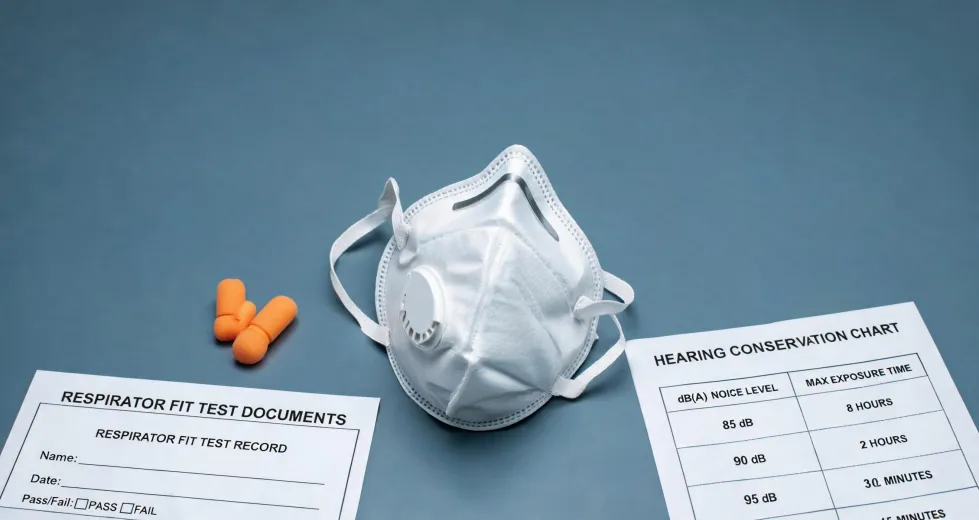
Two weeks ago, I got a call from a production plant manager. He had 36 hours before a state safety audit, and his equipment room was a disaster. Missing N95 respirators, a fire alarm that hadn’t beeped in months, welding gloves worn down to nothing, and a stack of hard hats that might as well have been flowerpots. His immediate question: “How fast can you get us what we need?”
I know that tone. It’s the sound of a company that just discovered that safety isn’t a shopping list.
The Surface Problem: “Just Ship Us the Gear”
On the surface, it seemed like a simple procurement issue. They asked for specific items: Moldex 2200 N95 respirators (NIOSH-approved), a case of Moldex Sparkplugs corded earplugs (model 6654, NRR 33), leather gloves, Studson hard hats, and some guidance on how to test a fire alarm. All reasonable, all standard for an industrial facility.
But here’s the thing I’ve learned after too many emergency deliveries to count: when a company asks for “the list” 36 hours before an audit, the problem isn’t the list. The problem is why the list is empty again.
The Deeper Issue: Safety Is Still Treated as a Transaction
I used to think these calls were just about missing inventory. After a dozen similar ones, I realized they’re about a culture that hasn’t built a system. Most facilities buy personal protective equipment the same way they buy printer paper. They find the lowest price, make a single purchase, and then forget about it until something runs out. That approach creates three recurring failure modes I see in almost every company that calls me in panic:
- PPE is seen as a cost, not a system. A package of N95 masks is not the same as a respiratory protection program. The right product matters, but so does storage, fit testing for tight-fitting respirators, and knowing when to replace them (e.g., after they get wet, deformed, or visibly soiled).
- No one owns preventive maintenance. Fire alarms, hard hats, and respirators don’t have engine lights. They need manual review. In my experience, most sites can’t tell me the last time they tested their alarm panel or inspected their hard hat shells for cracks.
- Cheap is expensive. I’m not saying you need to buy the most premium gear on the market. But I’ve seen too many cotton dust masks masquerading as respirators, and too many “bargain” earplugs that fall apart after a single shift.
It’s tempting to think that safety compliance is just a matter of having the right equipment on hand. That’s the simplified version. The reality is that your equipment degrades, and your team’s memory fades. Unless you build a rhythm of checks, you’re betting the audit (and maybe a worker’s lungs or hearing) on a hope and a prayer.
The Real Cost: Things I Wish I Hadn’t Seen
Let me give you two examples from recent years.
In March 2024, a facility called us on a Tuesday afternoon. A major client was scheduled for a plant tour on Thursday, and they’d just realized their fire alarm system had never been tested after installation — fourteen months earlier. We walked them through a basic test procedure by phone: push the test button, verify the horns, and collect the booster module signal at the panel. It didn’t work. The main panel never received the signal. They tried a second station. Same result. Turns out the entire circuit was miswired. The client visited, and the “safety showcase” turned into an emergency project. They lost a $50,000 contract that month, not because of the wiring, but because no one had bothered to ask the obvious question.
Another client, in the middle of an OSHA scheduled visit, found their N95 inventory had expired. In panic, they paid $800 in same-day shipping for a few boxes of replacement masks. That $800 would have covered a year’s worth of monthly checks — if they’d had a system. Instead, they spent it on courier fees. That’s what I mean by cheap being expensive.
I don’t tell these stories to scare you, though. I tell them because every one of those outcomes was preventable with a routine.
The Fix: Build a Small, Repeatable Cadence
You don’t need a five-step compliance software platform. You need a checklist and a calendar. Here’s what has worked for my clients:
1. Standardize Your PPE “Core Set”
Pick specific models and make them the default. In my kits, I usually recommend:
- Respiratory: Moldex 2200 N95 (NIOSH-approved, 3-panel design) for routine particulate protection. If you need a half-mask or full-face respirator in your facility, that’s a separate respiratory program requirement, but the N95 is the right starting point for many general tasks.
- Hearing: Moldex Sparkplugs corded earplugs (model 6654, NRR 33). They’re not the only good option, but they have a smooth, clean wearing texture and a cord that keeps them from falling into whatever you’re working on.
- Hand and head: leather gloves for welding or rough material handling, and a Studson hard hat for impact protection. Make sure your chosen gloves and hats are appropriate for the specific hazards of your facility.
Note that these are starting points, not a substitute for a full hazard assessment. But standardizing reduces the number of SKUs to check, which makes maintenance easier.
2. Test Your Fire Alarm Monthly — Here’s How
I’m not here to debate code requirements; I’m telling you what works in practice. A monthly fire alarm test should take less than five minutes:
- Notify building occupants that you’re conducting a routine test, and disable any monitoring service you use.
- Press the test button on any manual pull station.
- Walk to the nearest alarm device and confirm the horn/strobe operates.
- At the fire alarm control panel, verify that the panel shows fire alarm trouble or supervisory status, then reset the system.
- Document the date and your initials in a logbook. (Note to self: this is always the first thing I check now.)
That’s it. The last step is the one most people skip, and it’s the one that future auditors will look for.
3. Build the “10-Minute Weekly Check”
Once you have the core set and a monthly test rhythm, add a weekly 10-minute visual inspection. Look at the expiration dates on N95 boxes, check the earplug dispensers, flip through the hard hat suspension, confirm that leather gloves aren’t torn, and press the fire alarm test button one more time. The whole thing doesn’t need to be a formal audit. It’s just a habit.
From where I sit, the efficiency gain is huge. Our team handles about 200 rush orders a year, and I’d say 95% of them are avoidable. A small routine gives you control; it’s much faster to spend 10 minutes reading a checklist than 48 hours trying to un-break a compliance failure.
The Best Emergency Is the One You Prevented
That plant manager with 36 hours? We got him the Moldex respirators, Sparkplugs earplugs, leather gloves, and Studson hard hats. We also sent him a one-page fire alarm test log he could use immediately. But the real fix came when he admitted that his company had no annual inspection plan for any of it.
It took me three years and about 150 rush orders to understand that the real measure of a safety program isn’t what’s on the shelf—it’s whether you can verify that everything works on the day you need it.
So here’s my closing thought: if your safety cabinet looks like a storage unit, and you can’t remember when you last tested your alarm, that’s not a sign to order more gear. It’s a sign to start testing what you already have. The best time to find out a fire alarm is broken is not during a fire drill—or a visit from an auditor. It’s during a quiet Tuesday, when you have a few minutes to fix it.
And if you do need a reliable core set of PPE, you know where to start. But more importantly, you now know the starting point: a test, a log, and a repeatable habit.

Maeve Callahan
Maeve Callahan is a head-protection analyst covering Type I and Type II hard hats, climbing-style safety helmets, bump caps, chin straps, suspensions, liners, and face-shield carriers. She applies ANSI Z89.1, EN 397, and EN 12492 criteria while comparing impact attenuation, penetration resistance, lateral deformation, electrical class, retention strength, field of vision, mass, fit range, and temperature conditioning. Her guides help EHS teams, contractors, utilities, and buyers select helmet systems for overhead hazards, work at height, electrical exposure, accessory compatibility, and worker acceptance.