PPE and Safety Equipment: What You Can Handle In-House vs. What Needs a Professional
-
Respirator Filters: Moldex 2200 NIOSH N95 vs. Moldex P100 Filter Disk
-
Why Single-Use Earplugs Require a Professional Fitting Before They Can Be Used
-
Fire Extinguisher Recharge Near Me: Why “Near Me” Is Not the Only Criterion
-
Why Is My Smoke Detector Blinking Red? Usually, It’s Fine
-
Where I Draw the Line Between In-House and Professional
I’m a quality/compliance manager at a PPE company. I review every safety product that goes out the door—roughly 200+ unique items a year. From the outside, it looks like all safety equipment is the same: you buy it, hand it out, done. The reality is that a lot of it only works when someone qualified decides which approach to use.
Here’s the comparison I keep coming back to: in-house quick fixes versus certified professional services. I’ll walk through four examples—respirators, earplugs, fire extinguishers, and smoke detectors—and show where the line sits.
Respirator Filters: Moldex 2200 NIOSH N95 vs. Moldex P100 Filter Disk
The first comparison might look like a product spec sheet question. In my world, it is actually a question about who should make the call.
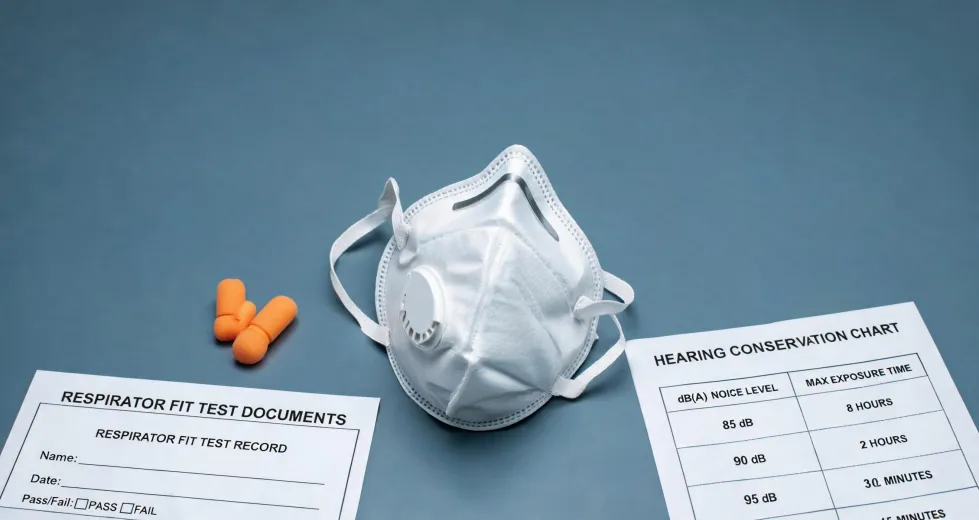
The Moldex 2200 NIOSH N95 is a disposable filtering facepiece. It is rated to block at least 95% of airborne particles and is a solid default for nuisance dust. In a voluntary-use situation, you can treat it as an in-house task: stock it, teach workers how to do a user seal check, and go. But if a hazard assessment says respirators are required, even an N95 has to be fit tested under OSHA 29 CFR 1910.134.
The Moldex P100 filter disk is a different animal. It attaches to a reusable half-mask or full-face respirator and is rated to capture 99.97% of airborne particles. It is also oil-resistant, which means it covers environments where N95 filters will not. But here is the catch: a P100 disk only performs if the facepiece seals to the wearer. That requires a fit test. It also requires a hazard assessment to justify moving from N95 to P100.
So which is better? Depends on your exposure. If you are dealing with dust or general particulates, the N95 is enough. If the hazard assessment shows oil-based aerosols, or a higher protection requirement, then a P100 filter disk is the professional’s call. The price difference is small. The risk difference is not.
Why Single-Use Earplugs Require a Professional Fitting Before They Can Be Used
This sentence still gets pushback from buyers: single-use earplugs require a professional fitting before they can be used. I get it. A foam earplug costs cents. It seems like you should just hand them out and move on.
The reality is different. The NRR on the package—for example, NRR 33 on our Moldex SparkPlugs—is measured under ideal lab conditions. In a real ear, actual attenuation depends on insertion. Too shallow, too loose, or rolled wrong, and you get a fraction of the protection. That is why hearing conservation programs use fit testing. A trained technician verifies the worker’s ear canal and insertion technique, then measures the real-world protection.
I still kick myself for not pushing fit testing earlier. In our Q1 2024 audit, we found workers using foam earplugs like earbuds. The company thought they were protected. The fit test showed they were getting maybe half the labeled NRR. The fix was not a different earplug. It was the fitting process.
So yes: single-use earplugs require a professional fitting before they can be used—if “used” means actually protecting hearing. Once the fitting is complete, workers can correctly use disposables on their own.
Fire Extinguisher Recharge Near Me: Why “Near Me” Is Not the Only Criterion
When a fire extinguisher gets used—even for two seconds—it needs a recharge. Search for “fire extinguisher recharge near me” and you get a list. The challenge is separating a certified service company from a guy with a filling pump.
Under NFPA 10, fire extinguishers require annual maintenance by a trained, certified technician. Recharge is not just refilling the cylinder. It means inspecting the valve, hose, seal, and pressure gauge, then verifying the unit holds the proper charge. I once came across a “recharged” extinguisher with the gauge in the green zone but no service record. The vendor said it was ‘within industry standard.’ We rejected it. Now every contract includes an itemized service report.
This is a professional task. The comparison is not whether you can do it in-house—it is whether you trust the cheapest quote. Ask for certification, service records, and hydrostatic test history. In that order.
Why Is My Smoke Detector Blinking Red? Usually, It’s Fine
Now the one where you can skip the pro. The question “why is my smoke detector blinking red” has an anticlimactic answer: it is usually telling you the power is on.
Most residential and commercial smoke detectors blink red every 30 to 60 seconds when they are receiving power. That is a status indicator, not an alarm. If it blinks red and chirps at the same time, or the red light will not stop when you press the test button, you have a low battery, a dirty sensor, or a detector that has reached end of life. Replacing the battery or the detector is often an in-house fix.
If it is hardwired and still will not reset after a fresh battery, call a licensed electrician or a fire alarm tech. That is the line: troubleshooting power status is DIY; opening a 120V alarm circuit is not.
Where I Draw the Line Between In-House and Professional
After four years of reviewing safety deliverables, I have landed on a simple test. If a mistake will not hurt anyone, do it in-house. If it can hurt someone, get a professional to sign off.
Here is how that applies to everything above:
- In-house: stocking Moldex 2200 NIOSH N95 disposables for nuisance dust, replacing smoke detector batteries, and following the earplug insertion technique that was verified during fit testing.
- Professional: selecting between an N95 and a Moldex P100 filter disk, respirator fit testing, earplug fit testing, fire extinguisher recharge and annual maintenance, and hardwired smoke detector repairs.
The same logic applies to vendors. A specialist who says “this is not our strength—here is who does it better” earns my trust for everything else. “We can handle that too” is not a quality statement. It is a sales statement.
Next time you are comparing safety options, ask who is accountable and what certification they bring. The right answer to “fire extinguisher recharge near me” is a certified technician. The right answer to “why is my smoke detector blinking red” might be patience. And the right answer to whether you need N95 or P100? Let the hazard assessment—not the sales rep—decide.

Maeve Callahan
Maeve Callahan is a head-protection analyst covering Type I and Type II hard hats, climbing-style safety helmets, bump caps, chin straps, suspensions, liners, and face-shield carriers. She applies ANSI Z89.1, EN 397, and EN 12492 criteria while comparing impact attenuation, penetration resistance, lateral deformation, electrical class, retention strength, field of vision, mass, fit range, and temperature conditioning. Her guides help EHS teams, contractors, utilities, and buyers select helmet systems for overhead hazards, work at height, electrical exposure, accessory compatibility, and worker acceptance.