The Safety Equipment Blind Spot: Moldex N95 Size Chart, 6800 Earplugs, Electric Fence, Nitrile Gloves, and How to Test a Smoke Detector
The Surface Problem: You Have All the Gear. So Why Are You Calling Me?
In my role coordinating emergency PPE orders for industrial facilities, I get the calls that start with 'It just failed' or 'We didn't think this mattered.' In March 2024, 36 hours before an OSHA audit, a plant asked if I could replace 200 respirators overnight. Normal turnaround for that order is about a week. We shipped a partial quantity, paid $600 in rush fees on top of the $4,000 base cost, and made the deadline. Missing it would have meant a $50,000 penalty clause.
The strange thing is how rarely the equipment itself is the root cause. The assumptions around the equipment are. Most failures I've triaged come down to the same five blind spots: respirator fit, earplug fit, glove selection, fence voltage, and smoke detector testing.
What Actually Goes Wrong
When I'm triaging a site after a failed inspection or a near miss, I don't start with the product catalog. I start by asking what was actually verified. The answer is usually 'We checked it'—but a checklist check is not the same as a measurement. Here's what that gap looks like, item by item.
Fit, Not Model Number: The Moldex N95 Mask Size Chart Reality
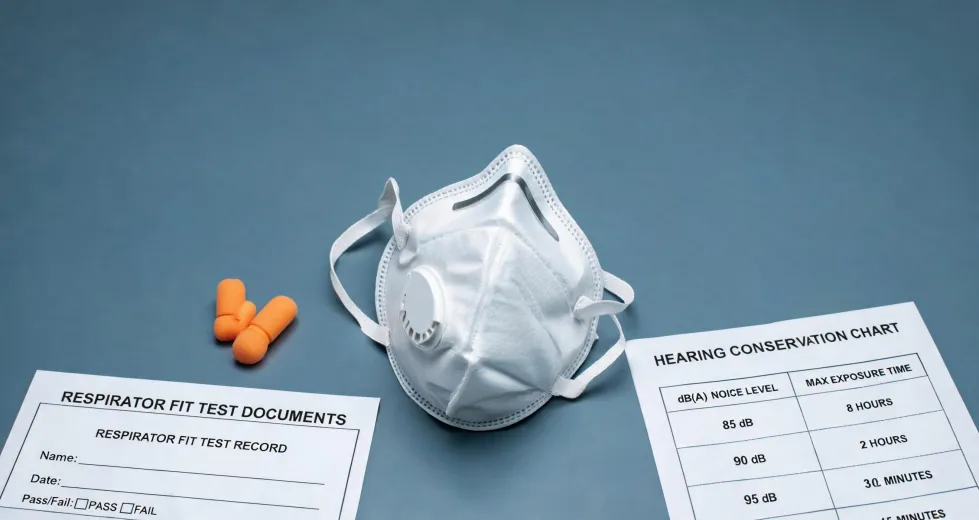
Most buyers treat N95 as one SKU. It isn't. A respirator has to seal against the face, and the right model depends on face width and length, not just a generic S/M/L. The Moldex N95 mask size chart exists because different models sit differently on different face shapes. If you order based on 'we always used this model' and never measure faces, you'll have boxes of respirators that feel fine but leak.
NIOSH approval (42 CFR Part 84) means the filter captures at least 95% of test particles under lab conditions. It doesn't mean the mask seals on everyone. OSHA's 29 CFR 1910.134 requires fit testing for tight-fitting respirators, and a user seal check every time. Here's something vendors won't tell you: the size chart is a starting point, not a promise. A mask can be 'in range' and still not seal on a particular person. You need a fit test, and you need a trained person to watch the seal check.
The NRR Myth: Moldex 6800 Earplugs and Real-World Protection
An earplug with a 33 NRR sounds like the obvious choice. But NRR is measured on perfect insertion by trained panelists in a lab. In the real world, the same earplug is rolled too loosely, inserted at the wrong angle, or worn for less than a full shift. Real-world attenuation is often half or less of the lab rating.
The Moldex 6800 earplugs are a solid example. NRR 33 on the box. Can be a great option, but only if the training covers how to roll, reach, and seat the plug. I've seen a facility switch to a high-NRR plug and still fail noise monitoring because nobody taught the crew how to use it. To be fair, no earplug solves a training problem.
Nitrile Gloves: One Pair Doesn't Fit All Hazards
Buyers search for nitrile gloves as if it's one category. It's not. There are exam gloves, heavy-duty industrial gloves, chemical handling gloves, and thicknesses from under 4 mil to over 12 mil. Nitrile resists some chemicals but not all. It breaks down over time with solvents, and cheap gloves can have weak seams.
I have a scar on my forearm from a splash that went through a 4-mil glove that 'should have held.' The chemical compatibility chart said nitrile was acceptable, but the specific glove was under-specified and the contact time was too long. Now I check breakthrough time and thickness, not just the material. In my opinion, a glove failure because nobody asked about the chemical is an emergency waiting to happen.
Electric Fence: If It's Not Measured, 'On' Means Nothing
We don't normally group electric fences with PPE, but plant perimeters, storage yards, and temporary fencing all use them. The problem is that someone sees the indicator light, sees it's on, and assumes it's working. An electric fence can be 'on' and still be nearly useless. Vegetation shorts, broken insulators, poor grounding, and bad splices all drop the voltage.
I knew I should test a fence line before a client's inspection, but I thought 'it was just there last week.' That was the week a branch fell on the line and grounded it. We found it when the client asked for a voltage log. Now I recommend a fence voltmeter and a weekly reading. The reading should be logged, not just 'operational.'
How to Test Smoke Detector: The Button Isn't the Test
If you Google 'how to test smoke detector,' you'll find the same answer: press the test button. The test button tests the battery and the horn, not the sensor. A detector can beep and still fail to respond to smoke. I've seen this in more facilities than I can count.
Here's the deeper issue. A monthly push-button check is useful for battery life, but NFPA 72 also calls for a functional test of the detector's sensing chamber, done annually with smoke or an approved test aerosol. In an industrial setting, you also need to verify that the detector actually reports back to the monitoring panel. That last step is the one that gets skipped, and it's the one that saves the building. (note to self: always pull the panel report before leaving the site.)
What This Costs You
These failures don't happen on a normal Tuesday. They happen during an audit, after an incident, or when an emergency already has everyone distracted. I've seen the cost in four forms: fines, injuries, insurance claims, and lost credibility. OSHA can issue five-figure penalties for a serious respirator violation, and six figures for a willful one. But the medical and legal costs after a chemical splash or a silent smoke detector are harder to cap.
We didn't have a formal smoke detector test process at one site. It cost us when an insurance inspector asked for records and we had a blank page. I created a simple test sheet the following week (I really should have done that before the inspection, not after). It wasn't a big fix. It was just a process gap that nobody wanted to look at.
The Short Version: Build a Failure Readout, Not a Checklist
Checklists are useful, but they turn into box-checking. Replace them with a readout of numbers and dates:
- Respirators: Use the Moldex N95 mask size chart to narrow models, but verify with fit testing. Record pass/fail and do a user seal check before each use.
- Earplugs: Train for insertion, spot-check workers, and don't quote NRR as real-world protection. The Moldex 6800 earplugs are only as good as the training that comes with them.
- Gloves: Match the chemical to a tested glove model and thickness. Document breakthrough times and changeout intervals.
- Electric fences: Test voltage weekly and log the number. Investigate any drop instead of waiting for the shock to feel weak.
- Smoke detectors: Do a monthly test button check, an annual smoke/sensitivity test, and verify panel notification.
None of this is exciting. But when a call comes at 4 p.m. on Friday because something failed, the answer isn't an emergency shipment. It's the fact that nobody measured the thing that died. An emergency order can fix a missing SKU. It can't fix a missing safety culture.

Maeve Callahan
Maeve Callahan is a head-protection analyst covering Type I and Type II hard hats, climbing-style safety helmets, bump caps, chin straps, suspensions, liners, and face-shield carriers. She applies ANSI Z89.1, EN 397, and EN 12492 criteria while comparing impact attenuation, penetration resistance, lateral deformation, electrical class, retention strength, field of vision, mass, fit range, and temperature conditioning. Her guides help EHS teams, contractors, utilities, and buyers select helmet systems for overhead hazards, work at height, electrical exposure, accessory compatibility, and worker acceptance.