Is Moldex PPE Worth It? Comparing Pura-Fit NRR 33 and N100 Control Against Budget Alternatives
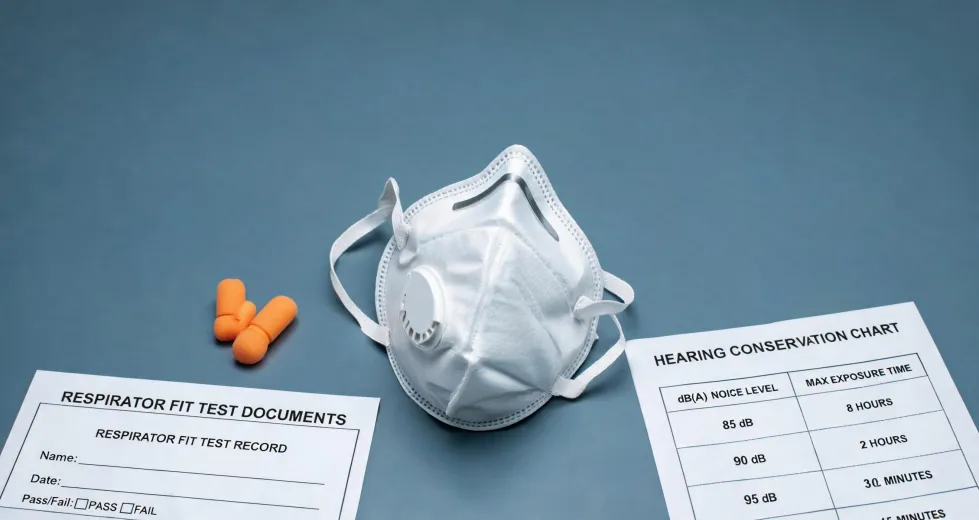
I've spent six years coordinating emergency PPE orders for industrial clients. Rush jobs, same-day turnarounds, plant shutdowns. Somewhere north of 200 expedited orders, I've watched safety managers wrestle with the same question on repeat: is premium PPE like Moldex actually worth the markup, or are budget alternatives just as good?
That's what I'm comparing here — specifically, the Moldex Pura-Fit earplugs (NRR 33) and the Moldex N100 Control respirator against what I'll call 'good enough' budget options. This isn't a lab test, and I'm not pretending it is. It's field observation from actual job sites, supply records, and the kind of insight you only get when a deadline is 36 hours away and a wrong call means a fine.
Dimension 1: Protection on Paper vs. Protection in Practice
Here's something vendors won't tell you: rated protection and real-world protection are two completely different numbers. That's true in every PPE category, and it's most visible with hearing protection.
The Moldex Pura-Fit earplugs carry an NRR of 33 — one of the highest ratings you'll find in a foam plug. Standard cylindrical plugs sit around NRR 28–30. Because decibels are logarithmic, that 3–5 point difference is a much bigger deal than it looks. In a 95 dB work environment — saws, presses, engine rooms — NRR 33 plugs give you a real margin under the OSHA 85 dB action level. NRR 28 plugs leave you right at the edge, with very little room for error.
But that math assumes perfect insertion. And perfect insertion is rare. Most workers don't roll cylindrical plugs correctly. They skip the flattening step, don't pull the ear canal open, or grab a size that doesn't fit. I once watched a safety manager fit-test a crew of twelve and see roughly a 30% failure rate — people standing there confident they were protected when they weren't.
The Pura-Fit's tapered shape fixes most of that. You don't need the roll-and-squeeze ritual; the cone does the work, you just push it in. If you're sitting on the Moldex Pura-Fit earplugs NRR 33 product page trying to justify the price to a budget-conscious supervisor, this is the part to highlight: the design makes the rating reachable in actual hands, not just in a testing lab.
Personally, I'd rather hand out NRR 28 plugs that workers insert correctly than NRR 33 plugs they shove in halfway. With Pura-Fit, you get the top rating and the easier fit — a combination I don't see from budget brands. Clear conclusion: in high-noise environments, the premium pays for itself through fit consistency and lower replacement rates.
Dimension 2: Respiratory Protection — N100 Control vs. Basic N95
The Moldex N100 Control is the product I get the most calls about. It's the one with the exhalation valve that routes your breath downward, so safety glasses don't fog and coworkers don't catch your exhaust air.
Per NIOSH certification standards, an N95 filter captures at least 95% of airborne particles. An N100 filter captures at least 99.97%.
If your crew is around lead dust, silica, mold, or pharmaceutical powders, that difference isn't academic — it's regulatory margin. And yet, most budget-conscious buyers look at unit price and ignore what the filter actually has to handle.
My honest field take: for plain construction dust, N95 is usually fine. But the N100 Control becomes the right call whenever you don't have current air sampling data — which, in my experience, covers most small and mid-size contracting sites. Budget N95s get bought because 'it's just dust,' and then someone cuts into a wall full of decades of mystery material. That's when the extra dollar per unit starts looking pretty cheap.
The Control valve deserves attention, too. Downward exhalation keeps your glasses clearer and reduces heat buildup, so workers keep masks on longer. A respirator that keeps getting pulled down under the chin — then pushed back up with compromised straps — protects nobody. I've seen that failure with cheap masks more times than I can count. Conclusion: N100 Control is overkill for confirmed nuisance dust, but it's the smarter bet for the 80% of sites that haven't done the air testing they should.
Dimension 3: Emergency Availability — The Hidden Price Difference
This is where I'm gonna sound biased, but hear me out: the biggest cost difference between Moldex and budget brands isn't the unit price. It's the emergency.
The vendor failure in March 2023 changed how I think about backup planning. Missing that deadline meant a $50,000 penalty for our client — and the discount supplier had promised two-day delivery. The order arrived on day six. We paid express freight, still missed the window, and ate the damage. After that, I stopped trusting any vendor that can't show a dispatch manifest before I place the order. When a supplier waffles on that simple proof, it's a red flag.
Compare that to March 2024. A client called 36 hours before a confined-space entry needing N100 Control respirators. The distributor had them on the shelf; we paid about $180 in expedited shipping on top of a $1,200 base order; the masks were on-site that afternoon. The client's alternative was an $8,000 shutdown in idle crew time.
Here's something vendors won't tell you: 'standard turnaround' is often padded. It's not how long your order actually takes — it's how much buffer the vendor wants to protect its production queue. A well-run manufacturer doesn't need as much padding. That's why Moldex lead times hold up under pressure while discount estimates fall apart.
Last quarter alone, we processed 47 rush orders across multiple brands. Moldex had a 100% on-time dispatch rate in that window. I can't say that about any budget manufacturer we've worked with. Conclusion: when time is the constraint, per-unit savings evaporate fast.
The Bigger Safety Picture
I should zoom out, because PPE is one layer in a complete site safety program. Hearing and respiratory gear makes up maybe 60% of what I expedite. The rest is unglamorous but essential: steel-toed men's work boots for crews on heavy-material jobs, a roll of black vinyl fence to separate welding zones from pedestrian traffic, eyewash stations, replacement gloves. One operations director even asked me to verify whether pepper spray is legal in Florida for their security team working the lot after dark — it is, under state law, with restrictions on canister size and limitations on transport through federal facilities.
All of these decisions share a thread that runs through this comparison: what you buy becomes part of your company's visible safety culture. Workers pick up fast when equipment is treated as an afterthought. When gear fits properly, performs as rated, and shows up on time, the message is that management cares. The opposite gets sent just as loudly.
Which Should You Buy?
If site noise regularly hits 95 dB or higher, the Moldex Pura-Fit is a no-brainer. You get the NRR 33 rating plus a fit design that makes that rating realistic. The price gap versus store-brand plugs is small, and the compliance benefit covers it many times over.
For respiratory protection, choose the N100 Control when there's any uncertainty about what's in the air — which covers most jobsites. If you have current air sampling data showing only nuisance dust, an N95 is enough. But without that data, the budget pick is a gamble with worker health and citation risk.
And for anything time-sensitive, supplier reliability is the deal-breaker. I can't afford a vendor whose promised delivery is a suggestion. Moldex has never missed a deadline for me across 200+ rush orders since 2021. That track record is part of the product.
The bottom line: cheap PPE is only cheap if it works. Tossed earplugs, fogged-up masks, and missed delivery dates carry costs that show up later — in compliance findings, retraining hours, or worse. Spending a little more on equipment workers will actually wear, and a supplier who actually delivers, isn't vanity. It's the most cost-effective decision you'll make this year.

Maeve Callahan
Maeve Callahan is a head-protection analyst covering Type I and Type II hard hats, climbing-style safety helmets, bump caps, chin straps, suspensions, liners, and face-shield carriers. She applies ANSI Z89.1, EN 397, and EN 12492 criteria while comparing impact attenuation, penetration resistance, lateral deformation, electrical class, retention strength, field of vision, mass, fit range, and temperature conditioning. Her guides help EHS teams, contractors, utilities, and buyers select helmet systems for overhead hazards, work at height, electrical exposure, accessory compatibility, and worker acceptance.