Moldex Products for Every Scenario: From N95 Disposables to the 9000 Series Full Face Respirator
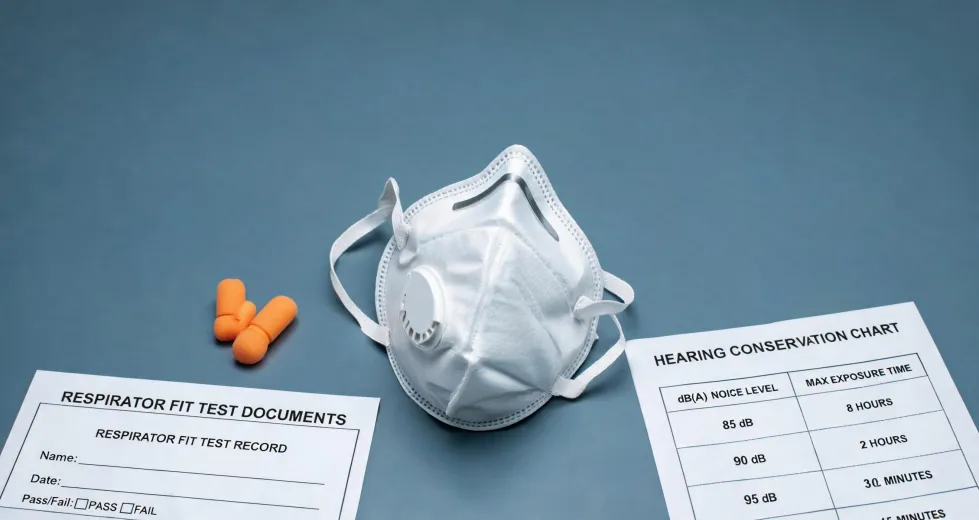
Choosing the right respiratory protection isn't a one-size-fits-all decision. The Moldex product line spans everything from disposable N95 masks to the 9000 series full face respirator, and picking the wrong one for your situation can mean anything from wasted budget to a serious compliance issue.
I've spent years coordinating PPE procurement for industrial facilities, including more than a few emergency orders where the clock was very much ticking. What works for a construction site doing routine drywall work isn't what a chemical plant needs for emergency response. And what a hospital needs during a surge event is different from both.
So let's break this down by scenario, because "just get a respirator" is about as useful as saying "just get a vehicle" when someone might need a sedan, a forklift, or an ambulance.
Three Common Scenarios for Moldex Products
Before we get into specific recommendations, here's the framework I use when helping clients figure out what they actually need:
- The Emergency / Short-Term Scenario: You need protection now, for a defined period, possibly with limited ability to do extensive fit testing or training.
- The Regular Industrial Scenario: Workers need respiratory protection as part of their daily routine — every shift, week in and week out.
- The High-Exposure / Specialized Scenario: You're dealing with chemicals, vapors, or particulate hazards where partial protection isn't acceptable.
Each scenario points to a different set of Moldex products. Let me walk through them.
Scenario A: Emergency and Short-Term Protection
If you're reading this because something happened and you need respirators fast, I feel your pain. I've been there more times than I can count.
In March 2024, I got a call on a Tuesday afternoon from a facility manager who'd just discovered their entire stock of disposable respirators had been compromised by a water leak in the storage room. They had a regulatory inspection scheduled for Thursday morning. We needed to get N95 masks on-site in under 48 hours.
For this scenario, Moldex's disposable N95 respirators — the 2200 series, 2400 series, or the 4600 series — are the go-to. They're NIOSH-approved, they come in various sizes, and they don't require the same level of fit testing as elastomeric respirators. Well, technically they do require fit testing, but it's a much simpler process.
What I'd actually spec for an emergency order:
- Moldex 2200 N95: A reliable all-around choice for general particulate protection. It features Moldex's Dura-Mesh shell, which resists crushing and collapsing in humid conditions better than some other disposable masks I've seen.
- Moldex 2400 N95: Same NIOSH-approved protection, but with an exhalation valve. That valve makes a real difference in hot environments or for workers wearing them through long shifts.
- Moldex 4600 series: These add comfort upgrades like the soft foam nose cushion. If workers are going to complain about anything, it's nose bridge pressure.
Here's the value-over-price point: I've seen procurement teams save a few cents per mask by switching to a cheaper brand, only to discover workers were pulling them off during shifts because they were uncomfortable. An N95 that sits on a worker's chin provides zero protection. It doesn't matter how good the spec sheet looks if the mask isn't being worn correctly.
While we're talking about emergency preparedness, your response kit should include respiratory protection alongside the standard first aid items. A basic workplace first aid kit typically holds bandages, gauze pads, antiseptic wipes, adhesive tape, scissors, tweezers, a CPR mask, and maybe a cold pack. Add a handful of N95 respirators to that kit if airborne particulates are a possibility in your environment. You can't bandage a breathing hazard.
Scenario B: Regular Industrial Use
This is the most common situation: workers need respiratory protection as part of their regular routine, forty hours a week or more. Here's where disposable respirators start to become cost-inefficient, and where elastomeric half mask respirators — the Moldex 7000 and 8000 series — become the smarter investment.
Let's run the math. A disposable N95 costs anywhere from a dollar fifty to three dollars per unit, depending on model and volume. A worker in a dusty environment might use one per shift, sometimes two. Over a year, that's roughly $800 to $1,500 per worker in disposable masks alone.
A Moldex 7000 series half mask, by contrast, costs maybe $20 to $30 for the mask itself. P100 filters — like the Moldex 9400 series — run around $10 per pair and can last weeks, depending on contaminant load. Even with regular filter changes and the occasional mask replacement, you're looking at $300 to $500 per worker per year. The total cost of ownership over three years is dramatically lower.
I'll admit I didn't always see it this way. For years I'd default to the cheapest disposable option per unit, because that's how the budget line read. Then we ran the numbers on a site with 60 workers and realized we were spending roughly $60,000 a year on disposables that were less comfortable and less protective than a proper half mask program. Switching to the 7000 series cut that cost by more than half.
The "always buy the cheapest per unit" approach ignores two things: the usage pattern and the compliance factor. Elastomeric masks are generally more comfortable for all-day wear because they sit differently on the face and don't absorb moisture the way filter media does. Comfortable workers are more likely to actually wear their respirators.
What I'd actually spec for regular industrial use:
- Moldex 7000 series half mask: Lightweight, durable, and compatible with a range of Moldex filters. This is the workhorse for most industrial applications.
- Moldex 8000 series half mask: Similar protection with some ergonomic differences. Some workers strongly prefer the fit; others don't. Have workers try both before standardizing.
- P100 filters (9400 series): For most particulate hazards, P100 gives you 99.97% filtration efficiency — the highest NIOSH rating available. That's a serious level of protection.
One thing we learned the hard way: always stock spare parts. The third time we had a cracked exhalation valve and no replacement on hand, I finally implemented a policy to keep spares for every mask we issue. The rush shipping fees on that third order cost more than the spare parts would have.
Scenario C: High-Exposure and Specialized Protection
Now we get to the product that shows up most in search queries: the Moldex 9000 series full face respirator. For good reason too.
A full face respirator is the right call when:
- Chemical splashes could damage the eyes
- You need a higher protection factor than half masks provide
- You're working in environments with mixed or unknown hazards
- Workers need integrated eye and respiratory protection without gaps between separate goggles and masks
The Moldex 9000 series gives you full facial coverage with a panoramic lens. The wide field of view is a bigger deal than you might think — it matters when someone is working in a tight space or operating equipment. And because eye protection is built in, there's no fit gap where separate goggles meet the mask.
What I'd actually spec for high-exposure work:
- Moldex 9000 series full face respirator: Pair it with P100 particulate filters for dust and aerosol hazards, or with the appropriate chemical cartridges for vapor and gas exposure. And confirm cartridge compatibility before ordering — mixing up bayonet styles is a classic "saved two bucks on the wrong part" mistake.
The 9000 series isn't for everyone. If you're doing light sanding for an hour a day, it's overkill. But if workers are facing chemical splash risk or unknown air quality, this is the piece of equipment that lets them do the job without constantly wondering if a splash is about to hit them in the face.
How to Determine Your Scenario
If you're still not sure which category fits, here's the self-check I walk clients through:
- How often is respiratory protection needed? Rarely, or in response to incidents → Scenario A. Every shift → Scenario B. Continuous exposure in hazardous atmospheres → Scenario C.
- What's the hazard? Dust, particulate, or airborne biological material → N95 or P100 filters. Chemical vapors or gases → the correct chemical cartridge. Mixed or unknown → go with the highest level of protection available.
- What's your fit testing capability? Minimal time and training → disposable N95. An established program with a fit tester → half mask or full face.
- What does the total cost actually look like? Don't compare unit prices. Compare annual cost per worker, including filters, spares, compliance rates, and the cost of an incident if the PPE fails.
The mistake I see most often is defaulting to disposable respirators because the unit price is low — without running the annual cost per worker. That's the classic penny-wise, pound-foolish trap. Every time I've laid out the total cost comparison for a client, the reusable option with proper filters won on cost per year of service.
Final Thoughts
The right Moldex product depends on your specific situation. Emergency response needs different respiratory protection than a chemical plant's daily operations, and a construction crew needs something different from both.
If the need is urgent, start with the disposable N95 options — the 2200, 2400, or 4600 series — and you'll have working protection in hand quickly. For regular industrial use, invest in the 7000 or 8000 series half masks with P100 filters. And for high-exposure environments, the 9000 series full face respirator earns its cost — but only if you commit to fit testing, training, and maintenance.
The common thread: don't make the decision based on unit price alone. I still kick myself for the years we spent overpaying on disposables that workers weren't consistently wearing. If I'd run the total cost numbers earlier, we'd have saved tens of thousands of dollars across our facilities.
Whatever scenario you fall into, buy NIOSH-approved equipment, keep replacement parts in stock, and document your fit testing. The specific Moldex product is the tool. The program around it is what actually protects people.

Maeve Callahan
Maeve Callahan is a head-protection analyst covering Type I and Type II hard hats, climbing-style safety helmets, bump caps, chin straps, suspensions, liners, and face-shield carriers. She applies ANSI Z89.1, EN 397, and EN 12492 criteria while comparing impact attenuation, penetration resistance, lateral deformation, electrical class, retention strength, field of vision, mass, fit range, and temperature conditioning. Her guides help EHS teams, contractors, utilities, and buyers select helmet systems for overhead hazards, work at height, electrical exposure, accessory compatibility, and worker acceptance.