PPE Is Not a Commodity: What I Learned From Ordering the Wrong Moldex N95 Respirators
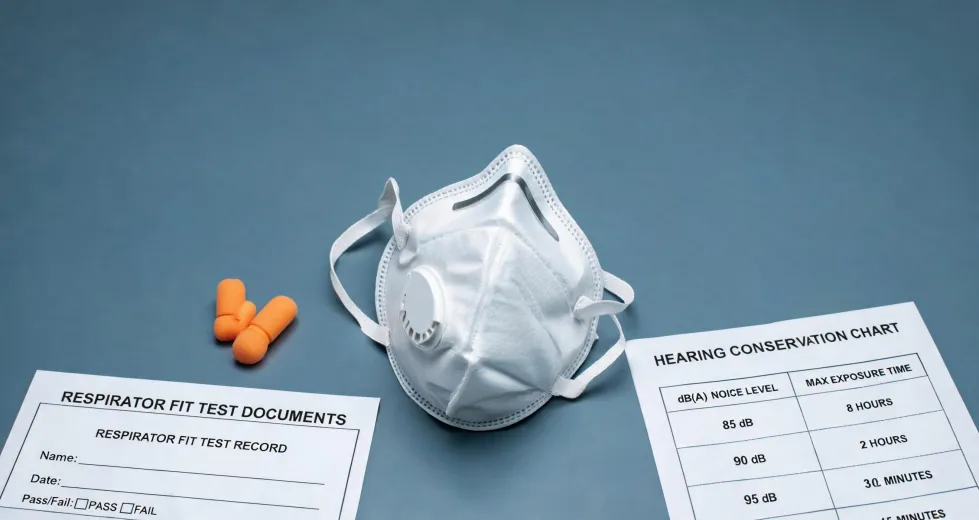
PPE Is Not a Commodity. Stop Ordering It Like One.
I'll say the thing that gets me sideways at procurement meetings: buying PPE on price alone isn't saving money. It's just moving the cost somewhere else.
I've been handling safety equipment orders for eight years. I've personally made (and documented) six significant mistakes, totaling roughly $12,000 in wasted budget. Most of them weren't caused by bad products. They were caused by vague language and unexamined assumptions.
Take the phrase "N95 mask." I said "N95 masks" on a requisition once. The supplier heard "NIOSH-approved respirator, whatever model we have in stock." Result? Ten boxes of flat-fold respirators that didn't fit my crew. We discovered it during fit testing when a technician moved his head and the nose wire dug into his cheeks. That order went to the "training prop" shelf.
The question isn't "is this N95 good?" It's "does this respirator fit the people who will actually wear it?" Those are two different questions.
The Substitution Mistake That Changed My Process
In September 2022, I ordered what I described as "Moldex N95 disposable respirators." I wanted the molded style, but I didn't write that. The distributor shipped a flat-fold alternative as a "like-for-like" substitution. I approved it because I didn't have a spec that said otherwise.
(I should add: we'd been with that distributor for four years. That's exactly why I stopped assuming familiarity meant accuracy.)
The substitution was NIOSH-approved. It met the filter standard. But it didn't work for us. On paper, the flat-fold model was lighter and cheaper. In practice, the molded version--specifically the Moldex 2200 N95 NIOSH--kept its shape in the high-humidity environment where my crew works. The flat-fold absorbed moisture, collapsed against the face, and made the seal unreliable for some wearers.
After that, I wrote the exact line item: "Moldex N95 disposable respirator, molded, model 2200, NIOSH-approved." It's a longer string of text. It also prevented a reorder of the wrong product.
Why "Molded" Matters More Than You'd Think
Molded N95 disposable respirators have a rigid shell. Flat-folds, by design, fold flat. That sounds cosmetic until you spend seven hours in one.
Why does this matter? Because a respirator that fails fit testing doesn't protect anyone. NIOSH approval means the filter media meets the efficiency standard in 42 CFR Part 84. It doesn't mean the respirator fits a particular face. And a mask that changes shape as it gets damp won't keep a reliable seal.
Searching for "Moldex N95 disposable respirator molded" is actually smarter than searching for "N95 mask." It tells the seller you understand that shape affects fit. That's exactly the kind of vocabulary that separates a useful order from a returns problem.
I went back and forth between the budget-friendly flat-fold and the molded Moldex 2200 for two weeks. The flat-fold had a lower unit cost. The molded one had a better chance of staying sealed on a sweaty, moving worker. Ultimately, I chose fit and comfort because a respirator left on a bench costs more than any price difference.
That's not a marketing opinion. It's a process lesson from a failed fit test.
The Education Problem Is Real
The same logic applies to other items on a safety order. Take nitrile gloves. I once ordered 2,000 nitrile gloves based on cost. The gloves were fine for light work. They weren't fine for the solvent we used in cleanup. I hadn't checked the manufacturer's chemical compatibility chart, and the box didn't have it printed on the label. $480 of gloves got pulled from the floor and scrapped. No injury, but I remember that line item.
That kind of mistake happens because buyers are forced to translate vague descriptions into specific standards. People search with words they know, not words that exist on a spec sheet. That's why I've seen search queries like "are body armor drinks good for you" and even "fuzzy handcuffs" land in safety-related catalogs. Are those searches about PPE? Probably not. But they're a reminder: if we don't give people clear product names, they'll use whatever language they have.
I'd rather spend ten minutes explaining why a molded N95 disposable respirator is different from a flat-fold than receive another "we got the wrong thing" email. An informed customer asks better questions, and better questions prevent reorders.
What I Do Now
Here's the checklist I now use for every major PPE order:
- Name the exact model and approval. Not "N95 respirator." Write "Moldex 2200 N95 NIOSH" or the exact approved model number.
- Fit test before you buy cases. If your people haven't tried it on, you're guessing.
- Check the medical evaluation requirement. OSHA's respiratory protection standard (29 CFR 1910.134) requires a medical evaluation before a worker uses a tight-fitting respirator. Not optional paperwork.
- Read the datasheet for gloves. "Nitrile" is not a chemical-resistance rating.
- Order one sample first. A single unit costs less than a case of mistakes.
This checklist didn't come from a consultant. It came from a failed PO. We've caught 47 potential problems with it in the past 18 months--most of them before they cost money.
The Pushback I Always Get
"We don't have time to spec every item." I hear that. Nobody has time to waste, but we still waste it on substitutions and returns.
Maybe you're thinking, "It's just a respirator. They all meet N95." I understand why someone would think that. In my case, the same NIOSH approval did not mean the same fit, the same humidity behavior, or the same willingness to wear it. Fit testing doesn't lie.
Honestly, I'm not sure why some distributors handle substitutions so loosely. My best guess is their systems are set up to "find a match" rather than to ask whether the substitution is actually right for the job. That's why we tightened our own process instead of relying on theirs.
What I Want You to Take From This
PPE is not a commodity. It's a safety measure with standards, fit requirements, and real-world conditions attached. If you're a buyer, ask "What exactly am I specifying?" before you ask "What's the price?"
Helping customers understand their own needs is part of the job. I'd rather explain why a molded N95 disposable respirator is right for one crew and wrong for another than silently process a PO that's destined to fail. An informed customer makes a better decision. That's good for everyone.

Maeve Callahan
Maeve Callahan is a head-protection analyst covering Type I and Type II hard hats, climbing-style safety helmets, bump caps, chin straps, suspensions, liners, and face-shield carriers. She applies ANSI Z89.1, EN 397, and EN 12492 criteria while comparing impact attenuation, penetration resistance, lateral deformation, electrical class, retention strength, field of vision, mass, fit range, and temperature conditioning. Her guides help EHS teams, contractors, utilities, and buyers select helmet systems for overhead hazards, work at height, electrical exposure, accessory compatibility, and worker acceptance.