Moldex PPE Purchasing: A Procurement Manager's Honest FAQ
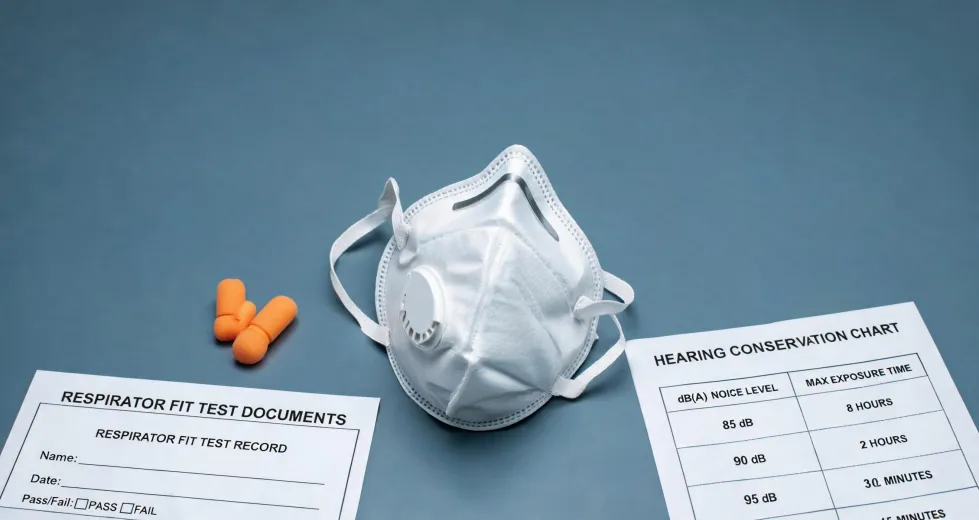
I've been handling procurement for a 400-person industrial company for about 12 years, and I manage roughly $180,000 a year in PPE spending. That means when someone asks about Moldex—the N95 masks, the respirators, the fit testing kits—I don't answer from a spec sheet. I answer from a spreadsheet. Every dollar has a paper trail.
This FAQ won't tell you that one brand is universally 'better' than another. What it will do is give you the questions I ask before I buy, the numbers I've seen, and the mistakes I've made so you can skip them. Some are the questions people ask me all the time. One of them is a question you probably haven't thought to ask yet.
Is the Moldex 2400 N95 Mask Worth the Price?
Compared to what? The 2400 is a cup-style N95, NIOSH-approved, which means the filtration level is set. The real cost difference between respirators isn't the sticker price—it's whether the device actually stays on a face.
In 2023, I bought a cheaper brand of N95 to save about 30 cents per mask. It made sense on the quote. What didn't make sense was the waste—we threw out a full box because the elastic straps degraded in storage. And the bigger problem: people didn't wear them. They found excuses. Different masks, less comfort, whatever. That 'cheap' option cost us more in reorders and compliance risk than the sticker savings ever justified.
I've been running Moldex 2400s in our facility for three years now. The Dura-Mesh shell doesn't collapse in humid conditions, and the foam nose cushion seems to be the difference between a worker leaving it on and a worker fiddling with it all shift. When I placed the order for the first 500, I second-guessed myself for two weeks. Then we piloted 20 masks on the floor and the feedback came back positive. Now it's the default for daily-wear particulate protection.
Is the 2400 the right mask for every job? No. For light nuisance dust a couple hours a week, a simpler model does fine. But for daily use, it's the one that actually stays on. That's the metric that matters.
Do We Really Need a Moldex Face Fit Testing Kit?
Short answer: yes, if any of your people wear tight-fitting respirators.
I tried to skip this once. Not because I'm against fit testing—but because we were rushing, and I thought, 'What are the odds anyone gets dinged for it?' Well. The odds caught up with us during a state OSHA audit. They asked to see our fit testing records. We didn't have them. We had to stop work in two departments for half a day while we figured out a response.
You know what that half day cost us? More than the Moldex face fit testing kit. More than the staff time to run the tests. More than the incentive pizza. Way more. The 'savings' from skipping that step got eaten alive by one afternoon of downtime.
Here's the thing about fit testing: it's not a one-time thing. OSHA's respiratory protection standard (29 CFR 1910.134) requires fit testing before first use, at least annually after that, and whenever a different respirator model is issued. Running it in-house with a qualitative kit is the most cost-effective way I've found. We can test a whole crew for the price of the kit and a box of test solutions.
One lesson from our close call: document everything. If a fit test is administered, the record should say who, when, and what method. That paper trail is what saves you when the auditor asks.
N95, P100, or Half-Mask? Which Moldex Respirator Should I Buy?
Start with a hazard assessment, not a product catalog.
N95 filters at least 95% of airborne particles. P100 filters 99.97%. And P100 generally costs more and is harder to breathe through. Here's the trap: if your workplace only needs N95-level protection, buying P100 isn't 'extra safe'—it's extra cost, extra breathing resistance, and extra complaints. When respirators are uncomfortable, people take them off. That's far worse than an appropriate N95 worn consistently.
For everyday particulates, I'd look at the Moldex 2200 or 2400 series. For oil-based aerosols or specific chemical hazards, a half-mask with the right cartridges—like the Moldex 9000 series—is often the better call. The best respirator is the one that matches your actual exposure and your workers' willingness to wear it.
And please, don't order 2400s just because I like them. Your hazard assessment might say P100. It might say half-mask with organic vapor cartridges. Buy the level your exposure requires. Not more, not less.
What About Coveralls and Woven Wire Fences? Shouldn't Moldex Sell It All?
This is the question I get a lot—not about fences specifically, but about one-stop shopping. If a supplier makes great N95 masks, shouldn't they also have coveralls? And disposable gloves? And safety signage?
Here's my stance after a lot of years in this seat: I'd rather buy from specialists than from a self-proclaimed one-stop shop.
Moldex does respiratory, hearing, and eye/face protection very well. That's their lane. When I need coveralls, I buy from a supplier whose core business is protective clothing. They have better fabric options, better sizing, better knowledge. When a project needs a woven wire fence—that's facility safety, not PPE. And it's not something I'd expect a mask manufacturer to be good at.
A vendor who tells you 'this isn't our strength, here's who does it better' earns my trust for everything else. The vendor who claims they can do it all? That's when I start reading invoices closely. The most costly 'convenience' I've ever paid for was a supplier stretching into territory they didn't own.
So no, you shouldn't expect Moldex to sell woven wire fence. And you shouldn't hold that against them. I want specialists who know their limits—it makes my procurement job simpler, not harder.
Can I Bring Pepper Spray on a Plane?
I'll admit, this one's a bit of a curveball next to respirator questions. But your keyword search led you here, and it's actually a fair thing to wonder about if you're traveling with safety gear.
When I travel for site audits, I often carry PPE samples. A few rules I've confirmed the hard way: N95 masks and respirators are fine in carry-on and checked bags. Earplugs too. Keep them in original packaging and you won't get questions. Chemical cartridges, though, can raise eyebrows, especially on international flights—I've had customs agents ask about organic vapor cartridges.
Pepper spray (OC spray) is the one people get wrong. TSA currently allows a single 4-fluid-ounce container in checked luggage only, with the valve protected so it can't accidentally discharge. Not in carry-on. I had a colleague lose a $30 can at a checkpoint because he forgot it was in his travel bag. The confiscation was faster than the explanation.
But here's the boundary part: this is a travel question, not a PPE-buying question. For TSA rules, ask TSA. For chemical exposure, ask an industrial hygienist. For coveralls and fences, ask the vendor whose core business that is. And for respirators? That's where Moldex is your answer.

Maeve Callahan
Maeve Callahan is a head-protection analyst covering Type I and Type II hard hats, climbing-style safety helmets, bump caps, chin straps, suspensions, liners, and face-shield carriers. She applies ANSI Z89.1, EN 397, and EN 12492 criteria while comparing impact attenuation, penetration resistance, lateral deformation, electrical class, retention strength, field of vision, mass, fit range, and temperature conditioning. Her guides help EHS teams, contractors, utilities, and buyers select helmet systems for overhead hazards, work at height, electrical exposure, accessory compatibility, and worker acceptance.