Ordering the Moldex N95 2400 Mask: A Purchasing Person's Honest Guide
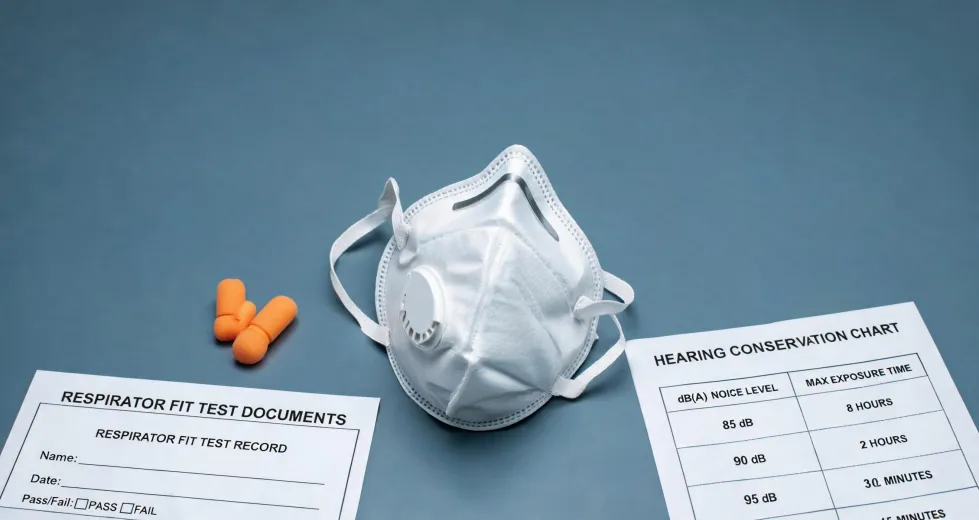
There isn't one perfect way to buy respirators. If anyone tells you there is, they haven't dealt with a mixed-site audit and a project manager who needs masks tomorrow. Most of the time, the right answer depends on whether you're starting from zero, restocking a known product, or untangling a request that only looks like safety gear.
I'm the office administrator for a 90-person engineering firm. I manage 60 to 80 purchase orders a year, roughly $110,000 across nine vendors, and I report to both operations and finance. When I took over purchasing in 2020, my first mistake was assuming that a similar product from a cheaper source was automatically a good buy. I still make some version of that mistake, but less often.
Before you order anything, figure out which of these three situations you're in:
- New program or first order: no baseline, no purchase history.
- Regular reorder: the product is approved and you just need more stock.
- Mixed request: someone says they need masks, but the real ask is bigger.
Situation A: New Program or First Order
If I don't have a history with the product, I check the Moldex official website first. I use it to verify product numbers, NIOSH approval status, and basic specs. Then I talk with a distributor who can actually ship to us and invoice properly.
The Moldex N95 2400 mask is the one we keep as our general particulate respirator. It's a useful default for nuisance dust, pollen, and non-oil particulates, but it's not a solution for chemical vapors or gases. I learned this the hard way when a manager assumed one N95 product would cover every task in the shop. It didn't.
In 2021, I found what looked like the same mask from a new vendor at a price that saved us $1,800 on the first order. I assumed "same specifications" meant identical results across distributors. Did not verify. The product box arrived, but the invoice was a handwritten receipt. Finance rejected it. The cost sat in limbo for months. Now I verify invoicing, lot traceability, and lead times before I place any order.
If you're building a new safety program, order a small sample first. Have a few people try the mask while wearing the other PPE they'd use. If it interferes with goggles or hearing protection, you've caught the problem before the big order.
Situation B: Reordering a Regular Product
Once a product is approved, reordering should be easy. But it still isn't always.
The main issue is total cost, not unit price. I've learned to ask what's NOT included before what's the price. A distributor who lists handling fees, freight, and minimum order quantities upfront usually costs less than one who looks cheap first and adds surprises later.
I've learned to ask "what's NOT included" before "what's the price."
Shipping is a hidden cost more often than not. A small sample box is not a letter. According to USPS business mail 101, a standard letter can't be more than 6.125 by 11.5 inches and 0.25 of an inch thick; a large envelope can be up to 12 by 15 inches and 0.75 of an inch thick. A box of the Moldex N95 2400 mask is a parcel, not a letter. I've had a supplier try to send samples in an envelope that didn't fit, and the post office returned it. USPS first-class letter rates were $0.73 for one ounce as of January 2025; parcel rates are a different conversation.
For a regular reorder, I also ask about shelf-life or date code information. Most respirator stock is fine when stored properly, but I want to know the lot and manufacture date on the box. It matters if an auditor asks about what we issued and when.
Situation C: When the Request Isn't Really About PPE
This is the one people miss. Sometimes the request shows up in my inbox as "we need some masks," but the real need is broader.
Last summer, a supervisor asked if we could order Wrangler Riggs workwear for a field crew. That's not a respirator order, but it's part of the same conversation about outdoor work comfort and protection. I buy it through a separate line and make sure the size and fit specs are right, just like anything else.
The facilities lead once asked me to look up "deck railing ideas" for the outdoor break area. That sounds like a Pinterest search, but in the workplace it's really about fall protection, railing height, and whether the existing structure can support the railing. Those are safety issues, not style choices. I sent the request to our facilities engineer instead of just choosing a railing design.
Then there was the question I never expected from an employee: how to make pepper spray. It came from a viral video about homemade self-defense products. My answer was no. Not because pepper spray is illegal, but because a DIY mix has no controlled concentration, no testing, and no liability protection. If the company decides it needs a defensive spray, we buy a commercial product from a licensed supplier, document it, and train people on it. Per FTC guidelines, claims about what a safety product does have to be truthful and substantiated. A video recipe doesn't meet that standard.
How to Decide What to Do Next
Ask yourself three questions before spending money.
- Is this a first order or a reorder? If it's a first order, start small and verify paperwork before scaling up.
- Who else depends on this purchase? If multiple departments do, the process matters as much as the product.
- What happens if it doesn't arrive? If the answer is "we can't work," expedite. If the answer is "we'll use older stock," you have more room.
If you need a documented audit trail, use the Moldex official website to verify product specs and approvals, then buy through a distributor who can produce a proper invoice with lot numbers. If you need speed and your distributor can't deliver, call the sales support line from the Moldex official website and ask for an approved option. But don't choose a supplier just because they have stock. A box in a warehouse won't help if the invoice gets rejected.
A Few Lessons I'd Rather Not Have Learned the Hard Way
Vendor consolidation has real benefits. In our 2024 consolidation project, we reduced our active vendors from 14 to 8 and cut a lot of invoice chasing. I have mixed feelings about it, though. On one hand, fewer vendors means fewer headaches. On the other, the one vendor we depend on for respirators can become a single point of failure.
I keep a primary and backup arrangement. The primary gets the regular reorder. The backup gets a small order twice a year so the account stays active. It costs a little more, but it keeps us from being stuck when a production line breaks down.
There's something satisfying about a purchase order that clears without a single follow-up email. After a year of messy invoices, that quiet process is the goal.
No N95 can promise 100 percent protection, and no purchasing process can promise zero surprises. But the more I check, the fewer surprises I have to explain to my VP.

Maeve Callahan
Maeve Callahan is a head-protection analyst covering Type I and Type II hard hats, climbing-style safety helmets, bump caps, chin straps, suspensions, liners, and face-shield carriers. She applies ANSI Z89.1, EN 397, and EN 12492 criteria while comparing impact attenuation, penetration resistance, lateral deformation, electrical class, retention strength, field of vision, mass, fit range, and temperature conditioning. Her guides help EHS teams, contractors, utilities, and buyers select helmet systems for overhead hazards, work at height, electrical exposure, accessory compatibility, and worker acceptance.