PPE Budget Wars: Moldex P100, Uvex Safety Glasses, Kask Hard Hats, and How to Test Smoke Detector
-
Comparison Framework: Why Price Is Not the Cost
-
Respirator Comparison: Moldex N95 vs. Moldex P100
-
Eye Protection Comparison: Uvex Safety Glasses vs. the $3 Pair
-
Head Protection Comparison: Kask Hard Hat vs. Basic Hard Hat
-
Bonus Safety Comparison: Tested vs. Ignored Smoke Detector
-
What Should You Buy? The Decision Guide
Over the past six years of tracking every PPE invoice, I've learned one thing: the lowest unit price is almost never the lowest total cost. We've ordered maybe 2,000 respirators in that time—maybe 1,800, I'd have to check the system—and the same pattern keeps showing up. The old way to buy PPE is simple: grab the cheapest thing that meets the standard. What I mean is, the decision often ends at the price per piece. That is the expensive way to buy.
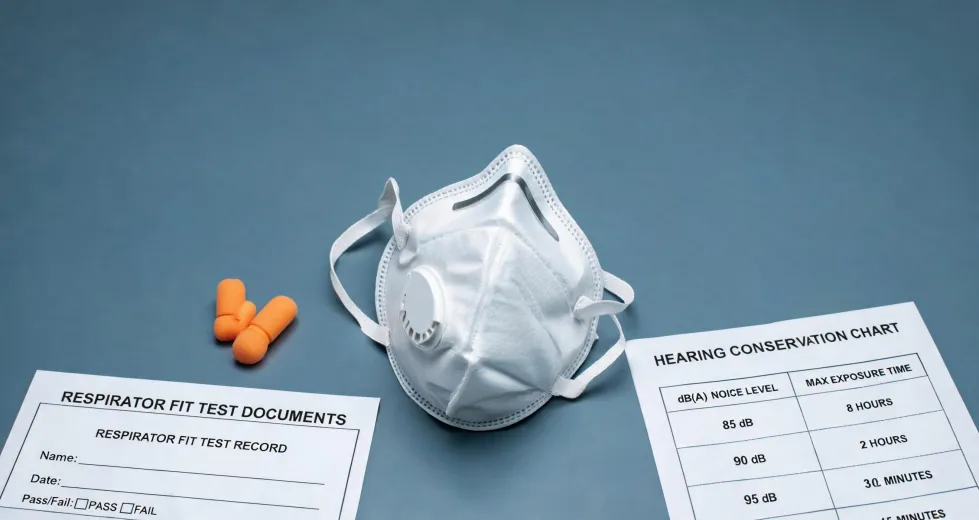
This post is not a brand pitch. It's a comparison framework I use when I have to choose between N95 and P100 respirators, cheap and premium safety glasses, and basic and high-end hard hats. The framework has four dimensions: upfront price, service life, compliance and worker acceptance, and hidden costs. If you only compare price, you miss the cost of workers not wearing the gear.
Comparison Framework: Why Price Is Not the Cost
Before any order, I don't open the catalog and stare at the number next to the product name. I open a spreadsheet and ask five questions: How much is this per month of real use? Will workers actually wear it? Does it meet OSHA, ANSI, or NIOSH requirements? How many times will we replace it because it fails? What would an injury cost? That sounds basic, but it changes decisions. When I audited our 2023 PPE spending, I found that 22% of our budget overruns came from buying the cheapest option twice or three times before finally buying the one that worked.
Respirator Comparison: Moldex N95 vs. Moldex P100
The first comparison I want to break down is not a brand battle. It's filter class: N95 vs. P100. Both have been in our shop, so this is neutral ground. N95 masks block at least 95% of airborne particles. They are fine for general dust, grinding, and many construction tasks. But they are not oil-resistant, and a disposable N95 has a short service life. P100 filters block 99.97% of airborne particles, and they are oil-proof. Again, that is not 100%, and no respirator works if the face seal leaks.
Here is where my cost brain kicks in. A disposable N95 looks cheap per unit. In 2024, I recall seeing bulk prices around one or two dollars per mask, though I might be mixing that with a quote from a different region. A Moldex half mask with Moldex P100 filters costs more upfront—I want to say around thirty dollars for the mask and filters, but don't quote me on that—and that makes some procurement people stop right there.
But compare service life. In our metal finishing area, a disposable N95 often lasted two or three shifts before the straps or foam gave up. A half mask respirator with P100 filters lasted months, and we only replaced the filters when they got damaged or clogged. When I ran the monthly cost per worker, the P100 setup was frequently cheaper. That was surprising. It went against the obvious 'cheaper mask means cheaper year' assumption.
Before ordering, I always pull up the Moldex N95 mask size chart. In Q2 2024, I almost didn't. So glad I checked. We had crew members with different face shapes, and the chart helped us pick two models instead of blindly ordering one size. A size chart is not a substitute for fit testing. OSHA 29 CFR 1910.134 requires a fit test for workers who are required to use respirators. But the size chart narrows down which models to test, and that saves time and money.
Eye Protection Comparison: Uvex Safety Glasses vs. the $3 Pair
I used to think any ANSI Z87.1-rated safety glasses were the same. The standard is the entry ticket, not the whole decision. In 2023, we had a bin of $3 glasses with scratch and fog problems so bad that workers stopped wearing them after two weeks. That is a compliance failure, and it costs more than any pricing difference.
We switched to Uvex safety glasses in our fabrication and grinding areas. The anti-fog coating and scratch-resistant lens are not just comfort features; they are durability features. A $12 pair of Uvex can outlast a $3 pair that gets replaced six or seven times a year. In our six-month test, the $3 pair was replaced about five times. The Uvex pair was still in use. To be fair, the cheap glasses are fine for a one-day visitor or a short task. For daily production, they are the expensive option.
There is also a softer benefit. When workers look in the mirror and see clean, professional safety glasses instead of scratched plastic, they behave differently. That's not a vague feeling; our replacement order rate dropped by around 60% after the switch. And when clients walked through the plant, they saw a crew that looked like they were serious about quality. That matters in a B2B environment where first impressions are part of your brand.
Head Protection Comparison: Kask Hard Hat vs. Basic Hard Hat
The same logic showed up when I bought hard hats. I ordered a basic helmet because it met ANSI Z89.1, which I thought was enough. Then I watched workers take it off as soon as the supervisor left. They said it felt heavy, the ratchet was stiff, and the sweatband rode too low. None of those excuses are acceptable when there is overhead risk, but the behavior is real.
A Kask hard hat costs more—I'd guess between $45 and $80 per unit in our market, give or take—so it felt like an easy negotiation loss. But once we put a few Kask helmets into a trial, the complaints stopped. The weight was lower, or at least better balanced. The suspension was easier to adjust. Workers left the helmets on. That matters because a hard hat that sits on a shelf costs a lot more than a comfortable one.
Honestly, I'm not sure why some basic hard hats still ship with a ratchet that pinches on cold mornings. My best guess is it's a cost decision. If I remember correctly, the weight difference between our old helmets and the Kask models was noticeable, but I don't have the spec sheet in front of me right now. The exact number matters on paper; the behavior matters on site. For short inspections or low-overlap work, a basic hard hat is acceptable. For daily work on ladders, platforms, and energized areas, I would rather pay for a Kask hard hat and see it worn.
Bonus Safety Comparison: Tested vs. Ignored Smoke Detector
PPE is not the whole safety program. A few months ago, I realized the smoke detectors in our warehouse had not been tested since before I joined. Everyone assumed someone else did it. So here is how to test smoke detector without making it a project:
- Press and hold the test button until the alarm sounds. That one test confirms the battery and the horn.
- If no alarm comes out, replace the battery and test again.
- If it still doesn't work, replace the unit.
- Mark the installation date on the detector so you know when it's ten years old.
This was accurate for our equipment as of early 2025. Always check the model-specific instructions because some detectors need different testing. In general, most manufacturers recommend a monthly test. NFPA 72 points back to the manufacturer's instructions, so treat monthly as the default. Replace batteries when the low-battery chirp appears, and replace the whole detector after ten years.
What Should You Buy? The Decision Guide
There is no single answer that fits every company. Use the comparison frame instead of a brand name. If your only need is dust on a short construction task, a disposable Moldex N95 and a pair of $3 safety glasses is a defensible choice. If your team is in metalworking, chemical handling, or any environment where particles are heavy, oily, or frequent, spend the extra money on a Moldex half mask with P100 filters and a pair of Uvex safety glasses with anti-fog lens coating. If overhead risk is a daily reality, a Kask hard hat is worth considering, even when the basic helmet looks okay on the price sheet.
Quality affects how a customer sees your company. In a B2B setting, the gear your workers wear is part of your brand. When I switched from budget options to equipment that people actually wore, our safety observation reports improved, and the facility looked different to visitors. That sounds like a soft metric, but it signals to clients that you manage the hard details too. At the end of the day, we cut our PPE line by roughly 17% in 2024 by using this comparison instead of defaulting to the lowest quote.
The lowest unit price is rarely the best investment. The best investment is the one that gets worn, meets the standard, lasts long enough, and protects the person inside. There's something satisfying about a PPE budget that survives contact with reality. That's the comparison I'll keep using.

Maeve Callahan
Maeve Callahan is a head-protection analyst covering Type I and Type II hard hats, climbing-style safety helmets, bump caps, chin straps, suspensions, liners, and face-shield carriers. She applies ANSI Z89.1, EN 397, and EN 12492 criteria while comparing impact attenuation, penetration resistance, lateral deformation, electrical class, retention strength, field of vision, mass, fit range, and temperature conditioning. Her guides help EHS teams, contractors, utilities, and buyers select helmet systems for overhead hazards, work at height, electrical exposure, accessory compatibility, and worker acceptance.