Why Your PPE Budget Is Leaking: A Procurement Manager’s TCO Wake-Up Call
The Price Tag Was Never the Problem
I’ll be honest: for the first two years of managing PPE procurement, I thought I was doing fine. Every quarter, I’d get quotes from three vendors, pick the lowest number, and move on. The warehouse was stocked, the safety team was happy, and my budget—well, it usually came in under the line.
But then something kept happening. A routine reorder of N95 respirators would arrive, and the lead wouldn’t fit properly. A batch of earplugs would feel flimsy. The safety manager would ask, “Why can’t we get the same quality we had last year?” And I’d be left explaining that the price was lower—but somehow, the value wasn’t there.
Sound familiar? If you’re in procurement for a mid-sized company—say 50 to 200 employees—you’ve probably felt this tension. You’re told to cut costs. But cutting the wrong cost can cost you more. That’s what I learned the hard way.
The Real Cost of Cutting Corners
After three years and roughly 150 PPE orders, I finally stopped blaming the vendors and started auditing my own process. What I found was uncomfortable: my obsession with unit price was actually inflating my total cost by a significant margin.
Let me give you a concrete example. We were ordering Moldex 2200 N95 respirators for our production line. Great product—NIOSH-approved, fits a wide range of face shapes, and has a decent shelf life. But we also tested a cheaper alternative, saving about $0.50 per unit. On a quarterly order of 2,000 units, that’s $1,000 saved. Easy win, right?
“The upside was $1,000 in savings. The risk was worker compliance—if the mask fits poorly, people either adjust it constantly or take it off. I kept asking myself: is $1,000 worth potentially compromising on health and safety?”
It turned out, the cheaper mask had a 15% higher fit-test failure rate. We had to re-order the Moldex 2200 within six weeks, paying expedited shipping. The net cost: $850 in savings lost, plus $200 in rush fees. And the morale hit? Priceless. The safety team lost confidence in the procurement process.
The Hidden Components of TCO in PPE
Here’s the thing: total cost of ownership (TCO) in PPE isn’t just about price per unit. It includes:
- Fit and compliance: A respirator that fails fit testing costs more than the price difference. Replacement orders, time spent retraining, and potential liability.
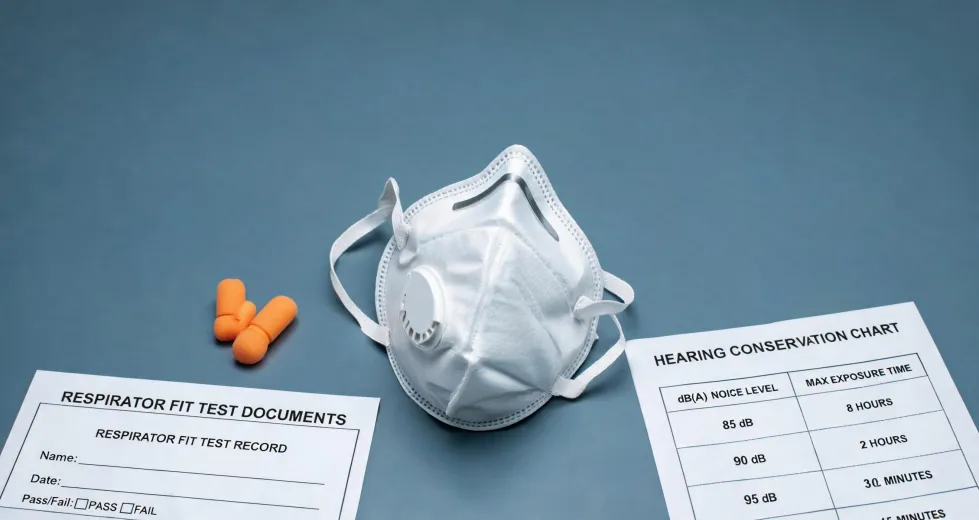
- Durability and shelf life: Some earplugs degrade faster than others. Moldex Pura-Fit earplugs, for example, are designed for longer wear without irritation. The cheaper ones we tested started to look beat up after two days.
- Inventory management: If a product has a short shelf life or inconsistent sizing, you’ll end up with waste. We once had to discard 30% of a cheaper earplug order because the batch didn’t meet our inner packaging specs.
To be fair, not every cheap product is bad. But my experience taught me that the decision-making framework matters more than the price tag.
The Wake-Up Call: When Small Orders Suffer
Another blind spot? How I treated smaller orders. Look, I get it—when you’re managing a $180,000 budget across six years of invoices, a $500 order of safety glasses feels small. But I started noticing that the vendors who treated my $1,200 quarterly orders seriously were the ones I still trusted for $12,000 annual contracts.
In Q4 2024, I needed a small batch of Brown work boots for a new shift hire—just five pairs. One vendor said, “We can do it, but the setup fee is $100, so it’ll be $150 per pair.” Another offered the same boot at $85 per pair, no setup fee, with a six-day lead time. That second vendor? They’re now my go-to for everything. The lesson: small doesn’t mean unimportant. It means potential.
Why the ‘Cheap’ Option Costs More—and What to Do About It
It took me a while to embrace this, but I’ve come to believe that the best procurement strategy isn’t about finding the lowest initial price. It’s about calculating the real cost over time.
Here’s what I now do for every major PPE category:
- Respiratory protection: I benchmark against Moldex products because they offer a consistent N95 and P100 line (like the 2200, 2400, and 4600 series) that’s easy to standardize across sites. No surprises on fit or durability.
- Hearing protection: I test the Moldex Pura-Fit earplugs (NRR 33) for high-noise areas. The upfront price is slightly higher, but one pair often lasts a full shift with no discomfort. For our team, that means less waste and better compliance.
- Safety eyewear: We standardized on a mid-range polycarbonate lens from Moldex. It’s not the cheapest, but it passed ANSI Z87.1 without a single field failure in two years.
“Calculated the worst case: switching to a cheaper earplug cost us $1,200 in reorders and retraining across six months. Best case: we would have saved $400. The expected value said go for the proven product. And the downside felt catastrophic for the safety program.”
What I Wish I’d Known About Hidden Fees
Look, I’m not against trying new vendors—I’ve negotiated with over 15 suppliers in my career. But I’ve learned that hidden fees are everywhere. Setup fees, minimum order charges, rush order premiums. When I was starting out, I didn’t know to ask about them.
Here’s a quick example: a vendor quoted us $3.25 per unit for a Moldex 2200 N95 respirator. That seemed competitive. But when I dug into the invoice, I found a $150 “special handling” fee because our order volume was below 2,500 units. The actual cost per unit shot up by $0.60. The next vendor included free ground shipping and no handling fee—at $3.40 per unit. The TCO? Almost identical. And the second vendor had a better reputation for lead time reliability.
Why the Garden Fence Analogy Stuck with Me
Once, while planning a garden fence for my backyard, I realized procurement is exactly the same. You can buy cheap wood and staples, but within a year, the fence will sag, rot, or need replacement. The cheap fence costs more over three years. PPE is no different: a low-quality respirator that fails after one use may look like a bargain, but it’s a liability. A Moldex 2200? You know it’ll last. You know the fit is consistent. That reliability is worth paying for.
The Cost of Not Fixing the Smoke Detector
And speaking of things that keep you up at night—why does my smoke detector keep beeping? It’s annoying until you realize it’s a warning about a bigger problem. That beep is your system telling you something is wrong. In procurement, the “beep” is those small budget overruns. The cheap orders. The reorders. The rush fees. Ignoring them is like ignoring a beeping smoke detector—eventually, you’ll have a real emergency.
For me, that emergency was a $4,200 unplanned reorder of respirators right before a major safety audit. We got through it, but barely. Now, I track every order in a TCO spreadsheet. The results? We cut budget overruns by over 35% in 18 months.
Final Takeaway: The New Procurement Playbook
To be honest, I’m not saying high-price is always better. But I am saying the right price is the one that includes all costs—including trust, reliability, and relationship. When I compare vendors now, I don’t just look at the quote. I look at the total cost over a year, factoring in what happens if a product fails, or if a supplier treats a small order poorly.
If you’re managing PPE for a team of 50 to 200, here’s my advice: start tracking TCO. Audit your last six months of orders. Is your cheapest respirator actually the most expensive? Are you paying hidden fees on small orders? And are your employees wearing gear that fits and works?
Because the answer might surprise you. It sure surprised me.

Maeve Callahan
Maeve Callahan is a head-protection analyst covering Type I and Type II hard hats, climbing-style safety helmets, bump caps, chin straps, suspensions, liners, and face-shield carriers. She applies ANSI Z89.1, EN 397, and EN 12492 criteria while comparing impact attenuation, penetration resistance, lateral deformation, electrical class, retention strength, field of vision, mass, fit range, and temperature conditioning. Her guides help EHS teams, contractors, utilities, and buyers select helmet systems for overhead hazards, work at height, electrical exposure, accessory compatibility, and worker acceptance.