The $4,700 PPE Lesson: What to Know Before Buying Moldex N95 Masks, Earplugs and Safety Glasses
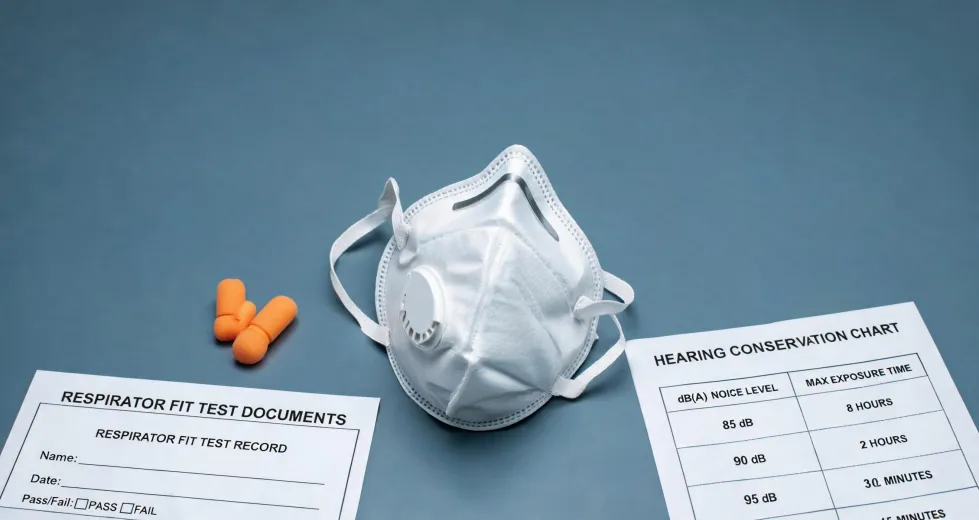
After eight years of buying PPE for a 60-person maintenance crew, I have the mistakes to prove it. Six significant ordering errors since 2017 and about $4,700 in protective gear that didn't work, not because it failed a test but because my crew wouldn't wear it. The most expensive lesson in safety purchasing is also the simplest one: a product that looks perfect on paper offers zero protection if it sits in a locker.
So before you buy anything, whether that means Moldex N95 masks for a dusty plant or the Moldex Rockets reusable earplugs (NRR 27) for a noisy workshop, start with samples. Test them with the actual people who will wear them. Only then order in bulk. I did it backwards for years.
How I learned this the expensive way
I'm an operations manager, not a certified safety professional. In a company our size, PPE purchasing falls to whoever runs operations, which is how a spreadsheet guy ended up responsible for respirators, hearing protection, and eyewear for 60 technicians.
My worst failure was in 2017. I ordered 240 disposable Moldex N95 respirators after comparing filter rating and price per unit. What I did not do was fit-test them on anyone except myself. The mask sealed fine on my face. Half the crew had a different experience: the molded cup didn't seat well on narrower faces, and several of the women could not get a consistent seal. Cases were opened, so returning them wasn't possible. About $1,100 sat in a storage cabinet. It took me a while to admit the mistake was mine, not theirs.
If you look up moldex masks n95, you'll see a range of cup-style disposables with similar filter performance. The fit, however, is not similar. That's the part the price list won't tell you.
What I check before an N95 order now
First, match the filter class to the hazard. N95 filters at least 95 percent of airborne particles under NIOSH test conditions and is not rated for oily environments. If oil mists are present, or the hazard assessment demands a higher margin, step up to P100, which filters at least 99.97 percent and is rated for oil-based aerosols. Moldex makes both disposable N95 models (I've bought the 2200, 2400, and 4600 series at different points) and reusable half-mask respirators with P100 filters for the heavier jobs.
Then you move on to the things no spec sheet covers. Do the head straps stay put under a hard hat? Does the nose area dig in after hour three? Is there an exhalation valve option so heat doesn't build up on a 90-degree day? A valve lets hot, humid air escape, which sounds like a minor detail until you've watched someone yank a respirator off during a heat wave.
Since late 2023 I've used a pre-order checklist, and it has caught eleven mistakes before I committed money: wrong filter class for the task, a missing valve option, and a supplier whose approval number didn't show up in the NIOSH database. All of those would have looked fine on a purchase order.
The earplug lesson: NRR 33 wasn't the winner
Hearing protection taught me the same lesson from a different angle. For a while, I stocked the highest-rated foam earplug I could find, with an NRR of 33. The spec sheet was impressive. The crew disagreed. They said their ears felt plugged, they couldn't hear coworkers or forklift beeps, and the foam plugs were a hassle to seat with work gloves on. The most frustrating part was that I couldn't argue with the number, but I also couldn't argue with the empty dispensers.
I tested the Moldex Rockets reusable earplugs NRR 27 as a compromise. Six points lower on paper. But the firmer stem makes them easy to insert even with gloves, the softer tip is comfortable for a full shift, and because they're reusable, workers treat them as their own instead of as trash. The dispensers started emptying for the right reason.
I have mixed feelings about telling anyone to accept a lower NRR. If your crew works in extreme noise all day, don't settle for less protection. We still keep the NRR 33 foam on the wall for the noisiest tasks. But for everyday exposure, an earplug worn correctly at NRR 27 beats an earplug left in a shirt pocket at NRR 33.
Heatwave safety glasses and the fog problem
Heat causes the same problem with eye protection. On a humid summer day, a respirator and safety glasses fog up within minutes. A fogged lens is a hazard in itself, because the first thing a worker does is take the glasses off, and that's exactly when something flies toward an eye.
The Moldex Heatwave safety glasses are what most of our crew wears in warm weather now. They're light, they sit comfortably under a hard hat, and they fog up far less than the cheaper glasses we used to buy. We still trial a pair with the pickiest welder before ordering a year's supply, but two summers in, they've earned the spot.
Buy local, even if it means searching earplugs near me
Where you buy matters as much as what you buy. My closest call came in September 2022, when an online listing offered disposable respirators at nearly 20 percent below our usual source. The annual savings would have been about $900. The downside was that the approval label in the product photo looked wrong, and the seller couldn't give me a straight answer about the NIOSH approval number.
I spent twenty minutes searching the NIOSH Certified Equipment List at cdc.gov/niosh/npptl and didn't find the model listed. I never proved the respirators were counterfeit. I also didn't need to. Good enough was not good enough for something my crew breathes through.
Since then I buy most PPE from local distributors. Search for earplugs near me and you'll often find an industrial safety supply house with a counter, not just a delivery dock. You can hold the product, read the labeling, ask for the approval number, and return the occasional wrong item without a fight. My current supplier earned my business because they treated a first order of $136 as seriously as the much larger orders that came later. Any distributor that treats a small trial order like a nuisance is telling you how they'll treat you when you have a problem.
One more thing: be suspicious of any ad that promises total or 100 percent protection from a respirator, earplug, or pair of glasses. Marketing claims must be truthful and substantiated, per FTC guidance on advertising (ftc.gov), and legitimate manufacturers don't make absolute promises. When you see that language, you're probably looking at someone selling confidence, not safety equipment.
Where my advice stops
I'm an ops guy, not an industrial hygienist, and this isn't a compliance document. If you're setting up a formal respirator program, OSHA's respirator standard (29 CFR 1910.134) requires medical evaluations, fit testing, and training, not just the right product. Particulate respirators like N95 and P100 do not protect against gases, vapors, or oxygen-deficient atmospheres. Get a qualified safety professional involved before you assume a filter solves the problem.
The same goes for hearing. If exposures are high enough that a single earplug won't bring noise below safe levels, or if workers need to hear warning signals, you may need double protection or communication-enhanced hearing protection, not just a different plug. This article is about the buying mistakes I made, not about setting exposure limits.
And my examples are U.S.-based. Respirator classifications differ in other countries, so check your local requirements before ordering. The product names and approval numbers will be different, but the human question will be the same: will the person actually wear it?

Maeve Callahan
Maeve Callahan is a head-protection analyst covering Type I and Type II hard hats, climbing-style safety helmets, bump caps, chin straps, suspensions, liners, and face-shield carriers. She applies ANSI Z89.1, EN 397, and EN 12492 criteria while comparing impact attenuation, penetration resistance, lateral deformation, electrical class, retention strength, field of vision, mass, fit range, and temperature conditioning. Her guides help EHS teams, contractors, utilities, and buyers select helmet systems for overhead hazards, work at height, electrical exposure, accessory compatibility, and worker acceptance.