Moldex Respirators vs. Moldex N95 Masks: What an Admin Buyer Checks Before Ordering Safety Glasses
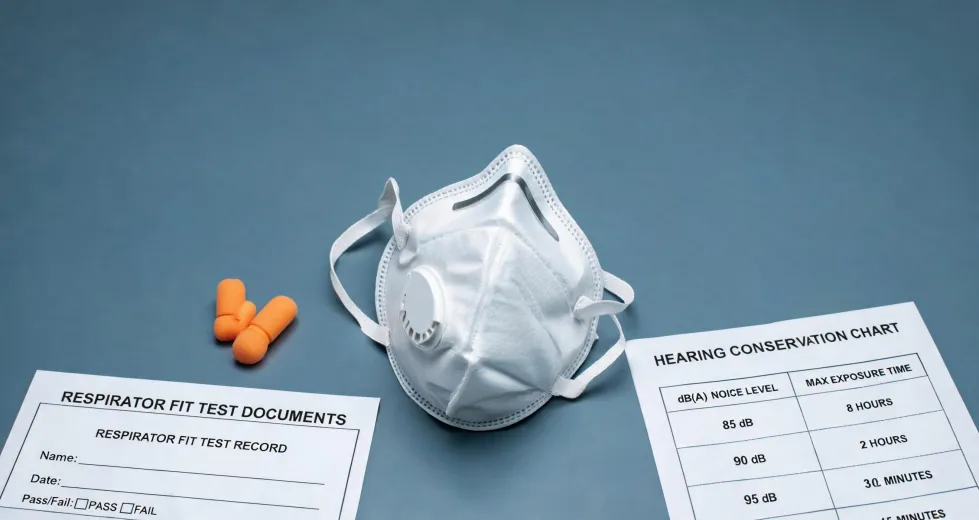
Short version: Moldex respirators are a solid choice for many industrial PPE programs, but Moldex is a brand, not a specification. I've ordered Moldex N95 masks and reusable Moldex respirators for a 150-person maintenance contractor since 2020, and they work well when we buy the exact model for the actual hazard. The model number and the NIOSH approval matter more than the name on the box.
I'm not a safety engineer. I'm the office administrator who handles purchasing for our maintenance teams across three locations. Since I took over buying in 2020, I've processed 60 to 80 PPE orders a year. That is probably $85,000 to $95,000 in annual spend, give or take, but I would need to check the system for a clean number. My job is to turn a safety request into a PO without creating returns or compliance gaps.
Moldex Respirators vs. Moldex N95 Masks
Here is where product-name confusion starts. A Moldex N95 mask is a type of respirator, but not every Moldex respirator is an N95 mask. Moldex makes disposable N95 masks, reusable elastomeric half-mask respirators, full facepiece models, P100 filter cartridges, hearing protection, and safety eyewear. If you ask a distributor for Moldex respirators, you are asking for a brand category, not a single product.
The disposable Moldex N95 masks we order most are the 2200 and 2400 series. They are filtering facepieces: the whole mask is the filter media. NIOSH approval under 42 CFR Part 84 means the N95 rating has to meet an independent test standard, not just a manufacturer's claim. For light dust, sweeping, and general particulate exposures, an N95 can be enough. It is not a gas or vapor respirator. If a worker is around solvent fumes or spray paint, we order a reusable half-mask with the right cartridges, not another disposable.
A common follow-up is whether to choose the 2400 with an exhalation valve over the 2200 without one. The valve helps in hot work because it releases warm air faster. It does not make the mask more protective. If the company policy is to minimize what a worker exhales, no-valve disposables may be the better call. I do not argue with the policy. I buy the model the policy supports.
Think about a fence post and a utility pole. Both are vertical posts, but they are engineered differently and you would not substitute one for the other just because they look similar. The same logic applies to a disposable N95 mask and an elastomeric respirator. Both are respiratory protection, but the reusable one is designed for longer service and a different set of filters. Just get us some Moldex is not a complete order.
Safety Glasses With Side Shields: What I Learned the Hard Way
When a foreman says he needs safety glasses with side shields, he usually means wraparound frames or frames with bolt-on side shields. The side piece is the visual clue, but the real requirement is impact protection. We only buy eyewear marked ANSI Z87.1. I don't trust a product photo to show that marking.
In 2024, I tried to save money by ordering a no-name eyewear brand from an online marketplace. The price was way lower and the frames looked fine. When the box arrived, the lenses had no impact rating and the side shields were flimsy clip-ons. Our safety manager rejected the whole order. We spent an extra $400 or so on rush shipping from a proper safety distributor. If I had just searched safety glasses side shields with the ANSI standard included, the mistake would have been obvious.
OSHA's eye and face protection rule at 29 CFR 1910.133 requires side protection when flying objects can reach the eye from the side. That matters for our crew doing angle grinding, chipping, cutting concrete, and field repairs. Side shields do not turn ordinary glasses into safety glasses unless the whole product meets the impact standard.
What's the Difference Between Pepper Spray and Mace? A Naming Lesson
That question looks off-topic, but it belongs in a PPE article because it is really a question about product names. Strictly speaking, pepper spray is a product type based on OC, or oleoresin capsicum. Mace started as a brand name, and older chemical mace formulas were not the same as today's OC pepper sprays. Over time, the word mace became a loose label for chemical sprays. That is why people ask what's the difference between pepper spray and mace: they are trying to separate a brand from a category.
The same separation matters with Moldex N95 masks. Moldex is the manufacturer. N95 is the NIOSH filter class. If you mix the two, you might order a P100 filter cartridge for a half-mask when you meant to order a disposable N95 mask, or you might assume all Moldex respirators are the same. The label, the model number, and the approval marking are the only reliable source.
Before You Place the PPE Order
I do not make the safety decisions. I make purchasing decisions after someone qualified makes the safety call. My pre-order checklist is short: full model number, not a nickname; the NIOSH approval marking for respirators; the ANSI Z87.1 marking for safety glasses; and a note on whether the respirator use is required or voluntary. Required-use respirators require a compliant fit test under OSHA's respiratory protection standard, 29 CFR 1910.134, before the worker wears one in the field.
If someone can only say the white Moldex ones, I do not roll my eyes. I ask whether they need disposable or reusable, and what task it is for. That one question has saved us more money than any vendor discount.
Where I Would Draw the Line
Moldex is not the answer for every hazard. An N95 mask is not resistant to oil, so oily aerosols may need an R or P class filter. No air-purifying respirator works in an oxygen-deficient atmosphere. A disposable N95 does not protect against gases or vapors unless it is part of an appropriate chemical cartridge system, and that means the respirator and cartridge have to be approved together. If you need a fluid-resistant respirator for medical use, verify that the model also meets whatever FDA criteria apply to surgical N95s.
Bottom line: Moldex is a good brand, but good procurement means ordering a specification, not a name. That rule applies to Moldex respirators, safety glasses with side shields, fence posts, and even a search like what's the difference between pepper spray and mace.

Maeve Callahan
Maeve Callahan is a head-protection analyst covering Type I and Type II hard hats, climbing-style safety helmets, bump caps, chin straps, suspensions, liners, and face-shield carriers. She applies ANSI Z89.1, EN 397, and EN 12492 criteria while comparing impact attenuation, penetration resistance, lateral deformation, electrical class, retention strength, field of vision, mass, fit range, and temperature conditioning. Her guides help EHS teams, contractors, utilities, and buyers select helmet systems for overhead hazards, work at height, electrical exposure, accessory compatibility, and worker acceptance.