PPE Buying Mistakes: Why Fit and Training Beat the Spec Sheet
-
The part of PPE buying nobody wants to hear: fit and training beat the spec sheet
-
Argument 1: Fit failures are invisible until they're expensive
-
Argument 2: Category confusion is a silent budget killer
-
Argument 3: Training is the cheapest PPE accessory you can buy
-
What about the argument that this slows procurement down?
-
The pre-check list I use now
-
My position hasn't changed
The part of PPE buying nobody wants to hear: fit and training beat the spec sheet
I'm a procurement and safety supply manager handling PPE orders for 9 years. I've personally made and documented 7 significant mistakes, totaling roughly $18,400 in wasted budget. Now I maintain our team's pre-check list to prevent others from repeating my errors.
Most PPE budget waste doesn't come from buying bad products. It comes from buying the right product in the wrong size, for the wrong hazard, with no training. That's my position. It's not popular in procurement meetings because it makes every order slower. But I've paid for the faster way, and it cost more.
It took me 4 years and about 220 PPE orders to understand that a catalog spec is not a safety plan. The product can be NIOSH-approved, ANSI-rated, and still fail your crew if it doesn't fit or nobody knows how to use it.
Argument 1: Fit failures are invisible until they're expensive
In March 2022, we ordered 600 standard Moldex N95 particulate respirator masks for a maintenance crew. On paper, it was perfect: NIOSH-approved, particulate protection, good price. Then the fit checks started. Three workers with narrower faces couldn't get a seal. One said the mask pinched his nose; another couldn't pass the user seal check.
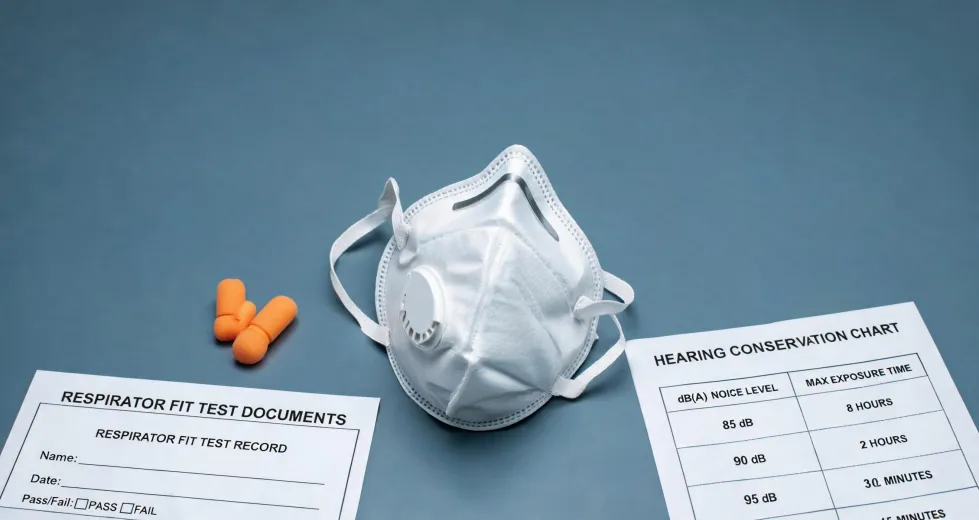
We had to rush-order the Moldex N95 small. The original order wasn't defective. Our pre-check was. We wasted $1,900—no, $2,300 once you add the rush reorder and the overtime to redistribute the masks. That's when I learned that fit testing is not a nice-to-have. Per OSHA 29 CFR 1910.134, employers must provide medical evaluation, fit testing, and training for respirator use. The standard doesn't say buy a box and hope.
Now we sample three sizes before any large N95 order. For narrow faces, the Moldex N95 small is a real line item, not an afterthought. If you're buying a Moldex N95 particulate respirator mask for a mixed crew, order the fit test kit first.
Argument 2: Category confusion is a silent budget killer
Never expected the ugliest compliance finding to come from winter gear. In November 2023, a supervisor bought UGG earmuffs—the kind often searched as uggs earmuffs—for the outdoor crew. They were warm, they looked like hearing protection, and someone on the floor assumed they were. They're not. Those earmuffs are cold-weather accessories. They have no NRR and no industrial hearing-protection rating. We had to pull them from the plant floor and reissue proper earplugs.
Same story with hard hats. A project manager tried to save $6 per hat by buying Type I instead of Type II. The difference matters. Under ANSI/ISEA Z89.1, Type I hard hats protect against top impact. Type II hard hats protect against top and lateral impact. If your risk assessment calls for a type 2 hard hat, a Type I is not a cheaper version of the same thing. It's a different class of protection. We reordered, ate the cost, and added a class check to our PO template.
Category confusion. Put another way: the product looked right, but it wasn't certified for the task. That's how you end up with shelves full of almost-right PPE.
Argument 3: Training is the cheapest PPE accessory you can buy
A new hire once asked me for a demo on how to use loop earplugs. He'd watched a short video and figured it was obvious. It wasn't. Consumer earplugs like Loop usually require following the manufacturer's insertion and twist instructions to get a decent seal. Industrial foam earplugs are different: roll them down, pull the ear up and back, insert, and hold for a few seconds while they expand.
We audited the crew and found about half were inserting foam earplugs halfway. They thought they had protection. They had discomfort and a false sense of security. We started a 10-minute fit clinic every quarter. The best part of that clinic: no more 3am worry sessions about whether the line is actually protected. It's not glamorous, but it's cheaper than a reorder and a near miss.
This is where I hit my professional boundary. I'm not a certified industrial hygienist, so I can't speak to exposure monitoring or noise dosimetry. What I can tell you from a procurement perspective is that if you don't budget 10 minutes for training, you'll budget two weeks for rework.
What about the argument that this slows procurement down?
Yes, it does. A pre-check adds maybe 15 minutes to a PO. But a wrong order adds days. The 12-point checklist I created after my third mistake has saved us an estimated $8,000 in potential rework over 18 months. Not because we're perfect, but because we catch the obvious stuff before it ships.
5 minutes of verification beats 5 days of correction. That's not a slogan. It's what I tell every new buyer who wants to skip the checklist because the vendor page looks clean.
The pre-check list I use now
- Hazard: Is the task particulate, noise, impact, or a mix? Write it on the PO.
- Certification: NIOSH-approved N95? ANSI/ISEA Z89.1 Type II? Adequate NRR? Don't substitute cold-weather gear like UGG earmuffs for hearing protection.
- Size: For respirators, sample standard and small. Moldex N95 small should be available before the bulk order.
- Training: Add a line for fit testing, donning, and doffing. If someone needs to know how to use loop earplugs or foam earplugs, schedule the demo.
- Records: Keep fit test records and training logs. OSHA 1910.134 requires them for respirator programs.
- Recheck: Before the PO goes out, ask one person who didn't build the order to review it.
My position hasn't changed
Prevention over cure. I'd rather spend 15 minutes checking sizes, certifications, and training than spend $2,300 fixing a rush reorder. The most expensive PPE is the PPE that gets rejected at the gate or worn wrong on the floor.
If you're buying Moldex N95 small masks, a Moldex N95 particulate respirator mask, Type II hard hats, or industrial earplugs, don't stop at the spec sheet. Stop at the fit check, the training, and the pre-check list. That's where the savings actually live.

Maeve Callahan
Maeve Callahan is a head-protection analyst covering Type I and Type II hard hats, climbing-style safety helmets, bump caps, chin straps, suspensions, liners, and face-shield carriers. She applies ANSI Z89.1, EN 397, and EN 12492 criteria while comparing impact attenuation, penetration resistance, lateral deformation, electrical class, retention strength, field of vision, mass, fit range, and temperature conditioning. Her guides help EHS teams, contractors, utilities, and buyers select helmet systems for overhead hazards, work at height, electrical exposure, accessory compatibility, and worker acceptance.