Why Your 'Budget' PPE Is Costing You More Than You Think: A Reality Check from 4 Years of Quality Audits
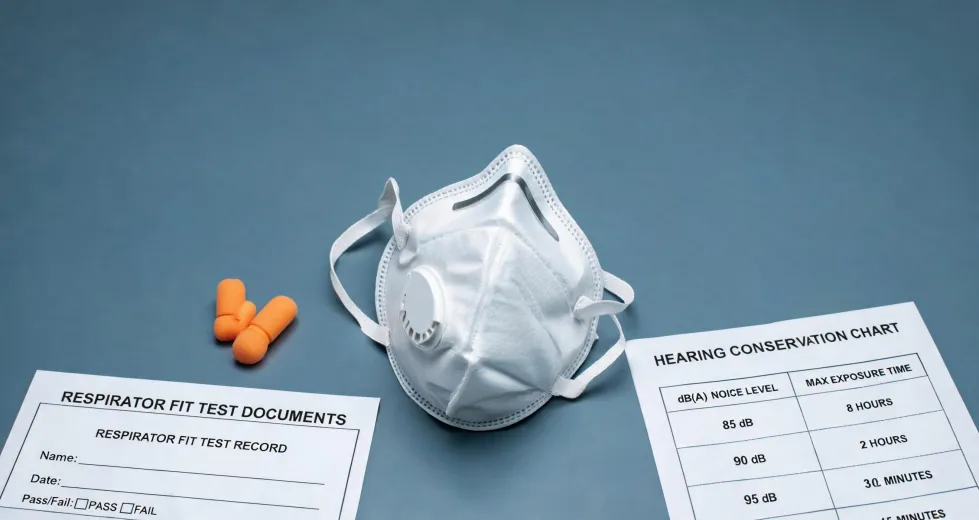
I'm a quality and brand compliance manager at a safety equipment company. I review every shipment of PPE before it reaches customers—roughly 200+ unique items annually. I've rejected about 12% of first deliveries in 2024 due to things like inconsistent foam density in earplugs or off-spec filtration layers in respirators. That's not a brag; it's just the reality of what happens when you're the person who has to say 'no' so the end user doesn't have to.
And here's what I've learned: the lowest quote is almost never the cheapest in the long run. (Should mention: we've been on both sides—buying and selling—so I've seen the math from every angle.)
So What's the Problem? (And Why You Think You Know It)
If you're reading this, you're probably responsible for sourcing PPE for a team, a job site, or a facility. Your inbox is full of sales pitches. Budget is tight. Safety manager wants 'the best.' Procurement wants 'the cheapest.' And you're stuck in the middle trying to find something that won't get anyone hurt and won't get you fired.
Classic problem, right?
But here's what I've seen play out over and over: it's not really a 'find the best price' problem. It's a 'we didn't know what we were really buying' problem. And that's a lot more insidious.
The Pain Point Nobody Talks About
You get three quotes for, say, N95 respirators. Vendor A is $0.85 per unit. Vendor B is $1.10. Vendor C is $0.67.
Which one do you pick?
I want to say most people pick Vendor C, but don't quote me on that—it depends on the organization. But I've seen enough purchase orders to know that price wins more often than it should. (Note to self: write a white paper on this later.)
The Deeper Problem: The Hidden Layers of 'Cheap'
The surprise isn't that budget PPE performs worse. It's that the way it fails is almost never the obvious thing you anticipated. I assumed 'same specifications' meant identical results across vendors. Didn't verify. Turned out each had slightly different interpretations of standards like NIOSH N95 or ANSI Z87.1 for safety glasses.
Here's what I mean. You compare the spec sheets: 95% filtration efficiency, 50-pack, meets regulatory requirements. They look the same on paper. But the actual experience is completely different:
- Fit and comfort: One vendor's mask has a malleable nose bridge that actually conforms. Another uses a cheap metal strip that bends out of shape after 10 minutes.
- Strap tension: Consistent strap tension across a whole box matters. If one mask in a box has a loose strap and the next has a tight one, workers stop trusting it.
- Packaging and storage: The 'budget' vendor might use thinner poly bags that tear, leaving masks exposed to dust before use.
These aren't things you catch from a sample. They show up after 500 units are on the warehouse floor and your foreman is complaining about the third torn bag that week.
The 'Medical' Trap in Hearing Protection
We see this a lot with earplugs. Someone finds a vendor selling foam earplugs at $0.05 per pair, NR listed at 29. Compared to Moldex SparkPlugs at NRR 33, the stat sheet looks close. But the difference between NR 29 and NRR 33 isn't just a number. In a real-world environment with noise spikes, that four-point gap can be the difference between a worker who's protected and one who's one accident away from permanent hearing damage.
And NRR isn't the only factor. The expansion rate, the texture, the comfort over an 8-hour shift—these affect whether workers actually wear them. If they're uncomfortable, they end up in pockets, not ears.
The Price Tag You Don't See on the Invoice
This is where 'value over price' really hits you.
Had two hours to decide before the deadline for rush processing on a safety glasses order last year. Normally I'd run a sample trial across three shifts, but we were behind schedule. Went with our usual vendor based on trust alone because the budget alternative quoted 30% less but gave me a bad feeling.
In hindsight, I should have pushed back on the timeline. But with the plant manager waiting, I made the call with incomplete information.
Even after choosing the usual vendor, I kept second-guessing. What if I'd cost the company an extra $4,000? The 10 days until delivery were stressful—until we got the shipment and it was perfect. No returns. No complaints. Zero reorder admin time.
Here's what that $0.67 N95 vendor would have cost you if everything went wrong:
- Return shipping: $250 for a 50-box return if they even accept it
- Reordering rush: $150 in expedite fees
- Downtime: If workers refuse to wear a bad mask, that job site slowdown costs real money—easily $500+ per hour
- Compliance failure: An OSHA fine for inadequate PPE starts at $15,625 per violation
I ran a blind test with our floor team last year: same style of full-face respirator (Moldex 8000 series vs. a budget competitor). 78% identified the Moldex as 'more comfortable and reliable' without knowing which was which. The cost difference was about $18 per unit. On a 200-unit annual order for a plant, that's $3,600 for measurably better worker compliance—and fewer fit-test failures.
So What Actually Works? (Spoiler: It's Boring)
If you've made it this far, you're probably thinking, 'Okay, so I should just buy the expensive stuff and stop worrying.'
Not exactly.
The real fix is boring. It's process. It's verification. It's having a system that catches these hidden costs before they become line items on your P&L.
What I've found works, after four years of being the person who signs off on every box:
- Don't judge by spec sheets alone. Get a sample and do a blind usability test with three shifts. You'll catch the comfort and consistency issues that statistics miss.
- Build TCO into your evaluation. Total cost of ownership isn't just unit price. It's the admin time to process a return, the morale cost of gear workers hate, the compliance risk of gear that doesn't fit right.
- Have a contract that includes spec requirements. That 2022 rejection I mentioned—we added a clause to every new vendor agreement specifying acceptable tolerances for strap tension, bag seal integrity, and lot-to-lot consistency. Since then, rejections dropped 64%.
Granted, this requires more upfront work. But it saves the kind of time and stress that don't show up on a spreadsheet—at least until they do.
The best part of getting our vendor verification process systematized? No more 3 a.m. worry sessions about whether the next shipment will pass. (Finally!)

Maeve Callahan
Maeve Callahan is a head-protection analyst covering Type I and Type II hard hats, climbing-style safety helmets, bump caps, chin straps, suspensions, liners, and face-shield carriers. She applies ANSI Z89.1, EN 397, and EN 12492 criteria while comparing impact attenuation, penetration resistance, lateral deformation, electrical class, retention strength, field of vision, mass, fit range, and temperature conditioning. Her guides help EHS teams, contractors, utilities, and buyers select helmet systems for overhead hazards, work at height, electrical exposure, accessory compatibility, and worker acceptance.