The $1,400 Mistake That Changed How I Buy PPE
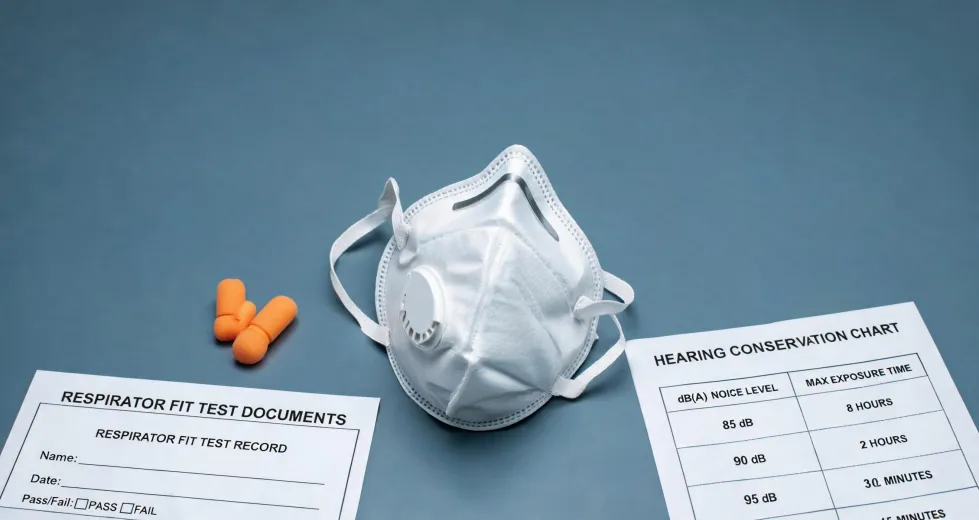
It Started With a Rush Order
Let me set the scene. It's late October 2024. Our operations manager walks up to my desk—I know that look. 'We need fifty more N95 kits for the plant expansion. The original supplier can't deliver until December.'
So I start hunting. I'm checking distributors, online marketplaces, anywhere that can get us Moldex 2200s with P100 filter disks in under two weeks. I find a vendor I haven't used before. Price is decent. They say they can deliver in ten business days. I place the order.
That was my first mistake.
The Surface Looked Right
From the outside, the vendor looked legitimate. They had a website, a catalog, even a toll-free number. The sales rep was responsive. The quote came in under budget. The reality? They couldn't provide a proper invoice. The receipt they sent was handwritten—literally a scan of a paper form. Our accounting team rejected the expense report flat. I ate $1,400 out of the department budget. No—$1,400, maybe $1,600, I'm mixing it up with the shipping charges.
People assume the lowest quote means the vendor is more efficient. What they don't see is which costs are being hidden or deferred. In my case, the hidden cost was my credibility with finance.
The Moment I Knew I'd Screwed Up
Hit 'approve' on that purchase order and immediately thought 'did I just make a mistake?' Didn't relax until the delivery arrived—but then the real problems started. Half the P100 filter disks were loose in a box without individual packaging. The N95 masks were fine—Moldex 2200s are built well—but the paperwork was a mess. No lot numbers. No certification documentation. Our safety officer wouldn't sign off on them. I spent the next week chasing certificates of compliance.
Here's something vendors won't tell you: the first quote is almost never the final price for ongoing relationships. But for a one-time rush order, the quote is the price—and you'd better verify everything before you commit.
Why I Switched to a Proven Line
After that headache, I took a step back. Our regular supplier could consistently deliver Moldex products, but I'd bypassed them for a slightly cheaper quote. The lesson: check the supplier, not just the price.
Moldex's product range is genuinely broad—N95, P100, FFP2, half-masks, even the SparkPlugs earplugs with NRR 33. For a facility like ours with 200+ employees across two shifts, we need consistency. We need to know the filter disks fit the mask frames, that the earplugs have the right decibel rating, and that the safety glasses meet ANSI standards. The moment I stopped assuming and started verifying—checking certifications, asking for sample invoices, calling references—our compliance issues dropped to near zero.
That's the point. I'm not saying Moldex is the only option. I'm saying the process of vetting a supplier is worth more than the discount you might get from skipping it.
The Checklist That Saved Us Thousands
The twelve-point checklist I created after that $1,400 mistake has saved us an estimated $8,000 in potential rework and rejected expenses over the last eighteen months. Here's the core of it:
- Verify invoicing capability — Ask for a sample invoice before ordering. If it's not professional, it's a red flag.
- Request certification docs upfront — For PPE, you need NIOSH approval numbers, lot codes, and traceability. No docs, no order.
- Check shipping terms — Is delivery guaranteed? What happens if it's late? Rush fees are sometimes worth it—but know the cost before you agree.
- Test a small order first — Ten units, not fifty. If the quality is there, scale up.
What I Learned About Moldex (and About Procuring PPE)
When I finally consolidated our PPE ordering around Moldex products, it wasn't because they're perfect. It's because the distributor I now use carries their full line, provides proper documentation, and has never failed an invoice audit. The Moldex P100 filter disks fit their masks without modification. The N95 respirators (models 2200, 2400, 4600) have consistent sizing across lots. That consistency saves me time, and time is what I don't have.
As for the original question about 'can you bring pepper spray on a plane'—that came up during our safety kit assembly for traveling employees. Short answer: it's complicated. The TSA has specific rules, and they change. But that's a different story for a different day.
The Takeaway
The biggest lesson from my $1,400 mistake isn't about Moldex. It's about the assumption that a good price equals a smooth process. Five minutes of verification beats five days of correction. A checklist is the cheapest insurance you can buy. And when you find a supplier who makes the process easy—who provides clean invoices, proper certifications, and consistent products—stick with them.
Once I started buying from a reliable source, I stopped worrying about whether the gear would pass inspection. That peace of mind? It's worth more than the discount I chased that October afternoon.

Maeve Callahan
Maeve Callahan is a head-protection analyst covering Type I and Type II hard hats, climbing-style safety helmets, bump caps, chin straps, suspensions, liners, and face-shield carriers. She applies ANSI Z89.1, EN 397, and EN 12492 criteria while comparing impact attenuation, penetration resistance, lateral deformation, electrical class, retention strength, field of vision, mass, fit range, and temperature conditioning. Her guides help EHS teams, contractors, utilities, and buyers select helmet systems for overhead hazards, work at height, electrical exposure, accessory compatibility, and worker acceptance.