Safariland Gear Buying FAQ: What Nine Years and $7,000 in Mistakes Taught Me
-
Is the Safariland Pro Impulse hearing protection actually worth it?
-
How do I avoid ordering the wrong Taser holster?
-
Are Nike tactical boots actually usable on duty?
-
Who actually invented body armor?
-
Why do quotes for the same gear vary by 40% or more?
-
How do I catch these mistakes before the order ships?
I've been handling equipment purchasing for a mid-size agency for nine years. By my own count, I've made twelve mistakes that were big enough to document, and together they burned through roughly $7,000 in budget. Most of that was duplicate orders, wrong SKUs, and one 47-piece order that had to be redone. Now I keep a one-page checklist to stop myself from doing it again.
These are the questions I get most often, in roughly the order I get them.
- Is the Safariland Pro Impulse hearing protection worth it?
- How do I avoid ordering the wrong Taser holster?
- Are Nike tactical boots usable on duty?
- Who invented body armor?
- Why do quotes for the same item vary so much?
- How do I catch errors before the order ships?
Is the Safariland Pro Impulse hearing protection actually worth it?
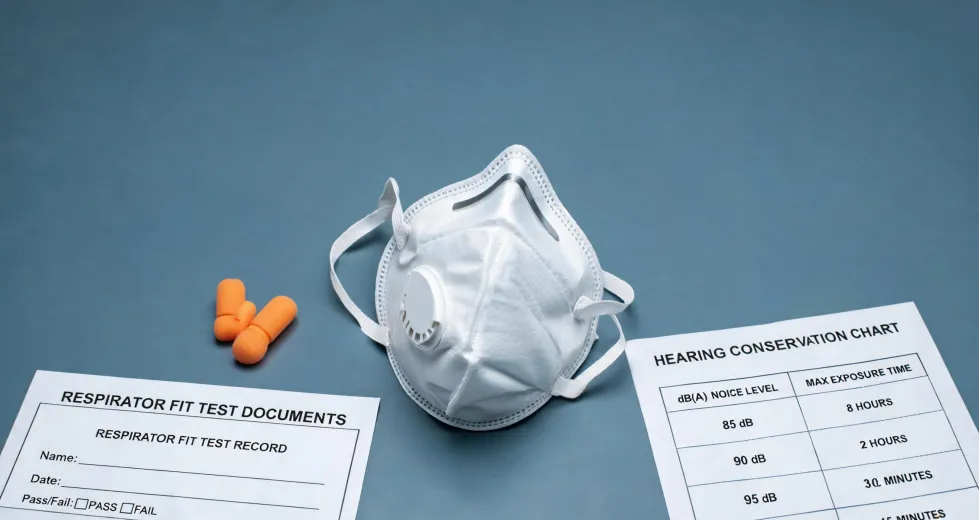
Honestly, we bought our first batch in spring 2019 mostly because I was already ordering holsters from Safariland and consolidating purchasing felt smart. That's a lazy reason, in hindsight. What I found after two range cycles is that the Pro Impulse is a pretty solid option — but the brand matters way less than whether the device actually seals to the person wearing it.
We had 22 people run a live-fire session with them. Four came back saying they were 'basically useless.' Two of those had narrow ear canals and needed the smaller tips. The other two had installed the foam tips wrong, because nobody had shown them how to roll them down first.
When I put our own observations next to the labeled numbers, that's when it clicked for me. The NRR on the packaging is a laboratory figure. OSHA's technical guidance already tells employers to derate it in practice, and my experience matches that — fit quality moves the real number more than the product spec does. If you're buying for a team, budget for a fit kit and ten minutes of instruction, not just the product.
How do I avoid ordering the wrong Taser holster?
This one hurt. In September 2022 I submitted a purchase order for 12 Safariland Taser X26 release tactical holsters. I checked the product page, checked the spec sheet, approved it, processed it. Everything looked right on my screen.
The problem: those holsters were cut for the X26P and the X2, not the original X26 body. Seven of our units were X26. We couldn't return them because I'd added asset engraving as a line item — my decision, nobody else's. About $600 went straight into a storage bin.
What I do now: before any weapon-specific order, I write the model number of the device on a sticky note, tape it to my monitor, and match it character by character against the holster's compatibility field. Tedious, yes. It caught two wrong SKUs in 2023.
One thing worth flagging on retention systems generally: ALS and SLS look interchangeable in product photos. They are not. ALS is a thumb-drive release, SLS is a rotating hood. If you're training people on one and ordering the other, you now have a training problem and a purchasing problem at the same time.
Are Nike tactical boots actually usable on duty?
From the outside, a tactical boot looks like any dark sneaker with a little ankle support. The reality is that the category covers everything from a literal running shoe painted black to a 10-inch leather boot that will outlast your career.
We trialed a couple of Nike models in 2023 for interior posts — checkpoints, lobby assignments, courtrooms. For that, they were pretty good. Light, comfortable twelve hours in, and nobody's feet were destroyed by hour eight.
For patrol, foot pursuits, wet ground, or anything with debris around, they're not the tool. Side stability is noticeably lower than a proper patrol boot, and the uppers don't handle standing water well at all.
The procurement takeaway: stop buying 'tactical boots' as a category. Write your spec around the assignment — ankle height, sole compound, waterproof membrane, polishable finish, CSA or ASTM toe rating if you need one. Then let the brand follow the spec instead of the other way around.
Who actually invented body armor?
People expect a single name. There isn't one.
The modern soft vest traces back to Stephanie Kwolek's work at DuPont — she developed the aramid fiber behind Kevlar in 1965. The wearable ballistic vest as a commercial product came from Richard Davis, who founded Second Chance in the mid-1970s. And the idea is older than the materials: there's a documented 19th-century Korean cotton-and-silk garment designed to stop bullets.
Where does Safariland fit? Neale Perkins started the company in 1964 building holsters, and the company expanded into armor and duty gear over the following decades. But 'who invented body armor' is really a materials and standards question, not a company question.
Why does that matter to a buyer? Because the NIJ standard is the only thing that makes cross-brand comparison honest. Before you accept anyone's claim about protection level, look for the model on the NIJ Compliant Products List. A marketing page is not a test result.
Why do quotes for the same gear vary by 40% or more?
It's tempting to assume the high quote is a ripoff and the low one is the real price. But identical-sounding specs from different vendors can produce very different outcomes.
In Q3 2024 I sent the same carrier spec sheet to four vendors. Quotes came back between $1,340 and $1,960 for what looked like the same unit count. When I lined them up side by side, only two had actually quoted the same spec. One had substituted a lower protection level. Another had quietly dropped the cummerbund upgrade. A third had quoted a lead time as though expedited shipping were already included, and it wasn't.
The 40% spread was mostly specification drift, not pricing.
So I stopped comparing total prices first. I compare line items. If a quote doesn't itemize every specification I asked for, it goes back for revision before I even look at the bottom line (this saves a surprising amount of arguing later).
How do I catch these mistakes before the order ships?
This is the part I actually care about, because I'm the reason the checklist exists.
After the third rejection in Q1 2024 — wrong belt size across a 47-piece order, which is its own separate story — I built a one-page pre-check. It's not sophisticated. Six items:
- Model number of the weapon or device, written by hand, matched character by character against the product compatibility field.
- Size run confirmed with at least two people on the receiving end, not one supervisor.
- Every line item on the quote traced back to a spec line I wrote myself.
- Lead time in writing, with an actual ship date — not '3 to 5 weeks.'
- Return policy and restocking fee confirmed before submission, especially on anything customized or engraved.
- One colleague reads the PO cold, with zero context from me.
We've caught 47 potential errors with this list in the past 18 months. Most were small. A handful would have cost real money. The sixth item catches the most, every single time — because I already know what I meant, and that's exactly the problem.

Pranav Shah
Pranav Shah is a hand and arm protection analyst specializing in cut-resistant gloves, chemical gloves, impact gloves, electrical insulating gloves, disposable nitrile gloves, welding gloves, and protective sleeves. He applies ANSI/ISEA 105, EN 388, EN ISO 374-1, and EN 60903 methods while examining cut level, puncture force, abrasion cycles, permeation breakthrough, impact attenuation, dielectric proof voltage, dexterity, grip, and cuff coverage. His guides help manufacturers, utilities, laboratories, construction teams, and sourcing specialists choose glove systems around the actual hazard, exposure time, tool handling, contamination control, and replacement frequency.