Miller Fall Protection vs. a One-Stop PPE Supplier: What I Compared, and What Changed My Mind
The comparison I actually ran
I'm the office administrator for a 180-person company. I manage all facility and safety supply ordering—roughly $85,000 annually across eleven vendors. I report to operations on the floor and finance on the spreadsheet, which means I hear “why is this so expensive” and “why isn't this here yet” in the same week.
In our 2024 vendor consolidation project, I had to decide whether to keep ordering fall protection through a single authorized distributor (Miller, which is Honeywell's brand for this category) or fold it into the one-stop PPE order that already covered our gloves, eyewear, and shop towels. Two options. Here's the frame I used: product depth, training support, and category boundaries.
I expected the one-stop supplier to win on convenience and the specialist to win on technical specs. That's not quite how it worked out.
Dimension 1 — Product depth: where “everything” gets thin
The one-stop catalog looked impressive. Scroll enough and there are dozens of fall protection items—harnesses, lanyards, anchor points, a few carabiners. But when I filtered for our actual use case (scissor lift work and mezzanine maintenance), I found the same three SKUs in different colors. Choice isn't the same thing as coverage.
The authorized Miller distributor's catalog felt narrower on the surface. Once I was on the phone with someone who knew the difference between a positioning lanyard and a shock-absorbing one, though, the number of actually relevant options was higher, not lower. The parts were compatible with our existing anchorage, the sizing chart matched our crew, and the certifications were current.
This matters more than it sounds. OSHA's personal fall protection systems standard (29 CFR 1910.140) cares a lot about whether components are designed and tested to work together. A harness from one brand matched to a lanyard from another isn't automatically non-compliant—but proving compatibility is on you, not on the catalog.
The conclusion here surprised me: the “everything” supplier had more listings and fewer solutions. For a category where a mismatch is a safety event and not just a return, I'll take the narrower catalog with a knowledgeable person on the phone.
Dimension 2 — Training is where the gap gets uncomfortable
This was the part I underestimated. Both quotes included fall protection training, but they meant very different things.
The one-stop supplier offered “free safety training” as part of the annual agreement—generic, delivered by a generalist safety rep, with a certificate I could file. The Miller distributor quoted training as a separate line item, and my first reaction was that they were charging for something I'd been getting “for free.”
Then I looked at the actual content. The Honeywell Miller fall protection training covered inspection procedures specific to the equipment we'd bought, suspension trauma rescue basics, and a written record format our EHS consultant said would hold up in an audit. The “free” version? It was a slideshow and a sign-in sheet. It would have been fine until it wasn't.
I only believed this after skipping a step once and paying for it, by the way. In late 2023, I assumed a supplier's onboarding session covered harness inspection. It didn't. Two new hires were issued harnesses that should have been flagged for a frayed stitching issue that our own floor lead eventually caught. Nobody got hurt. But I had to explain to operations why the equipment had been in service when it shouldn't have been, and I spent roughly $1,400 replacing harnesses our own inspection protocol should have removed months earlier.
That's the difference between training as a checkbox and training as a service. One is cheap because it doesn't do much. The other is priced because someone is accountable for the content.
Dimension 3 — The categories nobody should sell you
Here's where I had to make a decision I didn't anticipate: the one-stop supplier offered to absorb almost every safety-adjacent line item in our budget. That sounds efficient. It also meant asking them to source things that had nothing to do with fall protection, and the answers got shaky fast.
Three examples from my own inquiry log:
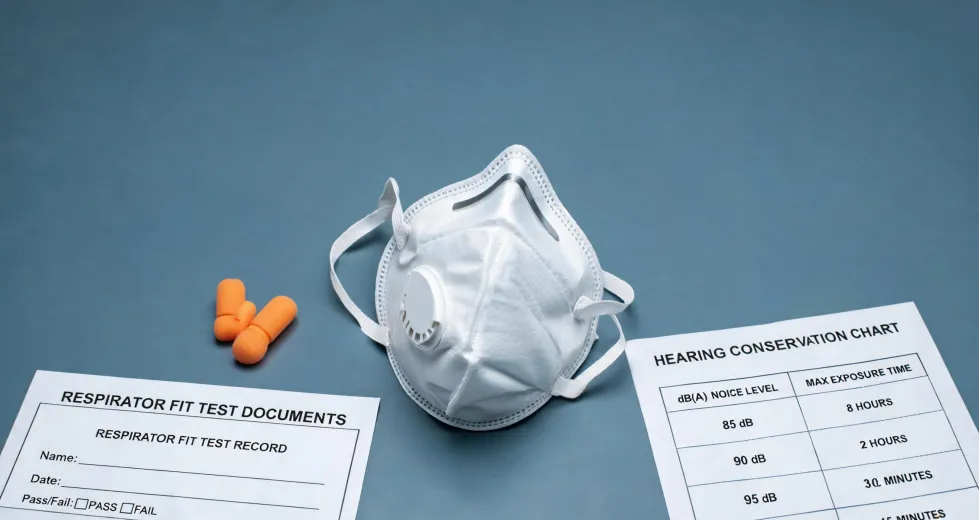
An employee asked me, in writing, “What should you consider when choosing the type of hearing protection you use?” Fair question, and one I now ask suppliers too. The real considerations are noise reduction rating versus actual exposure (OSHA's 1910.95 standard has a lot to say here), whether the protection is compatible with the safety helmet and eyewear already in use, and whether the wearer will actually keep it on for a full shift. The one-stop rep quoted an NRR number and moved on. The fall protection specialist said, honestly, “that's not our strongest category—here's who we'd call.”
A maintenance lead asked whether we could add coveralls for men to the same order. Easy line item. But fit and fabric matter when a coverall is worn under a harness—snug shoulders, a collar that doesn't bunch, zippers that don't interfere with lanyard attachment. The one-stop answer was a size chart. The specialist answer was a measurement check and a note that a coverall that's too loose under a harness is worse than no coverall at all.
And a colleague asked about the difference between bear spray and pepper spray, wondering if we could stock either for the field crews. That one stopped me cold. Bear spray is registered with the EPA as a pesticide, with restrictions on formulation and labeling; defensive pepper spray is regulated differently, and there are state-level rules about shipping and carry. Listing both under one SKU isn't a convenience question—it's a compliance question. The one-stop supplier's answer was essentially “we can list it.” The specialist said, “we don't touch it, and you should be careful about who does.”
That was the turn for me. The vendor who said “not our strength” earned trust on everything else. A supplier that claims to handle fall protection, hearing protection, apparel, and personal defense products on one invoice is usually selling logistics, not expertise—and I don't need logistics advice on a category where a mistake ends up in someone's incident file.
Where the one-stop supplier actually wins
It's not a clean sweep. For consumables—gloves, safety glasses, shop towels, first aid restock—the one-stop supplier was cheaper, faster, and easier to reconcile. One invoice, one portal, one delivery day. When I consolidated 60–80 orders a year into that system, our accounts payable team stopped chasing piles of four-digit purchases.
If your fall protection volume is small—a ten-person office that inspects a rooftop twice a year, say—you can reasonably keep it in the general PPE order. The specialist premium doesn't pay for itself at that scale. It's a volume-and-risk calculation, not a principle.
What I'd do differently in 2025
I keep fall protection with the authorized distributor and training as a separate budget line, because the two work better when I'm buying them from someone who knows what happens if they're wrong. I keep consumables with the one-stop supplier, because they're good at it and I'm not paying for expertise I don't need.
Three things I'd check before any future consolidation: whether the training is category-specific or generic, whether the supplier will tell you what they don't do, and whether the invoice has a line item for the thing you're most afraid of getting wrong.
This reflects our situation as of early 2025. Pricing, standards, and even EPA guidance can change, so verify current rates and requirements before you sign. And if a supplier says they can do everything, ask them what they say no to. The answer tells you more than the catalog.

Katja Nieminen
Katja Nieminen is a safety-footwear analyst covering steel-toe and composite-toe boots, metatarsal footwear, electrical-hazard shoes, puncture-resistant soles, slip-resistant work shoes, and chemical-resistant boots. She references ASTM F2413 and EN ISO 20345 while comparing toe impact and compression, metatarsal protection, outsole puncture force, electrical resistance, slip coefficient, water penetration, sole adhesion, fit, and footwear mass. Her evaluations help EHS managers, contractors, plant operators, and procurement teams align footwear with falling-object, underfoot, electrical, chemical, wet-floor, climate, and all-shift comfort requirements.