Most Safety Glasses Fail Before They Ever Reach Your Workers
Every safety manager I talk to has the same story. They bought safety glasses. The crew won't wear them. Or they push them up on their hard hat and pull them down when the supervisor walks by.
The default explanation is the workforce. "They think they're invincible." "They say the lenses fog up." "They leave them in the truck."
I used to believe that too. I've worked as a quality compliance manager at a safety equipment distributor for over four years, and I review every eyewear shipment before it reaches our customers—roughly 60 vendor batches a month. In 2024, we rejected 11% of first deliveries. Not because the lenses scratched easily (that happens, but it's fixable). Not because the temple arms snapped under normal pressure (though I've seen plenty of that). We rejected most of them because the frame geometry didn't match what the purchase order specified—and nobody caught it until the boxes were already on our loading dock.
That rejection rate is not a worker problem. It's a procurement problem. And it's more common than anyone in this industry wants to admit.
The Problem Isn't the Worker. It's the Purchase Order.
When I first started reviewing eyewear deliveries, I assumed the biggest issue was lens quality. Anti-fog coatings fail, polarized films delaminate, UV protection varies. Three years and roughly 2,000 inspected batches later, I can tell you the real culprit is fit—or more precisely, the absence of any systematic attempt to verify it.
Here's what actually happens inside most companies. A procurement manager gets a request for 500 pairs of safety glasses. They open a browser, compare three quotes, pick the cheapest option that says "ANSI Z87.1 compliant" in the description, and place the order. Nobody asks the workers which frames they actually find wearable. Nobody tests the fit across different face shapes. Nobody checks whether the nose bridge sits correctly on a worker who wears prescription glasses underneath.
The glasses arrive. They're compliant on paper. And they sit in a locker because the temples dig into the side of a worker's head after two hours.
I made this mistake myself early on. When we switched suppliers in 2022, I approved a batch of safety glasses based on the spec sheet alone—ANSI Z87.1-2020 rating, polycarbonate lenses, anti-fog coating. Standard stuff. What the spec sheet didn't tell me was that the frame was sized for a narrow face profile. About a third of our warehouse crew couldn't wear them comfortably. We ended up eating the cost of two hundred pairs that never left the building.
The spec sheet says a product is compliant. It doesn't say it's wearable. Those are two very different things, and too many procurement teams conflate them.
What It Actually Costs When Eyewear Fails
OSHA estimates that eye injuries cost U.S. employers roughly $300 million annually in lost production time, medical expenses, and workers' compensation (Source: OSHA Eye and Face Protection eTool). That's the big number. Here's a smaller one that stings more: in Q1 2024, we shipped 1,400 pairs of anti-fog safety glasses to a construction client without running our usual 48-hour fog test. The coating passed the factory's internal check. Four days into the job, the client sent back the entire shipment—the lenses fogged up within twenty minutes in humid conditions, and their crew had stopped wearing them altogether. We replaced the order at our cost, roughly $18,000 in product and freight, and delayed three other customer deliveries by a week.
The math on that decision was simple. Saving a dollar per pair on the cheaper anti-fog coating cost us $16 per pair in replacement and lost goodwill. I keep that number on a sticky note above my desk.
But the real cost isn't the replacement order. It's what happens on the job site when workers stop trusting the safety equipment. Once a crew decides the glasses are garbage, they don't just stop wearing that model—they get skeptical about the next pair you hand them. Rebuilding that trust takes months. Sometimes it never comes back fully.
The upside of fixing this is straightforward. Better-fitting eyewear gets worn. Worn eyewear prevents injuries. Preventing injuries keeps your worker's comp premiums down. The risk is that better eyewear costs more per unit—maybe $8 instead of $5. On a 500-pair order, that's $1,500 in extra spend. I've had procurement managers push back on that difference like it's coming out of their own salary. But then the same company spends $18,000 on a replacement order and a week of delayed shipments because the cheap glasses didn't work. The expected value math doesn't favor cheap eyewear. It just feels like it does when you're looking at the invoice.
What Good Eyewear Procurement Actually Looks Like
I'm not going to pretend there's one perfect pair of safety glasses. There isn't. A frame that fits a 6'2" maintenance tech with a wide face won't work on a 5'4" lab technician with a narrow bridge. That's not a defect—that's just reality. If a vendor tells you their eyewear fits everyone comfortably, they're either lying or they haven't tested it with actual workers.
What works—at least based on our own vendor audits and the clients we've helped fix their programs—is a three-step process:
- Test on actual faces before you buy. Order sample pairs from two or three vendors. Hand them to six workers with different face shapes. Ask them to wear the glasses for a full shift. Not ten minutes. A full shift. You'll learn more from that one day than from any spec sheet.
- Buy more than one model. On a crew of 40, you'll probably need two or three frame styles to cover most people comfortably. This isn't a failure of standardization—it's basic ergonomics.
- Document what you tested and why. When a worker complains about fit six months later, you want a record of what you tried, what worked, and what didn't. That record is your defense when someone asks why you didn't just buy the cheapest option.
For brands that put actual thought into fit, I've seen decent results from Edge Eyewear's Reclus line—the adjustable nose piece and rubber temple tips actually hold up under heat and sweat, which matters in warehouse environments. Their Dakura model has a slightly wider frame profile that works well for workers who need prescription glasses underneath. Neither is a universal solution. The Reclus tends to run narrow; the Dakura's wrap angle isn't for everyone. But that's exactly the point: you need options, not a single compromise.
And this isn't just an eyewear conversation. If you're buying protective equipment for a job site, the same logic applies across categories. You wouldn't order a no-dig fence panel just because it has the lowest unit price—you'd check whether it actually matches your site's perimeter requirements, installation method, and material spec. Hearing protection works the same way. Workers who need earplugs alongside their safety glasses often resist traditional foam plugs because they're uncomfortable and hard to insert correctly. That's why brands like Loop earplugs have gained traction in industrial settings—they're reusable, easier to seat properly, and workers actually keep them in. The principle is consistent: fit and comfort aren't luxuries. They're the difference between protection that works and protection that sits in a locker.
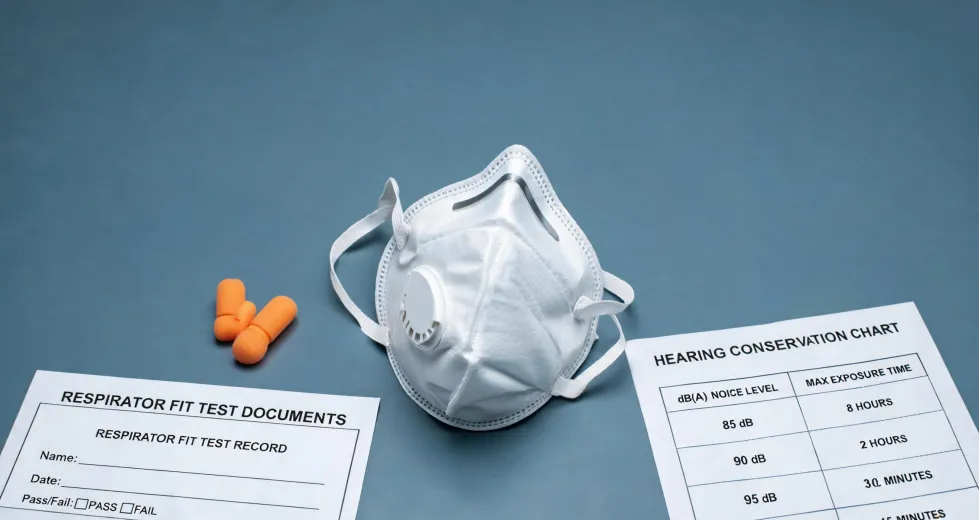
It's also worth remembering that eye protection doesn't exist in a vacuum. Before anyone on your crew uses a respirator, OSHA requires a medical evaluation, fit testing, and training under 29 CFR 1910.134. That's a good standard, and it's one that eyewear programs rarely meet. Nobody fit-tests safety glasses. Maybe they should.
I'll be honest about the limits of this approach: it takes time, and it costs more upfront. If you're ordering eyewear for a one-day job with a crew of three, the full testing protocol is probably overkill—just buy a few pairs from a local supplier and eyeball the fit. But if you're outfitting a 200-person site for a twelve-month project, the upfront cost of testing three models instead of buying the cheapest one on the quote is negligible compared to the cost of a rejected order or an eye injury.
The glasses aren't the problem. The way we buy them is. Fix the purchase order, and most of those "worker compliance" issues disappear on their own.
Prices and rejection rates referenced in this article reflect our internal figures as of January 2025. Verify current pricing and compliance standards with your supplier.

Maeve Callahan
Maeve Callahan is a head-protection analyst covering Type I and Type II hard hats, climbing-style safety helmets, bump caps, chin straps, suspensions, liners, and face-shield carriers. She applies ANSI Z89.1, EN 397, and EN 12492 criteria while comparing impact attenuation, penetration resistance, lateral deformation, electrical class, retention strength, field of vision, mass, fit range, and temperature conditioning. Her guides help EHS teams, contractors, utilities, and buyers select helmet systems for overhead hazards, work at height, electrical exposure, accessory compatibility, and worker acceptance.