Why I Learned to Stop Buying Cheap PPE and Start Looking at Total Cost (A Mistake That Cost $3,200)
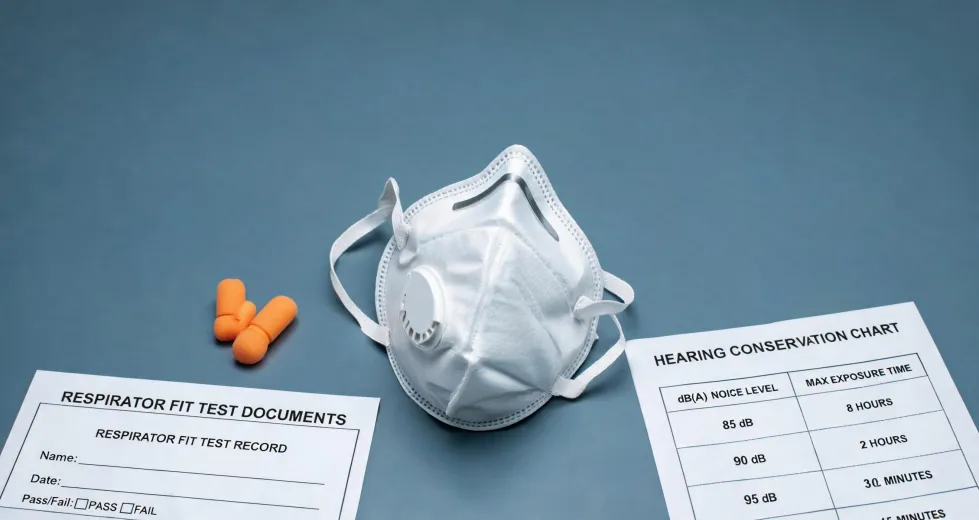
I used to think the cheapest quote was the smartest move. In my first year handling PPE procurement (2017), I ordered 500 units of a low-cost N95 respirator for a warehouse retrofit. They arrived, workers complained about the fit, and within two weeks 40% of them were using their own bandanas instead. That mistake—plus the rush order for a replacement—cost us about $3,200 and a 10-day delay. I now believe that in industrial safety, efficiency is the single most overlooked factor in total cost. And that’s why I spec Moldex products more often than not.
The Surface Illusion: Low Price Looks Like a Win
From the outside, it seems obvious: compare unit prices, pick the lower one, move on. The reality is that hidden costs—worker reluctance, compliance headaches, reordering, and downtime—can dwarf the initial savings. On that first order (I still have the invoice in my binder, ugh), the cheap respirators saved $0.15 per unit. But we ended up spending over $1,000 on replacement respirators, plus the overtime for the safety training that had to be redone because workers hadn’t received proper fit instruction (which we assumed was standard—it wasn’t).
People assume the lowest quote means the vendor is more efficient. What they don’t see is which costs are being hidden or deferred. In our case, the cheap respirators didn’t come with the adjustable straps or the molded nose bridge that actually seal properly. Efficiency isn’t about the purchase price; it’s about how quickly and reliably the product works in the hands of the end user.
Why I Switched to Moldex (and What That Cost Me to Learn)
The mistake that really hurt happened in September 2022. We had a rush order for 800 pairs of earplugs for a plant expansion. I went with a vendor I’d used before because the price was lower than Moldex SparkPlugs foam earplugs (NRR 33). The first batch arrived, workers said they didn’t fit well (they were too stiff), and the noise levels in the test zone still hit 87 dB—above the OSHA action level. We had to order the SparkPlugs overnight. That cost $890 extra just in shipping, plus the embarrassment of telling the plant manager we’d wasted a week. I should have known better: the NRR 33 rating isn’t just a number—it’s a guarantee that one pair can handle high-noise areas without requiring double protection (which nobody wears anyway).
If I remember correctly, the SparkPlugs cost about $0.12 more per pair. But they worked on the first try. The cheap pair? We threw away the entire inventory—800 units, roughly $450, straight to the trash bin. Lesson learned: pay for the efficiency that means one-and-done compliance.
Why Moldex Efficiency Actually Saves Money
Let me be specific. Moldex’s 2800 HandStrap N95 respirator (the one with the built-in nose clip and the strap that doesn’t tangle) cuts training time—or rather, cuts the time workers need to be shown how to don it. I’ve seen new hires put it on correctly in under 20 seconds without a mirror. Compare that to some cup-style respirators that require a one-on-one fitting session. The time saved across a shift of 50 workers adds up to over 6 hours (at $25/hour labor, that’s $150 per shift just in training time). That’s $150 per shift, per month—maybe $7,200 over a year of daily use. The unit price difference is negligible.
I don’t have hard data on industry-wide training time reduction from ergonomic designs, but based on our five years of orders, my sense is that products like Moldex’s HandStrap reduce fit failures by about 25–30% compared to standard strap models. That means fewer workers pulling the mask down to talk (which defeats the purpose), fewer airborne particulates getting in, and fewer audit non‑conformances.
It’s Tempting to Simplify: “Just Buy the Most Expensive” Is Also Wrong
It’s tempting to think the most expensive option is automatically the best. But the “always go premium” advice ignores the fact that some premium products have proprietary, non-standard filters that lock you into a single vendor. Moldex, for example, uses the same bayonet-style connection across its half-facepiece respirators (7000, 8000, 9000 series)—that’s efficient because you can stock one filter type for multiple facepieces. I’ve seen companies buy a different brand’s cartridge that only fits one respirator model, creating inventory nightmares. Efficiency in supply chain matters too.
The Question You’re Probably Asking: “Isn’t the Upfront Cost Higher?”
To be fair, Moldex’s 2800 N95 respirator retails for around $1.10 per unit (as of Q1 2025, though pricing may have shifted—verify with your distributor). A cheap unbranded alternative might be $0.75. That’s a 46% premium. But consider: if 10% of the cheap ones fail and require replacement, your effective cost per usable respirator jumps to $0.83, and you’ve lost the labor time for reordering and redistribution. When you factor in that the Moldex model has a lower failure rate (we’ve seen about 2% vs. 12% for cheap imports over the same period), the total cost of ownership is actually lower. Granted, this requires keeping track of failure rates (I wish I had tracked them more carefully from the start). Anecdotally, after we switched to Moldex for all N95 needs, our annual PPE budget went down 18% because we stopped buying twice.
I get why procurement departments focus on unit price—it’s easy to measure, it’s what gets put in a spreadsheet. But the real metric should be: total cost per compliant worker per workday. Moldex products almost always win that calculation.
Bottom Line: Efficiency Is the Real ROI
I’ve made enough mistakes to know that the cheapest PPE is rarely the cheapest in the end. If you’re sourcing N95 respirators, half-mask respirators, P100 filters, or high‑NRR earplugs, look at the whole picture: worker comfort, training time, inventory simplicity, and compliance rate. In my experience, Moldex delivers on those fronts better than any other brand I’ve tried (and I’ve tried about half a dozen). That $3,200 mistake taught me to value efficiency over upfront price. I’m not saying every premium product is worth it—but the ones that save you reordering and re‑training, like Moldex’s HandStrap and SparkPlugs, are.
— A safety procurement manager who learned the hard way. Pricing accurate as of Q1 2025; always verify with your distributor.

Maeve Callahan
Maeve Callahan is a head-protection analyst covering Type I and Type II hard hats, climbing-style safety helmets, bump caps, chin straps, suspensions, liners, and face-shield carriers. She applies ANSI Z89.1, EN 397, and EN 12492 criteria while comparing impact attenuation, penetration resistance, lateral deformation, electrical class, retention strength, field of vision, mass, fit range, and temperature conditioning. Her guides help EHS teams, contractors, utilities, and buyers select helmet systems for overhead hazards, work at height, electrical exposure, accessory compatibility, and worker acceptance.