The Hidden Cost of Cutting Corners on PPE: A Procurement View
-
When "Good Enough" PPE Costs You More
-
The Surface Problem: Is PPE Even a Real Cost Driver?
-
The Deep Reason: You're Not Paying for the Mask, You're Paying for the Fit and Compliance
-
The Real Cost of "Cheap": A Practical Framework
-
The Cost Controller's Recommendation: Pick the Stepping Stone, Not the Cliff
When "Good Enough" PPE Costs You More
I get it. You're looking at PPE for your crew, and the budget is tight. You see a box of earplugs for $15 and another for $30. Both say they reduce noise. The cheaper option seems like a no-brainer, right?
I used to think that way too. About six years ago, when I first started managing procurement for a mid-sized manufacturing shop (about 80 people), I was under pressure to cut costs everywhere. PPE was an easy target. I bought the cheapest N95s I could find and the lowest-cost foam earplugs. We saved maybe $200 a quarter. I thought I was doing a good job.
Then I audited our spending that year and found something that completely changed my approach. The "savings" from cheap PPE were being eaten—and then some—by hidden costs I hadn't considered. It took me about 18 months and a deep dive into our injury reports to connect the dots.
So, bottom line: That cheap N95? That bargain-bin earplug? They might be costing you way more than you think. Here's what I learned the hard way.
The Surface Problem: Is PPE Even a Real Cost Driver?
Let's start with the question most people ask: Can I really save significant money on safety gear? The short answer is yes, but not the way you might think.
If you're a small business owner or a safety manager for a 50-person crew, your annual PPE budget might be a few thousand dollars. The difference between a cheap N95 (say, $0.50 each) and a better one (like the Moldex 1510 at $1.50 each) for a crew of 20 workers over a year might be a few hundred bucks. For a procurement manager, that's pocket change (ugh).
The real driver isn't the unit price of the mask. It's everything else that happens when the mask doesn't work well.
The Deep Reason: You're Not Paying for the Mask, You're Paying for the Fit and Compliance
Here's the insight that took me 150+ orders to really understand: The cost of PPE is inversely proportional to its compliance rate.
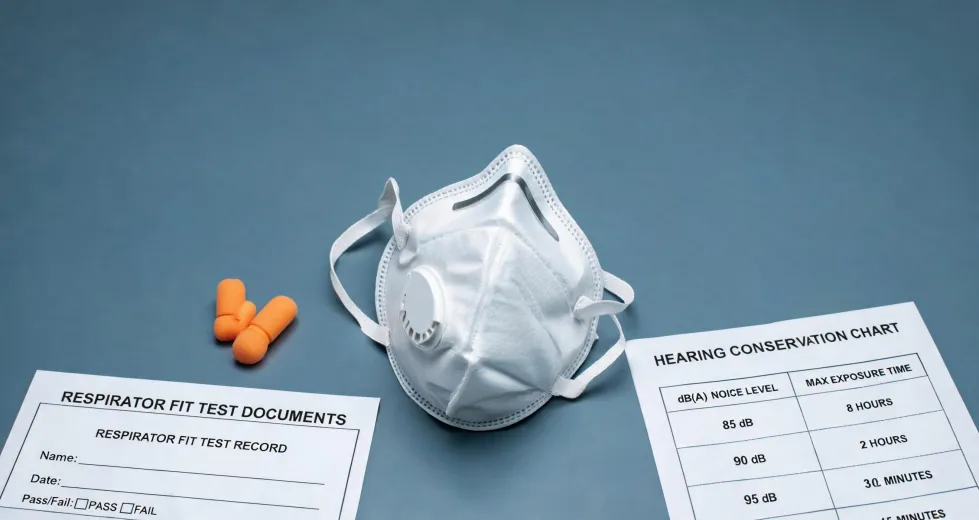
A cheap N95 that fits poorly? Workers take it off. They wear it under their chin. They leave it in their locker. It becomes a non-functional cost center. You bought the equipment, but you got zero protection because it wasn't worn properly. That's waste.
I had a crew member tell me once, "Your new masks, they're fine for a walk-through. But I can't breathe in them for 8 hours. I pull them down after lunch." He wasn't being lazy—he was uncomfortable. The mask design was the problem.
Similarly, cheap foam earplugs that don't expand evenly or compress too much in the ear canal often get discarded. Workers fidget with them, remove them to talk, and forget to put them back in. The NRR rating printed on the box doesn't matter if the plug isn't in the ear.
This is where the Moldex SparkPlugs soft foam earplugs come in. Their tapered shape and slow-expanding foam make them easier to insert and more comfortable for extended wear. A worker is way more likely to keep them in. I've seen compliance rates jump from maybe 60% to 85% just by switching the earplug model. That's a huge difference in noise exposure reduction.
(My experience is based on about 200 orders across different brands and materials. If you're dealing with a completely different workforce, your results might vary, of course.)
The Real Cost of "Cheap": A Practical Framework
Let me break down what I now calculate when evaluating PPE costs. It's not just the unit price.
1. The Cost of Non-Compliance:
- If 30% of your workers aren't wearing their earplugs correctly, you've effectively thrown away 30% of your hearing protection budget.
- A single noise-induced hearing loss claim can cost tens of thousands of dollars in compensation, medical bills, and lost productivity. Suddenly, that $15 vs. $30 earplug savings is laughable.
2. The Cost of Re-ordering and Waste:
- Cheap N95s that tear or lose their shape after one use? Workers will grab two or three a day. Now your $0.50 mask costs $1.50 per person per day.
- Earplugs that are uncomfortable get tossed and replaced constantly. I've seen boxes of 200 pairs disappear in two weeks because people just threw them away after a few minutes.
3. The Cost of Fit Testing and Training Time:
- A mask that's hard to fit means more time spent on fit testing. A respirator that has a simple, intuitive design (like the Moldex 1510 with its pre-formed nose foam and single-strap design) reduces the training burden.
- Time is money (unfortunately). If you spend an extra two hours per month per shift on PPE training because the gear is fiddly, that's a real line item.
I built a simple cost calculator in a spreadsheet after getting burned twice on this. For a typical quarter, I found that the cheapest option often resulted in a total cost that was 25-40% higher than the mid-range option when you factored in waste and compliance. Seriously.
The Cost Controller's Recommendation: Pick the Stepping Stone, Not the Cliff
So, what's the solution? Do you need to buy the most expensive PPE on the market? Probably not. But you need to avoid the cheapest cliff.
For a small business or a first-time buyer, my advice is this: Don't optimize for unit price. Optimize for compliance rate.
Here's what that looks like in practice:
For N95 Masks (like the Moldex 1510):
- Prioritize comfort and fit over the absolute lowest price.
- Look for features like pre-formed foam nose bridges and braided straps (which reduce stress on the ears).
- The Moldex 1510 is a great example of a mid-tier mask that offers excellent breathability (Dura-Mesh shell resists collapsing in heat/humidity) and a very good fit for medium-to-large faces. It's super comfortable for all-day wear.
For Earplugs (like the Moldex SparkPlugs):
- Get a sample box if possible. Let your crew try them for three days.
- Look for a tapered, smooth design that fits well without excessive pressure.
- The SparkPlugs have a high NRR 33 rating, but more importantly, they're designed to be easily rolled down to a thin plug that expands slowly. This makes insertion easier and reduces the urge to push them in too far (a common mistake).
My personal rule of thumb: When I compare PPE, I calculate the cost per piece AND I ask myself: "Will my crew actually use this for the next 8 hours?" If the answer is no, the cost doesn't matter. It's a waste.
I know it's tempting to go for the lowest quote, especially when you're starting out. When I was first managing a small budget, the vendors who treated my $200 sample orders seriously are the ones I still buy from for $20,000 orders. Small doesn't mean unimportant—it means potential. A vendor who invests in making a comfortable, reliable product for a small price is a vendor worth talking to.
So, next time you're comparing prices on N95s or earplugs, stop thinking about the unit cost. Think about the total cost of having a crew that's wearing them. That's where the real savings—and the real safety—live.

Maeve Callahan
Maeve Callahan is a head-protection analyst covering Type I and Type II hard hats, climbing-style safety helmets, bump caps, chin straps, suspensions, liners, and face-shield carriers. She applies ANSI Z89.1, EN 397, and EN 12492 criteria while comparing impact attenuation, penetration resistance, lateral deformation, electrical class, retention strength, field of vision, mass, fit range, and temperature conditioning. Her guides help EHS teams, contractors, utilities, and buyers select helmet systems for overhead hazards, work at height, electrical exposure, accessory compatibility, and worker acceptance.