Which PPE Can Protect You From Liquid Chemicals? A Scenario-Based Guide (Moldex 4600 N95)
-
Start With the Exposure Type, Not the Product
-
Scenario A: Liquid Splash, Low Volatility
-
Scenario B: Dust, Fibers, and Dry Airborne Particles
-
Scenario C: Vapors, Gases, and Volatile Organic Compounds
-
Scenario D: Mixed Hazards (Liquid + Vapor + Particulate)
-
How to Tell Which Scenario You're Actually In
-
What This Means for Your PPE Purchasing
-
Don't Forget the Rest of Your Body
-
The Bottom Line
The most common question I get from safety managers is straightforward: "Which PPE can protect you from liquid chemicals?" The short answer: it depends. Anyone who gives you a one-line answer hasn't done the job.
I'm a quality compliance manager at a PPE distribution company. I review every respirator, filter, and safety product before it reaches customers—roughly 300 unique items a year. Actually, closer to 350 when you count samples and not just orders. In 2024, I rejected 4% of first deliveries due to missing documentation or failed spot checks. When I implemented a stricter verification protocol in 2022, our product return rate dropped by nearly a third. This guide is based on that experience: not theory, but what actually holds up in the field.
Start With the Exposure Type, Not the Product
"Chemicals" covers everything from windshield washer fluid to industrial solvents. Splashing coolant on your arm is different from breathing toluene vapors for eight hours. Different hazards, different protection. Before you reach for a respirator, glove, or faceshield, answer three questions:
- Is the chemical primarily a liquid hazard, a vapor hazard, or both?
- Is there a mist, spray, or dust in the air?
- How long is the exposure, and at what concentration?
That's it. Those three answers decide which protection you actually need. Let's walk through the scenarios.
Scenario A: Liquid Splash, Low Volatility
If your team is handling mild acids, cleaning agents, or coolants that aren't vaporizing heavily, the priority is skin and eye protection:
- Chemical-resistant safety glasses or a face shield with ANSI/ISEA Z87.1 rating.
- Nitrile or neoprene gloves—check the specific chemical compatibility chart, don't just trust the brand name.
- A chemical apron or full suit depending on splash potential.
If the task creates a spray or mist—like pressure washing a part or mixing chemicals—throw in a particulate respirator. For oily mists, a P100 filter is a better fit than N95, because N95 does not resist oil. The Moldex 4600 N95 is a great mask, but it's designed for dry particulates. Match the filter to the aerosol, not the other way around.
Scenario B: Dust, Fibers, and Dry Airborne Particles
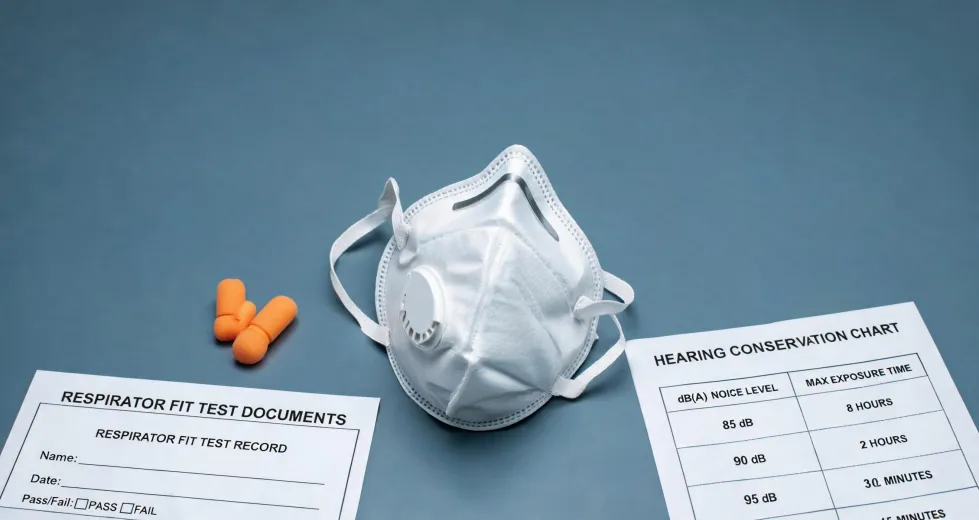
If you're searching for a dust mask moldex carries several options, and the one I specify most often is the Moldex 4600 N95. It has a molded nose bridge, a foam nose seal, and an exhale valve that keeps heat from building up inside. It's NIOSH-approved under 42 CFR Part 84, meaning it filters at least 95% of non-oil particulates.
But here's what I see daily: people grab a N95 without a fit test. NIOSH certification applies to the filter, not to your face. If the mask leaks along the nose or chin, effective protection drops to near zero. A fit test isn't a luxury—it's the difference between a respirator and a piece of cloth. (Should mention: fit testing is a separate cost item that many quotes conveniently omit.)
So glad I caught that batch of respirators with misprinted straps back in January. I almost signed off on it because the filter media was fine. The straps were the problem. Small details like that can make or break a program.
Scenario C: Vapors, Gases, and Volatile Organic Compounds
A N95 stops particles. It does not stop vapors. If you're painting, using solvents, or working around acid fumes, the chemical goes right through the mechanical filter and into your lungs.
For this scenario, you need a half-mask or full-face respirator with the correct chemical cartridge. Organic vapors require an organic vapor cartridge. Acid gases require an acid gas cartridge. And you cannot swap them freely—an organic vapor cartridge won't stop ammonia, for example.
A widespread misconception is that P100 filters block gases. They don't. P100 is still a particle filter; it just handles oil-based particles too. Filtering gases requires adsorption media, not mechanical filtration. To be fair, the confusion is understandable—many cartridges combine both, but the labels matter. The "higher number = better" logic fails when you change the type of hazard entirely.
Take a painter spraying polyurethane. The mist is a particulate, so an N95 catches that. But the solvent vapors from polyurethane pass through an N95 like it isn't there. The SDS calls for an organic vapor cartridge with a particulate pre-filter, yet many painters only reach for a dust mask until someone gets dizzy.
Scenario D: Mixed Hazards (Liquid + Vapor + Particulate)
Most real industrial jobs fall into this bucket. Degreasing a metal part with solvent while rinsing it with water creates both airborne mist and vapor. Welding nearby adds metal fumes, which are solid particles small enough to reach deep into the lungs.
For mixed exposures, a combination cartridge—particulate filter plus organic vapor/acid gas layers—is the minimum. For confined spaces or high concentrations, move up to a supplied-air respirator or SCBA. I've seen budgets strain when a contractor insists a half-mask is enough for tank entry. In 2023, I reviewed such a plan and rejected it. The company redid the entry with a supplied-air system. The added cost was significant—around $12,000 more, maybe $12,500. But the alternative wasn't acceptable.
How to Tell Which Scenario You're Actually In
Don't guess. Follow this sequence:
- Read the Safety Data Sheet (SDS) for each chemical. Look at vapor pressure, evaporation rate, and the OSHA exposure limit. That tells you whether vapor is a real risk.
- Do a simple exposure assessment. Is the chemical heated? Is the space ventilated? Is the task generating mist or spray?
- Have an industrial hygienist or a qualified safety professional review the process. This is standard practice under OSHA 29 CFR 1910.134, not overkill.
A practical rule: if you can smell it, there's vapor, and a particulate filter is doing nothing for that vapor. But don't rely on smell—many hazardous vapors are odorless at dangerous concentrations.
What This Means for Your PPE Purchasing
Now the part that connects back to quality and trust. When you order PPE from a workwear outfitters or a distributor, ask what the quote actually includes.
- Does it include fit testing?
- Replacement cartridges and filters?
- Training for employees?
- Disposal of expired items?
I've seen safety managers buy 5,000 low-cost N95s and skip fit testing to save money. Then an OSHA citation shows up, and the fine could have paid for years of fit tests. The "cheap" option wasn't cheap at all.
I've learned to ask "what's NOT included" before "what's the price." The vendor who lists all fees upfront—even if the total looks higher—usually costs less in the end.
In one review, a client almost chose a lower bid for 800 full-face respirators. The quote looked great. It didn't include replacement facepieces, hazmat shipping, or fit test kit rental. Once itemized, the "low-cost" option was $14,000 more than the transparent bid. That's not an unusual story in this industry.
Don't Forget the Rest of Your Body
Respirators protect your lungs, but liquid chemicals also target your eyes, skin, and feet. If you're searching work boots near me, pay attention to the material. In many chemical workplaces, PVC- or nitrile-coated boots repel liquids far better than plain leather. Cotton and leather soak up spills quickly.
The same scenario logic applies everywhere: match the hazard, don't just match the product category. A good workwear outfitter should help you verify certifications—NIOSH for respirators, ANSI for eyewear, ASTM F2413 for protective footwear. And a transparent supplier will walk you through the total cost, including the service side.
The Bottom Line
So, which PPE protects you from liquid chemicals? The one matched to your actual exposure scenario. No universal answer, no one-size-fits-all product. Start with the SDS, do a real exposure assessment, verify fit, and choose a supplier that shows you the true total cost.
It's tempting to think a single fancy mask solves everything. It doesn't. But with the right process and the right partner, you can protect your people without guessing. That's the standard I hold every product I review to—and it's the one that works.

Jane Smith
I’m Jane Smith, a senior content writer with over 15 years of experience in the packaging and printing industry. I specialize in writing about the latest trends, technologies, and best practices in packaging design, sustainability, and printing techniques. My goal is to help businesses understand complex printing processes and design solutions that enhance both product packaging and brand visibility.