What $12,000 in Safety Mistakes Taught Me About Moldex Respirators, Earplugs & Fire Extinguishers
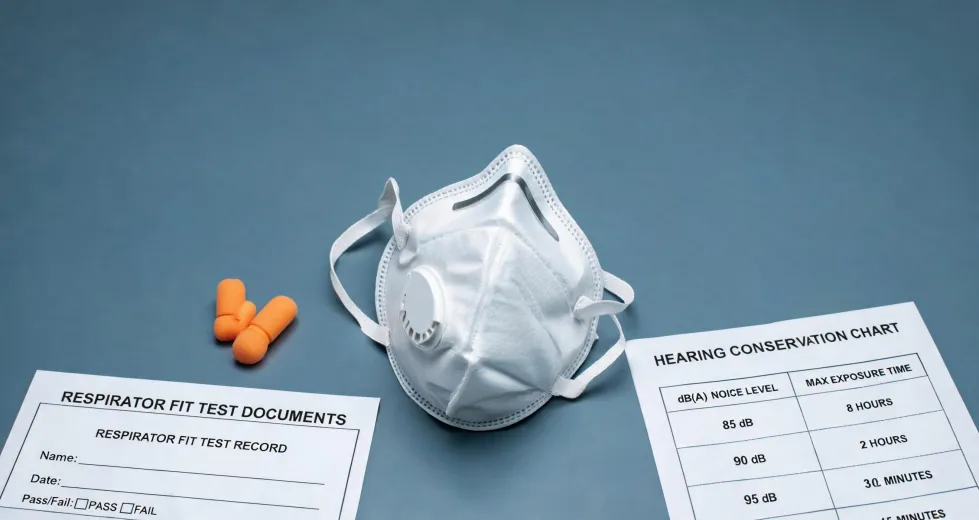
I'm a safety manager at a mid-sized manufacturing plant in Ohio. I've been responsible for PPE and fire safety purchasing for five years now. In that time, I've personally made (and documented) some expensive mistakes—roughly $12,000 in wasted budget on the wrong respirators, earplugs that didn't work, and a fire extinguisher drawing that got us cited.
This is the story of how I learned to get it right. Hopefully, you can skip the trial-and-error.
How It Started: A Coughing Worker and a Useless Respirator
In my first year (2018), I received a frantic call from the floor supervisor. A worker had been exposed to cutting fluid mist and was coughing uncontrollably. We had respirators in storage, but nobody was wearing them. When I got there, I found out why. The respirators were old, ill-fitting, and confusing to use. I had to admit I didn't know much about respirator selection either.
That's when I started researching. I quickly found Moldex and their N95 respirators. They seemed perfect—affordable, NIOSH-approved, and comfortable. I ordered 200 Moldex 2200 N95 respirators and felt a sense of accomplishment. Then I made the classic mistake: I assumed "N95" was the answer to every respiratory hazard.
The N95 vs. P100 vs. Vapor Cartridge Confusion
Three weeks later, one of our maintenance workers asked for a respirator for painting tasks. I handed him an N95. He looked at me and said, "This won't stop organic vapors." I didn't even know that was a thing.
Here's what I've learned since then:
- N95 respirators filter at least 95% of airborne particles. They're fine for dust, mist, and non-oil particulates.
- P100 filters stop 99.97% of particles, including oil-based aerosols. They're a better choice for cutting fluid, metalworking fluids, and many other industrial aerosols.
- Neither N95 nor P100 stops chemical vapors. If you're painting with solvents, you need a respirator with an organic vapor cartridge.
So I went back to the drawing board. For our painting station, I chose Moldex 8000 Series half-mask respirators with the appropriate combination cartridges (particulate + organic vapor). For general shop-floor use, we now keep a supply of Moldex 2400 N95 respirators. The extra cost is worth it when you realize the alternative is a serious illness or a failed OSHA inspection.
"The right respirator is the one that matches the specific exposure—not just the one with a familiar brand. Always check the NIOSH approval label and the hazard assessment."
When Someone Asked "Are Loop Earplugs Worth It?"
In late 2020, one of our production team members walked into my office and asked, "Are Loop earplugs worth it?" He'd seen an ad for Loop earplugs, marketed for concerts. He wanted to wear them on the factory floor.
Honestly, I wasn't sure. I'd heard of Loop as a consumer brand, but I didn't know their noise reduction rating. That was my mistake—I should have looked it up right then. Instead, I said, "Maybe, let's try them."
We bought a few pairs for testing. They were comfortable, I'll give them that. But when we measured the noise reduction with our sound level meter, they didn't come close to our safety threshold. Here's what I learned:
- Consumer earplugs like Loop are mostly designed for music events. They aim to lower volume while preserving sound quality. They are not typically NIOSH-certified for occupational hearing protection.
- Industrial foam earplugs (we switched to Moldex Sparkplugs with NRR 33) are designed from the ground up for maximum noise reduction, and they meet NIOSH requirements for hearing protection.
The numbers aside, fit matters. Foam earplugs are meant to be rolled, inserted, and expand to fit the ear canal. Consumer earplugs with silicone tips often leak noise when you chew, sweat, or move your jaw. In a factory environment, that's a hearing hazard.
I have mixed feelings about Loop—it's a good consumer product. But for industrial use, you need certified PPE. So, are Loop earplugs worth it? For a concert, maybe. For industrial work, the answer is no.
The Fire Extinguisher Drawing That Failed an Audit
The next chapter involves fire extinguishers. It started when our annual fire protection inspector asked for documentation. He specifically requested a current drawing showing the location of every fire extinguisher on site.
I had a drawing, but it was wrong. I'd missed the fire extinguisher in the warehouse corner, hidden behind a stack of pallets. The inspector found it on his walkthrough, then looked at my drawing and said, "If this diagram is inaccurate, your employees won't know where to find an extinguisher during an emergency." That earned us a citation.
I learned two important things:
- OSHA (29 CFR 1910.157) requires fire extinguishers to be accessible and maintained per NFPA 10. Part of that is making sure they're not obstructed.
- A fire extinguisher drawing is a training tool. It must be accurate, current, and visible to employees.
After the citation, I did exactly what you'd do: I searched for "fire extinguisher inspection near me." That's how I found a local company that specializes in NFPA 10 compliance. They helped me create a proper location diagram and set up an inspection schedule. Now we have:
- Monthly visual checks (pressure gauge, seal, damage) by trained floor staff.
- Annual certified inspections by a licensed company.
- An updated drawing with all extinguishers clearly marked, reviewed every time we move equipment or change room layouts.
That was in September 2022. It took a citation, but we finally have a system for keeping extinguishers visible and documented.
How We Built a $12,000 Safety Checklist
Looking back, all three mistakes had a common root: I was making decisions without a documented process. I relied on intuition, marketing, and memory. After the third incident, I created our team's safety checklist. Since then, we've caught 47 potential errors using it in the past 18 months.
Here's the core of that checklist:
- Respiratory protection: Identify the hazard (particulate? oil? vapor?), select the NIOSH-approved cartridge/filter, then fit-test every employee.
- Hearing protection: Measure noise levels, choose an NRR that brings exposure below 85 dBA, and train employees on how to insert foam earplugs correctly.
- Fire extinguishers: Keep a current location drawing, perform monthly visual checks, schedule certified annual inspections, and document everything.
I'm not going to pretend it's perfect. Honestly, I'm still not sure why some workers treat earplugs as optional, even after seeing a noise-induced hearing loss simulation. My best guess is that an invisible threat is hard to take seriously. So we added a "buddy check" system: no one starts a task in a hearing-protection area until a teammate confirms their earplugs are in place.
What I'd Tell My 2018 Self
Industry standards evolve. What was considered best practice in 2020—like using "N95 for everything"—often doesn't hold up in 2025. But the fundamentals haven't changed: understand your hazards, choose certified equipment that fits, and document your process.
If you're in charge of safety purchasing, don't repeat my mistakes. Download the NIOSH guidelines, read the OSHA standards, and build your own checklist. It's a lot cheaper than a $12,000 lesson.

Maeve Callahan
Maeve Callahan is a head-protection analyst covering Type I and Type II hard hats, climbing-style safety helmets, bump caps, chin straps, suspensions, liners, and face-shield carriers. She applies ANSI Z89.1, EN 397, and EN 12492 criteria while comparing impact attenuation, penetration resistance, lateral deformation, electrical class, retention strength, field of vision, mass, fit range, and temperature conditioning. Her guides help EHS teams, contractors, utilities, and buyers select helmet systems for overhead hazards, work at height, electrical exposure, accessory compatibility, and worker acceptance.