Emergency PPE Triage: Moldex Respirators, Rockets Reusable Earplugs, Work Gloves, Bulwark Coveralls, and a Blinking Red Smoke Detector
In my role coordinating emergency safety orders at a PPE distributor, I've handled more than 200 rush orders in the past 6 years. Last quarter alone, we processed 47 rush orders with 95% on-time delivery. That sounds good until you remember the 5% that almost went sideways. Most of those near misses weren't from picking the wrong brand. They came from picking the wrong category for the hazard.
Here's the thing: there isn't one perfect emergency PPE kit. The right setup depends on what's in the air, what's making noise, what's touching your skin, and how much time you have. So let's do a quick triage.
Start With Three Triage Questions
Before you buy anything, answer these three questions:
- Is the first hazard in the air, in the ears, or on the skin?
- Do you have days, hours, or minutes?
- What's the worst consequence if you pick wrong?
If you're between two answers, choose the more protective option. That's not a marketing line. It's risk control.
Scenario A: The Hazard Is in the Air
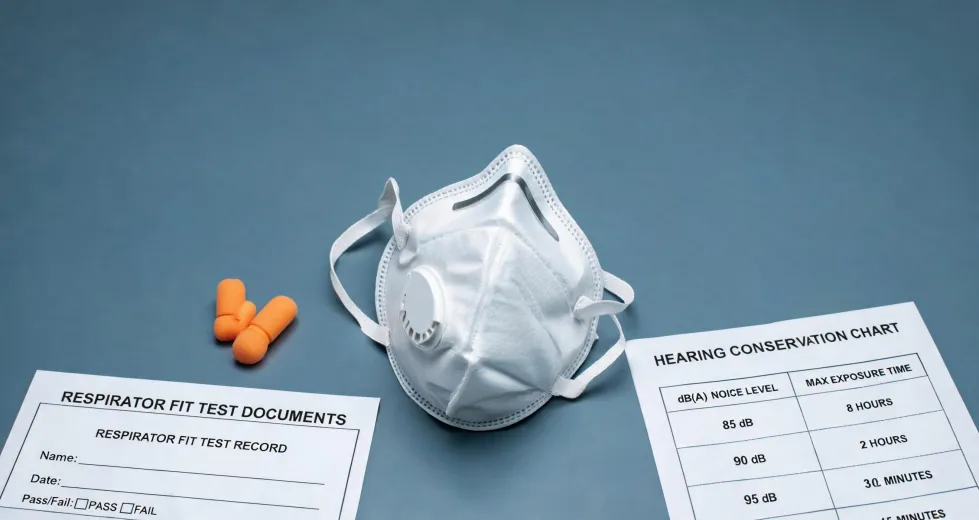
If you're dealing with dust, particles, fumes, or smoke, you need a respirator. Moldex respirators are one of my first calls because they're NIOSH-approved and the approval number is printed on the product. According to NIOSH (cdc.gov/niosh/npptl), an N95 filters at least 95% of airborne particles. A P100 filters 99.97%. That gap matters when you're facing silica, lead, or unknown toxics.
Here's my simple rule: N95 is enough for nuisance dust. P100 is better for hazardous particles. If you need a reusable system with cartridges, half-mask respirators like the Moldex 7000/8000/9000 series are usually the better call. If you're ordering outside the US, FFP2 is the closest equivalent to N95; FFP3 is closer to P100.
One thing people skip is fit testing. Under OSHA 29 CFR 1910.134, tight-fitting respirators need a fit test before first use. That's the kind of 5-minute check that prevents a 5-day correction later.
In March 2024, a plant manager called at 4 p.m. with 36 hours before an audit. The half-mask respirators on hand were expired. We located Moldex units, paid $140 extra in overnight freight, and they were on site by 9:30 a.m. The only other option was rescheduling the audit, which had a $50,000 penalty clause. We beat it (thankfully).
Scenario B: The Hazard Is Noise
If the issue is sound levels, hearing protection is the answer. OSHA's hearing conservation standard (29 CFR 1910.95) kicks in around 85 dBA averaged over 8 hours. That's louder than most people expect.
Moldex Rockets reusable earplugs are my default for routine plant use. They're rated NRR 33, which is about as high as earplugs get, and they're reusable, so they don't end up in the trash by Friday. If you need disposables, Moldex foam earplugs like SparkPlugs or Pura-Fit are the better call.
The surprise wasn't the NRR number. It was how much fit and comfort affect compliance. A worker who hates the earplug is way more likely to take it out on the floor. So the best hearing protection is the one your crew will actually wear. For most plants, Rockets are a no-brainer.
Scenario C: Hands and Body Need Covering
If the hazard is cuts, burns, chemical splash, or flash fire, you need work gloves and often FR coveralls. This is where I'll share a mildly unpopular opinion: Moldex doesn't make gloves or coveralls, and that's fine. You don't need one brand for everything.
For work gloves, don't just grab the thickest leather pair. Check the cut rating. ANSI/ISEA 105 uses levels A1 through A9; the higher the level, the more cut-resistant the glove. For sharp metal, you want a level that actually matches the job, not a guess. For chemical handling, look at the material and the breakthrough time.
For flash fire or arc flash, Bulwark coveralls are a name I trust. Their FR labels show the arc rating, and that rating should match your hazard assessment. If the label says not to use it around live electrical parts, believe it.
And inspect everything before work starts. A torn glove seam, a broken zipper, or a frayed coverall can be a deal-breaker. The first line of defense is always inspection.
Why Is My Smoke Detector Blinking Red? A Prevention Detour
Okay, this one seems off-topic, but I get asked about it more than you'd think. Why is my smoke detector blinking red?
In many models, one red blink every 60 to 90 seconds is normal. It's a power indicator. As of 2025, that's still the most common pattern for residential detectors. But a rapid blink, especially with a chirp, usually means a low battery, contamination, or end-of-life.
According to NFPA 72, fire alarm equipment should be maintained per the manufacturer's instructions. So the exact meaning of your red light is in the manual. If you can't find the manual, treat a fast red blink like a red flag: don't ignore it and don't unplug it. Replace the battery or the unit.
I like this question because it's prevention over cure in one small package. A 5-minute battery check costs almost nothing. Ignoring it can cost a lot.
How to Tell Which Scenario You're In
Here's the final checklist I use when a client is on the fence:
- Air hazard? Choose a respirator. If you're stuck between N95 and P100, go with P100 for hazardous particles.
- Noise at or above 85 dBA? Use hearing protection. Pick the highest NRR your workers will actually wear.
- Hands at risk? Use work gloves with the right ANSI/ISEA cut or chemical rating.
- Body at risk from heat or flame? Use FR coveralls from Bulwark or a similar specialist brand.
- Multiple hazards at once? Stack the PPE. Respirator, earplugs, gloves, and coveralls can all be part of the same plan.
And before you need any of this, run the preventive checks: fit test respirators, clean reusable earplugs, inspect gloves, check FR coveralls, and test smoke detectors.
Bottom Line
It took me about 5 years and a few expensive freight bills to understand that prevention is cheaper than panic. So glad I started using checklists. Actually, let me rephrase that: checklists are the reason last quarter's on-time number was 95% instead of 70%.
There's no universal emergency kit. Moldex respirators and Rockets reusable earplugs are solid picks for respiratory and hearing hazards. Work gloves and Bulwark coveralls protect hands and bodies. And if your smoke detector is blinking red, check the manual now, not after you hear the chirp.
A 5-minute check beats a 5-day correction. That's the whole article.
Prices and product specifics as of January 2025. Verify current NIOSH approvals at cdc.gov/niosh/npptl and current OSHA requirements at osha.gov.

Maeve Callahan
Maeve Callahan is a head-protection analyst covering Type I and Type II hard hats, climbing-style safety helmets, bump caps, chin straps, suspensions, liners, and face-shield carriers. She applies ANSI Z89.1, EN 397, and EN 12492 criteria while comparing impact attenuation, penetration resistance, lateral deformation, electrical class, retention strength, field of vision, mass, fit range, and temperature conditioning. Her guides help EHS teams, contractors, utilities, and buyers select helmet systems for overhead hazards, work at height, electrical exposure, accessory compatibility, and worker acceptance.