Moldex N95 Particulate Respirator Masks: A Procurement Manager’s TCO Buying Guide
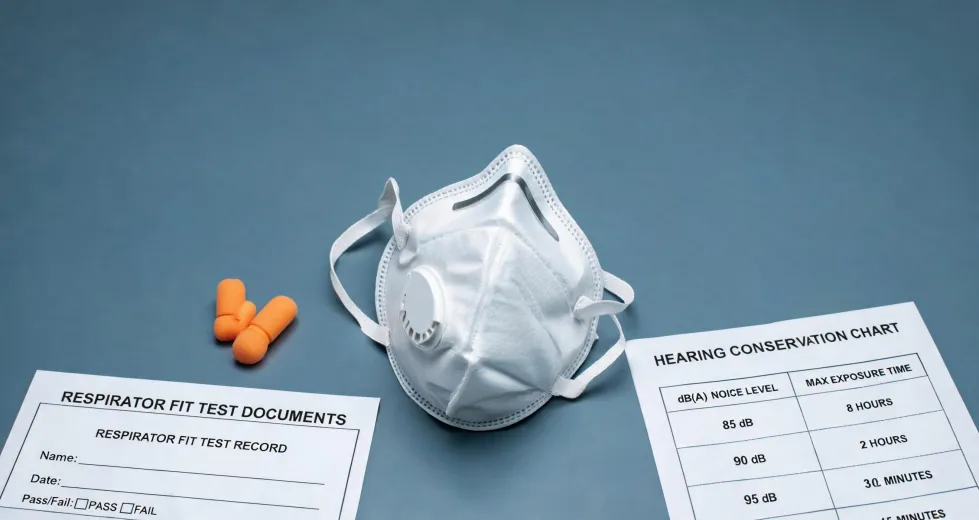
The Short Version
If you're sourcing a Moldex N95 particulate respirator mask, stop comparing sticker prices first. In my experience, the mask itself is maybe 40% of what respiratory protection really costs your company. Fit testing, training, inventory management, compliance, and worker adoption can all outweigh the unit price. I've managed safety purchasing for a 400-person manufacturing operation for six years, and I've tracked about $180,000 in PPE orders across that time. The pattern is consistent: the cheapest mask is not always the cheapest program.
The cheapest mask is not always the cheapest program.
Why I stopped comparing sticker prices
When I first started managing safety procurement, I assumed the lowest quote was the right answer. That's the natural move when you're watching a budget. But in 2023, I audited our spending and found a quiet pattern: nearly a third of our PPE line items ended up with follow-up costs. Shipping overages, replacement orders, expediting fees, and one $1,200 redo after a “cheap” option failed under real working conditions.
In Q2 2024, I compared quotes from four distributors for a quarterly order of Moldex N95 particulate respirator masks. One quote came in at $2.10 per mask. Another came in at $1.85. I almost went with the cheaper one until I plugged in freight, minimum-order handling, and split delivery. The cheaper quote landed at $2.32 per mask. The first one landed at $2.20. The apparent 12% savings was actually a 5% markup. Those numbers were from Q2 2024, so verify current rates before budgeting.
The cost items that hide in PPE budgets
Here's what I put in the TCO spreadsheet for every respirator choice. I use these seven lines, even when accounting doesn't ask for them.
- Landed unit price. Not the catalog price. The price after freight, minimums, and delivery windows.
- Fit testing. OSHA's respiratory protection standard (29 CFR 1910.134) requires fit testing for tight-fitting respirators before first use and at least annually. If you switch models, you should expect a new round.
- Training. Workers need to know how to put the mask on, check the seal, and remove it safely. That takes paid time.
- Inventory carrying cost. Masks take up space and can expire. Overstocking a discontinued size is a real cost.
- User adoption. If people won't wear the mask, the program fails. An unworn respirator protects no one, no matter what it cost.
- Compatibility. This is where prescription safety glasses come in. A respirator that doesn't work with the eyewear your team wears will create fit problems.
- Regulatory and legal risk. A compliance failure is expensive. So is guessing on a legal question without checking the current rules.
The eyewear blind spot
Most PPE buyers remember to ask about the mask. They forget about the head contact points. If your team wears prescription safety glasses, you can't just hand them a standard frame and assume it works. The temple arms can sit exactly where a respirator seal needs to sit. We bought over-glasses and prescription safety glasses for roughly 5% of our crew before our fit test pass rate improved. That cost was invisible in the respirator quote.
I should add that this cuts both ways. If you already have prescription safety glasses, test them with the respirator before committing to a large order. A mask that fits one person's face won't fit everyone's. That's not a product flaw; it's how respiratory protection works.
PPE is not a fence post
One thing I remind every new operations manager: PPE is not a fence post. A fence post is a one-time purchase. You put it in the ground and move on. A respiratory protection program is ongoing, regulated, and tied to how people behave on a Tuesday afternoon. If the mask is uncomfortable, people will stop wearing it. You don't save money by buying something nobody wears; you've just bought a more expensive shelf decoration.
Legal questions are a cost line
Legal gray areas show up in safety purchasing more than people expect. A few months ago, one of our field technicians asked, “Is pepper spray illegal in NY?” The question wasn't about respirators, but it still landed in my inbox because it was tied to company-issued safety equipment. I'm not a lawyer, so I don't answer that from memory. We routed it to counsel and added training before approving anything.
The reason I bring that up: legal uncertainty is a cost. The same way you check NIOSH approval before buying a respirator, you check current law before approving gear that carries legal consequences. A wrong assumption can cost more than the right answer ever would.
How I actually compare Moldex products
Here's the process I've landed on after six years of tracking orders.
- Start with the Moldex official website to verify current part numbers and NIOSH approval details. I use moldex.com as the source of record before I look at any distributor quote.
- Ask two or three distributors for a delivered price, not a “best price.” I want the price that lands in my warehouse, not the one that lands in a marketing email.
- Run the TCO screen. Will this be a disposable N95 program, or do we need reusables with P100 filters? For some work areas, the per-shift cost of a half mask with P100 filters beats disposables. For others, disposables win.
- Fit the trainers, not just the product. Pick one standard model, test it with a small user group, and let their feedback steer the final decision.
After comparing 8 vendors over 3 months using our TCO spreadsheet, I changed our internal procurement policy. We now require quotes from at least three vendors for any safety product order above $2,000. That rule has cut our budget overruns by about 17%, though I should note that estimate is based on our own tracking, not an outside study.
NIOSH and OSHA are not suggestions
According to NIOSH (cdc.gov/niosh/npptl), an N95 filtering facepiece respirator is designed to filter at least 95% of airborne particles during certification testing. That efficiency only matters if the program around the mask works. According to 29 CFR 1910.134, tight-fitting respirators must be fit-tested before first use and at least annually. Fit tests are not optional. They take time, money, and coordination.
The most frustrating part of PPE buying is that the same mistake keeps recurring. People make decisions from a catalog instead of talking to the people who will wear the equipment. You'd think a written spec would prevent that, but interpretation varies wildly.
Where this approach falls apart
I don't want to oversell the TCO method. It works for us because we're a mid-size operation with predictable demand. If you're a three-person crew buying a box of masks once a year, a full procurement process is overkill. Check NIOSH approval, make sure the masks fit, and move on.
Also, I can only speak to U.S. regulatory standards and my own industry context. Healthcare, international supply chains, and emergency response have requirements I haven't had to navigate. If you're in one of those worlds, find someone who lives in that world.
And one more thing: read the fine print on your own orders. I've seen a “free setup” offer cost more in hidden fees, and I've seen a slightly higher quote save money because it included what we actually needed. That's not a rule about Moldex—it's a rule about buying anything for a workplace.
I'm not saying every Moldex N95 particulate respirator mask is the right answer for every job. But I am saying the decision deserves more than a one-line price comparison.

Maeve Callahan
Maeve Callahan is a head-protection analyst covering Type I and Type II hard hats, climbing-style safety helmets, bump caps, chin straps, suspensions, liners, and face-shield carriers. She applies ANSI Z89.1, EN 397, and EN 12492 criteria while comparing impact attenuation, penetration resistance, lateral deformation, electrical class, retention strength, field of vision, mass, fit range, and temperature conditioning. Her guides help EHS teams, contractors, utilities, and buyers select helmet systems for overhead hazards, work at height, electrical exposure, accessory compatibility, and worker acceptance.