The Hardest Lesson I Learned in B2B PPE Procurement: Why 'Urgent' Isn't Just About Speed
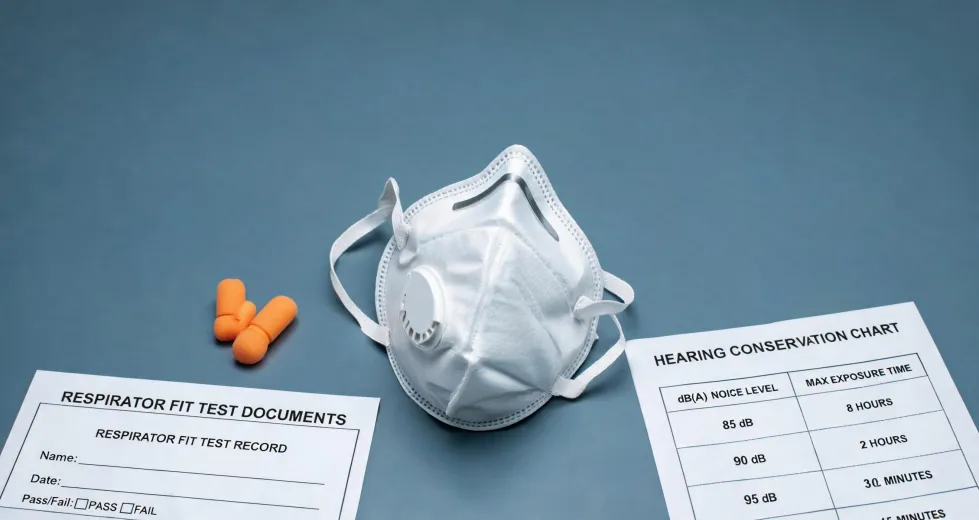
When I first started managing PPE procurement for a mid-sized manufacturing firm, I thought I had it figured out. My initial approach was simple: find the cheapest price, place the order, and move on. After all, safety glasses are safety glasses, right? A single, catastrophic event in March 2024 changed everything. A client called at 2 PM needing 500 units of Moldex 2400 N95 masks for a compliance audit the next morning. Normal turnaround from their usual vendor was 5 days. We scrambled, paid a 60% premium for next-day delivery from a new supplier, and got the masks. But here's the kicker—they were counterfeit. The audit failed, the client lost a 50K contract, and I learned the most expensive lesson of my career: in emergency procurement, price is the least important factor.
The Surface Problem: 'It's Just a Mask, Why Is It So Hard?'
That's the first thing I hear from safety managers under pressure. They assume that a respirator is a commoditized product. 'Just get me some N95s,' they say. The urgency blinds them to the underlying complexity. The superficial problem is always the same: a deadline. A surprise OSHA inspection. A new contract that requires specific PPE. A last-minute plant shutdown. The immediate reaction is to find a vendor who can ship now.
The Real Cost of 'Just Get Me Something'
What I see from my side is a completely different picture. The real cost isn't the $200 rush shipping fee. It's the hidden, often catastrophic, costs of a bad decision made under pressure. I'm not a legal expert, so I can't speak to specific OSHA liabilities. What I can tell you from a procurement perspective is how to evaluate the real risk.
The cost of getting it wrong breaks down into three categories:
- The Compliance Gap: A counterfeit or non-NIOSH-approved mask (like that 2400 we got) means your entire safety protocol is void. The fine? That's $13,653 per violation as of 2024 (Source: OSHA). More importantly, you've lost the safety argument for your team.
- The Operational Risk: If your workforce can't wear the PPE (wrong fit, wrong material, too hot), they won't wear it. That leads to injuries, lost time, and production halts. This is the biggest hidden cost.
- The Trust Deficit: Once you deliver bad PPE in a crisis, your safety team loses trust in your supply chain. They'll start stockpiling, buying from multiple vendors, creating chaos in inventory. I've seen it happen.
In my role coordinating emergency PPE orders for clients like food processing plants and chemical facilities, I've learned that the 'cheap and fast' vendor is often the most expensive option. We once needed high-NRR earplugs (think Moldex SparkPlugs with NRR 33) for a plant floor noise audit. The standard vendor was out of stock. A discount competitor promised next-day delivery. We chose them. The earplugs were brittle, hard to insert, and offered maybe half the rated protection. We had to re-order from Moldex directly, paying for overnight shipping, and missed the audit window by two days. The production line delay cost us $8,000. The rush fee was $150.
The Deep-Seated Vulnerability: Your Supply Chain Has a 'Weakest Link'
The real problem isn't the emergency. It's that most procurement strategies are built for the 'normal' 5-day lead time. They optimize for cost-per-unit, not for delivery certainty. A cheap supplier from overseas might have a great unit price, but they have no local stock for a rush order. And in a crisis, that 'cheap' supplier becomes a liability.
The conventional wisdom in my early career was to always choose the lowest quote. My experience with 200+ emergency orders suggests otherwise. The 'right' vendor for a standard order is often the wrong vendor for a crisis order. You need a supply chain with depth—a partner like Moldex, which manufactures in the US and has a robust distribution network. I get why people go with the lowest bidder—budgets are real. But the hidden costs add up. (Note to self: I really should write a checklist for this.)
The Solution: Pay for the 'Buffer', Not Just the Product
So what do I do now? I've built a 'buffer' into every critical PPE plan. This isn't just about adding a few extra masks to the order. It's about budget and vendor selection.
Step 1: Identify 'Critical Path' PPE.
For my clients, this is always respirators (like the Moldex 2400 for dust or the half-mask respirators for chemicals) and high-attenuation earplugs. If you only make N95s one day, you can hold a meeting. If you shut down a chemical line without replacement cartridges, that's a plant stoppage.
Step 2: Assign a 'Certainty Budget'.
Instead of trying to save 5% on the unit cost, allocate an extra 15-20% of the annual budget for 'expedite capacity'. This isn't wasted money; it's an insurance policy. When the emergency hits, you don't panic. You know which vendor can deliver Moldex P100 filters in 48 hours, and you have the budget to pay the expedite fee without blinking.
Step 3: Vet for Reliability, Not Price.
I learned this in 2020. The cheapest vendor for earplugs had a 20% stock-out rate. Their delivery was 'usually' on time. In a crisis, 'usually' is a complete failure. Now, I test vendors on their worst-case scenario. 'Can you deliver 1,000 Moldex Rockets earplugs to an industrial park in 24 hours on a Sunday?' If the answer is 'maybe,' they're out.
To be fair, this approach requires more upfront administrative work. You need to vet suppliers, get their crisis protocols, and plan for contingencies. But the alternative—a failed audit, an injury, a plant shutdown—is immeasurably worse. The 'cheap' option that fails in a crisis is the most expensive thing you can buy.
In March 2024, we paid $400 extra for a guaranteed delivery of genuine Moldex 2400 masks. The alternative was missing a $15,000 audit window. But more importantly, we avoided the risk of counterfeit products and a compromised safety program. That's the real value of 'time certainty.'
Pricing is for general reference only. Market rates for rush shipping vary. As of Q1 2025, the expedite premium for industrial PPE is roughly 40-80% above standard ground rates (based on feedback from 3 major industrial distributors). Verify current rates before budgeting.

Maeve Callahan
Maeve Callahan is a head-protection analyst covering Type I and Type II hard hats, climbing-style safety helmets, bump caps, chin straps, suspensions, liners, and face-shield carriers. She applies ANSI Z89.1, EN 397, and EN 12492 criteria while comparing impact attenuation, penetration resistance, lateral deformation, electrical class, retention strength, field of vision, mass, fit range, and temperature conditioning. Her guides help EHS teams, contractors, utilities, and buyers select helmet systems for overhead hazards, work at height, electrical exposure, accessory compatibility, and worker acceptance.