Moldex 2200 N95 Particulate Respirator & Pura-Fit Earplugs: A Quality Control FAQ
-
Is the Moldex 2200 really an N95 particulate respirator?
-
What is different about Moldex Pura-Fit earplugs?
-
What should I inspect when a Moldex shipment arrives?
-
Why does a worker fail a fit test with the Moldex 2200 if it feels comfortable?
-
If a worker can’t hear a smoke detector beeping while wearing Pura-Fit earplugs, is NRR 33 too high?
-
Can you take Moldex 2200 respirators and Pura-Fit earplugs on a plane? And can you take pepper spray on a plane?
-
What about N95 versus P100 for everyday industrial dust?
Moldex 2200 N95 Particulate Respirator & Pura-Fit Earplugs: A Quality Control FAQ
I’m the person who checks incoming PPE for an industrial safety distributor. Before any carton reaches a customer, it goes through receiving inspection at my desk—roughly 150 product lots per year, including a steady stream of Moldex respirators and earplugs. I don’t have a quota to move product. I have a clipboard, a camera, and a stack of spec sheets.
The questions I hear most from procurement and safety managers are about the Moldex 2200 N95 particulate respirator and Moldex Pura-Fit earplugs. Here are the answers I give when the conversation is not about flavor-of-the-month marketing.
Is the Moldex 2200 really an N95 particulate respirator?
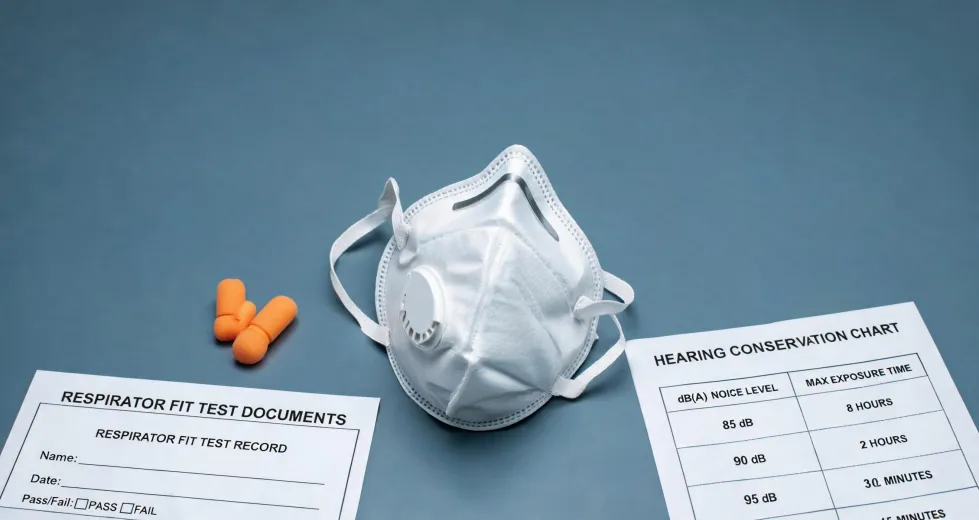
Yes, if you buy the approved version. “N95” is not a style statement. It means the filter has been tested by NIOSH, under 42 CFR Part 84, and captured at least 95% of the challenge aerosol. The Moldex 2200 is a disposable, cup-style filtering facepiece respirator. The box should carry the NIOSH approval label and a TC-84A approval number. You can verify it on the NIOSH Certified Equipment List before you even place the order.
I emphasize this because “respirator” is also a regulatory word. If a job requires respiratory protection, an N95 is not just a generic dust mask: the employer generally has to follow the relevant parts of OSHA’s respiratory protection standard, including medical clearance, training, and a fit test. A customer once asked me why they needed paperwork for a “comfortable little mask.” The paperwork is what turns a piece of filter media into a dependable control.
What is different about Moldex Pura-Fit earplugs?
On the label, the main difference is the NRR. The Pura-Fit has an NRR of 33, which is about the highest rating in the disposable foam earplug category. But I have seen enough hearing protection to tell you that spec sheets don’t protect hearing—behavior does.
The practical difference is that workers tend to keep Pura-Fit in. The foam surface is smooth enough that it doesn’t drag or irritate as much as some dry-textured plugs, and the bright color makes compliance checks fairly easy. A supervisor can tell at a glance if a worker is wearing something. That might sound minor, but a missing plug is a much bigger risk than the difference between NRR 30 and NRR 33.
Fit is still personal, though. If a worker has very narrow or very large ear canals, the best-selling plug on the shelf may be wrong for them. My advice is to run a small trial order before standardizing. What I mean is: buy a few boxes, not a pallet, and ask the noisiest crew which design they actually finish the shift with.
What should I inspect when a Moldex shipment arrives?
I get asked this by quality managers who want to avoid problems before they happen. A receiving inspection doesn’t need to be complicated, but it does need three checks:
- Model and approval label on the box match the purchase order. For the 2200, look for the NIOSH marking. For Pura-Fit, look for the EPA hearing protection label showing the NRR.
- No crushed or wet packaging. A crushed cup-style respirator can look fine from the outside and still fail a face seal check.
- Lot numbers are consistent. If you ever need to investigate a defect or a recall, mixed lot numbers make the traceability job much harder.
Last year we rejected a shipment because the outer carton said one lot number and the inner boxes carried another. The supplier corrected it at their cost, but the correction ate two days of our lead time. Now lot number verification happens before the truck leaves our supplier’s dock, not after it arrives.
Why does a worker fail a fit test with the Moldex 2200 if it feels comfortable?
A comfortable respirator can still leak. Fit is where respirators fail. Period.
I learned that the hard way on a seasonal hire. We were behind schedule, and I thought a “standard” 2200 would seal on a “standard” face well enough. The first time we ran a Bitrex qualitative fit test, he tasted the bitter agent almost immediately. The mask was leaking around his nose. If I had skipped the test and let him work in that dust, the exposure would have been on us.
We switched him to a different model, he passed, and the job went out a day late. The surprise wasn’t the leak; it was how easy it was to miss before the test. So don’t let a worker skip the fit test because the respirator “feels okay.” Feels okay is not the same as seals okay. And after every donning, a user seal check should become a habit, not a training slide.
If a worker can’t hear a smoke detector beeping while wearing Pura-Fit earplugs, is NRR 33 too high?
This comes up in safety meetings more often than you might expect. A smoke detector beeping is deliberately high-pitched and loud, but a properly fitted earplug with an NRR 33 can make that warning hard to hear through a wall or from the other end of a warehouse bay.
High attenuation is not automatically a defect. The question is whether the hearing protection selected matches the noise exposure and the warning needs. If your noise assessment says a lower-attenuation plug will get employees under the limit, choosing a lower NRR can be a smarter safety move, because over-isolating workers from alarms brings its own risk. If the exposure requires NRR 33, don’t trade down just so someone can hear a beep. Add visual alarms or integrate the audible alarm into a wearable alerting system. Fix the warning system, not the earplug.
Can you take Moldex 2200 respirators and Pura-Fit earplugs on a plane? And can you take pepper spray on a plane?
Respirators and earplugs are not a security concern. I have flown with both in carry-on luggage more times than I can count, and TSA screeners generally don’t give them a second look. If you ship respirators to a job site instead, make sure the NIOSH label and the lot documentation stay with the carton.
The direct answer to the pepper spray question: no, not in your carry-on. According to TSA’s public guidance, self-defense spray must go in checked baggage, and it has to be 4 oz (118 ml) or smaller with the actuator covered to prevent accidental discharge. TSA rules can change, so check their “What Can I Bring?” page before you fly.
What about N95 versus P100 for everyday industrial dust?
Let the exposure data lead the decision. N95 respirators like the Moldex 2200 are fine for many non-oily dusts when exposure levels and fit testing support their use. If the contaminant is an oil-based mist, the “N” rating is not appropriate; you need an R or P series. If the hazard assessment calls for a higher margin of protection, N99 or P100 is the next step.
In my own audits, I see more over-specification than under-specification. It seems safer on paper, but a heavier filter can make breathing harder, and a worker who removes the respirator for relief is not protected at all. The most protective respirator is the one that stays sealed to the face for the full shift and is supported by training, fit testing, and someone checking that workers actually use it.
There is something satisfying about closing out an order with matching lot codes, clear approval marks, and a fit test record that lines up with the product you shipped. Moldex tends to make that part easy—at least, that has been my experience from the receiving dock side, not from a marketing department.

Maeve Callahan
Maeve Callahan is a head-protection analyst covering Type I and Type II hard hats, climbing-style safety helmets, bump caps, chin straps, suspensions, liners, and face-shield carriers. She applies ANSI Z89.1, EN 397, and EN 12492 criteria while comparing impact attenuation, penetration resistance, lateral deformation, electrical class, retention strength, field of vision, mass, fit range, and temperature conditioning. Her guides help EHS teams, contractors, utilities, and buyers select helmet systems for overhead hazards, work at height, electrical exposure, accessory compatibility, and worker acceptance.