Six Years of PPE Data: Why Cheap Safety Gear Costs More
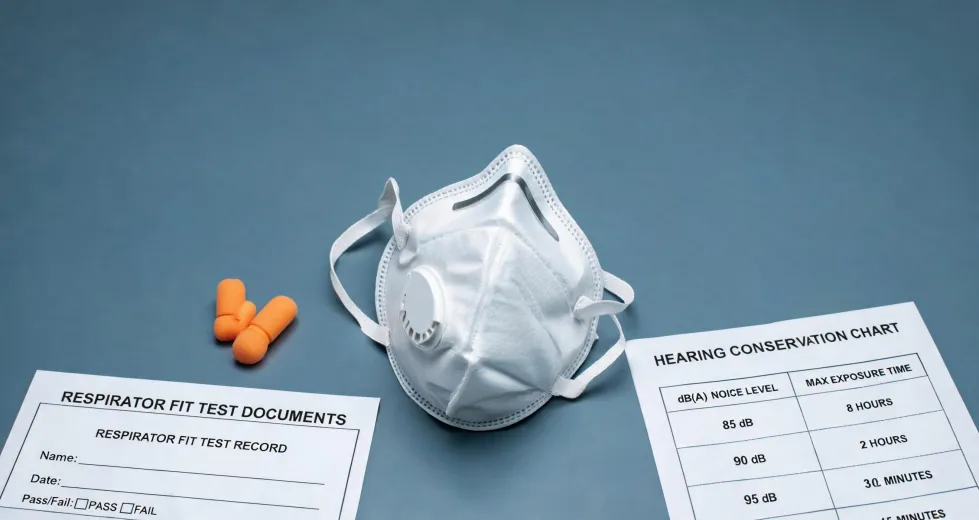
I'll say it plainly: the cheapest PPE in the catalog is rarely the cheapest PPE you'll ever buy. I know this because I've spent six years watching it play out in our order data—roughly $180,000 a year in safety equipment, tracked line by line, month after month.
I'm the procurement manager at a 300-person manufacturing plant. That's not a glamorous title, but it means I sit between the production floor and the CFO. Every decision I make gets measured twice: once in units, once in dollars. And when the two numbers disagree, my job is to figure out which one is lying.
The vendor failure in March 2023 changed how I think about this. We'd ordered a pallet of budget foam earplugs—the cheapest option on our approved vendor list—and they arrived crumbly. Heat-damaged in transit, per the quality report. Workers complained, then stopped using the dispensers entirely. The noise compliance audit that summer flagged three stations above the 85 dB action limit. That hadn't happened in the previous three years.
I'm done buying safety products on unit price. Total cost of ownership—i.e., not just the purchase order but replacements, enforcement time, and compliance risk—is the only number that actually matters. The math is uncomfortable at first, because it means admitting that a product with a higher sticker price can be the cheaper purchase.
The hearing protection math that changed our vendor list
We were buying budget foam earplugs at $0.08 a pair. Our annual usage ran around 40,000 pairs, so on paper that's $3,200 a year. The cheapest earplug we could source. Looked great in the quarterly review.
When I pulled the real numbers in late 2023, it didn't look so great. The budget plugs degraded in our warm, humid production areas. The compliance team took complaints seriously (which they should), so they spent time investigating, re-testing, and reordering replacement stock—twice. That labor doesn't appear on the vendor invoice, but it sure shows up in the budget. Once I charged those internal hours to the hearing protection line, the “cheap” earplugs had effectively cost us 22% more than the PO amount.
We trialed Moldex hearing protection—the SparkPlugs and Pura-Fit lines—which carry an NRR 33 rating, the top of the EPA noise reduction scale for earplugs. The unit cost was higher, no argument. But the reorder rate dropped so far that our annual spend on hearing protection actually went down. Workers stopped complaining about fit, and more importantly, they stopped pulling the plugs out after twenty minutes.
Switching cut our total noise-related costs by about $4,600 a year. That's the number I put in front of the CFO, and it ended the conversation about ever going back to the cheap brand.
The Moldex 1510 taught me a lesson about talking to vendors
In early 2024, I told a new salesperson, “We need N95s that our guys will actually wear all shift.” What he heard was, “send us the best-price N95s you offer.” Result: a $3,000 order of respirators that sat in the storage room for three months.
We were using the same words but meaning different things. I meant fit-and-comfort validated with our actual workers. He meant respirators that would pass a basic OSHA checklist. I discovered the gap when the first batch went out to the floor and supervisors quietly stopped distributing them—the nose piece irritated some guys, and word got around fast.
The Moldex 1510 N95 respirator is a flat-fold N95, NIOSH-certified like any legitimate N95 you'd buy. The difference is in the details: it's lighter than the folded-cup style we'd used for years, and the nose foam sits better, so people forget they're wearing it. A respirator people forget they're wearing is a respirator that stays on. A respirator that stays on a shelf is just a “$3,000 box of regrets,” as one of our supervisors put it.
(Note to self: always run a half-day fit trial before bulk orders. The trial costs next to nothing. The wasted order teaches the same lesson at a much higher price.)
The same TCO logic applies across the whole safety catalog
Once I shifted frameworks, I saw the same pattern everywhere in our safety budget.
Wet chemical fire extinguishers. We maintain these in the facility kitchen and the food-processing line. A wet chemical extinguisher is the Class K answer for fires involving cooking oils and fats—and the classification matters, because the wrong extinguisher on a grease fire can make it worse. The inspection sticker exists for a reason: pressure, charge, pin, certification. For a $120 piece of critical equipment, nobody on my team price-shops the inspection contract. The cost of failure isn't the extinguisher. It's the production line standing still.
Amazon safety shoes. Supervisors occasionally ask why our footwear allowance doesn't just cover the $30 pair they found online. The answer: those shoes usually aren't marked with ASTM F2413—the private sector consensus standard for impact and compression resistance. The $30 saving disappears the moment someone drops a die casting on their foot. We now source footwear from distributors who list the ASTM rating on every SKU. No rating, no reimbursement.
Pepper spray. One of our EHS coordinators asked me, point blank, “what is pepper spray made of?” I thought it was a random question until I realized she was doing exactly the right diligence before we issued any to security staff: verifying the active ingredient (oleoresin capsicum, typically 1.0–1.33% concentration), the spray pattern, and the manufacturer's test documentation. Know the chemistry, check the standard, verify the source. Same principle, different shelf.
Fair pushback: “What about your budget approval?”
To be fair, I get why people buy the cheapest thing. Budgets are real. A procurement manager's incentive structure usually rewards the lowest purchase order amount. And if you've ever had to explain a larger PO to a CFO, you know that conversation is not fun.
What made it possible for me was the spreadsheet. I compared eight vendors over three months using a total-cost model that included rejection rates, reorder frequency, and internal hours spent on follow-up. When the data showed a $4,600 annual saving from switching to Moldex hearing protection alone, the CFO's reaction wasn't skepticism. It was, “why did we wait this long?”
Was the transition annoying? Yes. Coordinating with EHS, running the fit trial, updating the approved vendor list—that was real work. But it was one-time work. The inefficient way—scrambling for replacements, investigating complaints, re-running compliance checks—repeats itself year after year.
What the data actually says
Efficiency isn't buying the cheapest item once. It's building a system where you know what each purchase truly costs over a full year. That's been the whole competitive advantage of our procurement shop: not being clever, just being informed.
The plant that tracks, measures, and adjusts its safety purchasing runs more smoothly than the one scrambling for emergency orders. That's not a feel-good conclusion. That's what six years of invoices, complaint logs, and compliance audits show.
I still approve budget picks where the risk genuinely justifies it. Not everything needs a premium label. But for anything that protects hearing, lungs, or feet? I'll pay for the documented standard, the reliable manufacturer, and the product people will actually use.
Because the spreadsheet doesn't care about catalog optics. It only cares what something costs over a full year. And that's why we now buy “premium” hearing protection and respirators—because the data turned out to be on their side all along.

Jane Smith
I’m Jane Smith, a senior content writer with over 15 years of experience in the packaging and printing industry. I specialize in writing about the latest trends, technologies, and best practices in packaging design, sustainability, and printing techniques. My goal is to help businesses understand complex printing processes and design solutions that enhance both product packaging and brand visibility.