How to Evaluate PPE Like a Quality Inspector: A 6-Step Checklist for Safety Buyers
-
Step 1: Verify the Certification—Don't Trust the Hang Tag
-
Step 2: Test Fit with Your Actual Workers—Not the Sales Rep
-
Step 3: Verify Alarm Audibility—The Step Everyone Misses
-
Step 4: Check Compatibility Across the Whole PPE System
-
Step 5: Plan the Reorder Before You Need It
-
Step 6: Build Your Own Incoming Inspection Protocol
-
Final Notes: Three Mistakes That Show Up in Audits
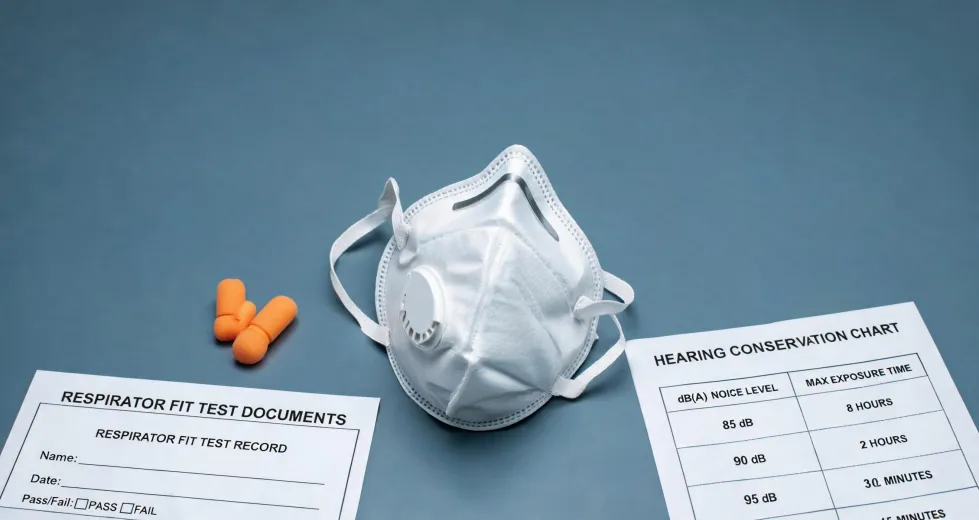
I review personal protective equipment before it reaches our warehouse floor—roughly 200 unique products a year. Maybe 180, I'd have to check our system. But the point stands: I've rejected a lot of safety gear that looked fine in a catalog and failed once it hit the real world.
If you're a safety manager or procurement lead buying for a crew, this is the exact checklist I use when evaluating new PPE—whether it's a full order of moldex products or a single new safety goggle line. Six steps, each with a specific checkpoint. No theory, just process.
Step 1: Verify the Certification—Don't Trust the Hang Tag
This sounds basic. You'd be surprised how often PPE spec sheets stretch the truth.
Three certifications matter most:
- Respirators: Look for NIOSH approval with a TC number on the box. Verify it at cdc.gov/niosh. No TC number, no approval.
- Safety goggles: ANSI Z87.1 marking on the lens itself, not just printed on packaging. The lens marking is your proof.
- Earplugs: NRR (Noise Reduction Rating, required by EPA labeling rules since 1979). The NRR is lab-measured, so treat it as a baseline, not a guarantee.
Here's something vendors won't tell you: certification is model-specific, not brand-wide. One approved respirator in a product line doesn't mean every product from that brand is approved. Check each item individually.
One thing I appreciate about moldex products is that approval numbers are easy to track down. The Moldex 2200 N95 series, for example, shows the NIOSH approval right on the box. No digging through a website.
Step 2: Test Fit with Your Actual Workers—Not the Sales Rep
The most expensive mistake I see in PPE buying: a decision-maker tests one size on themselves and assumes it works for the crew. It doesn't work that way.
Face shapes vary. A half-mask respirator that seals perfectly on your face can leak on half your team. When we evaluated the Moldex 7000 series, we fit-tested six workers. Four passed on the standard size; two needed the small. Same model, different sizes, different outcomes.
Earplugs are even more individual. The foam plug that feels comfortable to one person can create real pressure in another's ear canal. There's no universal "best earplug"—only "best for each person." That's why we stock multiple Moldex earplug models—Pura-Fit foam plugs for some workers, Sparkplugs with cords for others.
Checkpoint: Fit-test with at least 5–8 workers before committing to a bulk order. Include two or three brands side by side.
Step 3: Verify Alarm Audibility—The Step Everyone Misses
Here's a question I ask every safety manager: can your workers hear the fire alarm with their hearing protection in?
Workers often complain that "the fire alarm keeps beeping" as if it's a malfunction. But listen carefully: in several audits I've been part of, the alarm was fine. The problem was that foam earplugs with high attenuation at certain frequencies were muffling the alarm siren pattern. What should sound like a blaring alarm became a distant, indistinct chirp. Workers didn't consciously ignore it—they genuinely didn't recognize it as an emergency signal. During a fire drill, one production line just kept running.
What to do about it:
- Check the attenuation table on the earplug packaging (the NRR label includes one). If attenuation is high at 2,000–4,000 Hz, alarm signals can get masked.
- Consider level-dependent earplugs if workers need to hear audible warnings.
- Add visual alarm signals (strobes) as a backup if needed.
- Run a fire drill with earplugs in. That's the only real test.
This step isn't on any standard spec sheet. But it directly affects whether workers react in an emergency.
Step 4: Check Compatibility Across the Whole PPE System
PPE doesn't exist in isolation. Your respirator has to work with your safety glasses, your earplugs need to fit under your hard hat, and a high-collar workwear jacket shouldn't break your mask's face seal.
Sounds minor until it isn't. I once specified new safety goggles and only after distribution did we discover they pinched under the collar of the crew's winter workwear jackets. Workers skipped the goggles on "quick" outdoor tasks. Then a metal chip hit someone's eye. No permanent damage, but a medical bill and a near-miss report.
Compatibility checklist:
- Do safety glasses fit under your half-mask respirator without lifting the face seal? (Temple arms are the usual culprit.)
- Do earplugs stay in place when workers remove their hard hats?
- Do hoods, collars, or cold-weather liners interfere with any part of the equipment?
- Do gloves allow proper fitting of respirator straps and buckles?
Test with the actual clothing and equipment combo your crew wears. Not the ideal combination from the catalog photo.
Step 5: Plan the Reorder Before You Need It
In 2024, we nearly failed an audit because we ran out of a specific P100 filter for our half-masks. Lead time from the distributor: three weeks. That's three weeks of workers on light duty because their assigned respirators were missing filters.
When you qualify a product, verify three things:
- Does a local distributor carry the model in stock? Check actual shelf availability, not just what the website says.
- Are replacement parts—filters, cartridges, head straps—available for the lifespan of the product?
- Is the product at risk of discontinuation? A discontinued N95 means re-fitting everyone.
If I remember correctly, we standardized on Moldex N95s and earplugs in 2023, partly because auto-shipping through our distributor was straightforward. Product quality matters most, but supply predictability is a close second when compliance depends on shelf stock.
Step 6: Build Your Own Incoming Inspection Protocol
Once you've qualified a product, the job isn't done. The PPE you receive a year later, from a different batch, may not be identical.
In Q1 2025, about 3% of our first deliveries failed incoming inspection—due to missing documentation, not product defects. The units looked right, but the paperwork wasn't there. In this industry, paperwork isn't bureaucracy. It's the proof.
Here's my three-point incoming check:
- Lot number on the box matches the lot number on the invoice. If it doesn't, reject immediately.
- Scan all certification marks visually. Even legitimate brands ship factory defects. We caught a batch of safety glasses with scratched lens coatings once. Packaging was fine; lenses weren't.
- Open one random unit and inspect condition. For earplugs, check foam integrity. For respirators, check nose foam and strap tension.
Fifteen minutes per shipment. It's saved us from storing defective PPE more than once.
Final Notes: Three Mistakes That Show Up in Audits
Here's what I consistently see across audit findings:
1. Buying on unit price alone. The cheapest respirator that doesn't fit means workers won't wear it. PPE that isn't worn is the most expensive PPE you can buy.
2. Treating NRR as a real-world number. Lab-derived NRR often overstates actual attenuation. Use it for comparing products, not for predicting real protection.
3. Assuming "approved" means "right for your workers." NIOSH approval means a product meets a standard. It doesn't mean it fits your workers' faces, your noise spectrum, or your chemical exposures.
People think expensive PPE automatically means better protection. The reality: PPE that gets worn correctly—because it fits and makes sense in the work environment—is what actually protects people.
And if you're wondering why your fire alarm keeps beeping at work, check whether hearing protection is masking the signal. You might not have an alarm problem. You might have a PPE problem.

Jane Smith
I’m Jane Smith, a senior content writer with over 15 years of experience in the packaging and printing industry. I specialize in writing about the latest trends, technologies, and best practices in packaging design, sustainability, and printing techniques. My goal is to help businesses understand complex printing processes and design solutions that enhance both product packaging and brand visibility.