Moldex 7000 Series Half Mask Respirator Reviews: A Scenario-Based Buyer's Guide
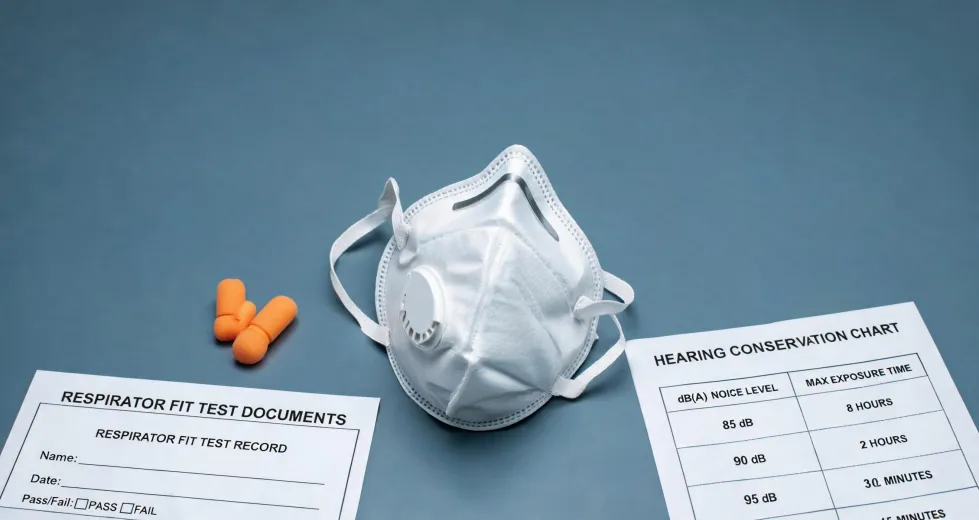
The short answer is: it depends. If you're looking for a Moldex 7000 series half mask respirator review and expecting one universal verdict, you're going to be disappointed. The 7000 series is a solid piece of PPE, but whether it's the right choice for your crew depends on how long they'll wear it, what they're exposed to, and how fast you need replacements.
In my role coordinating safety supplies for industrial facilities, I've handled 200+ rush orders over the past eight years—same-day turnarounds for plants facing audits, weekend deliveries for crews that ran out of cartridges, and one memorable shipment 36 hours before a major client's safety inspection. Most of those calls were about one thing: finding a compliant respirator that people will actually wear.
What I Check Before Calling Any Half Mask “Worth It”
Before any feature comparison, I start with three things: NIOSH approval, fit-testing requirements, and long-term supply. In the U.S., a half mask needs to be NIOSH-approved under 42 CFR Part 84, and your team needs fit testing under OSHA's respiratory protection standard (29 CFR 1910.134). The 7000 series checks the first box. The second box is on you.
Most procurement people start with price and approval status. Those matter, but they're not the first question. The first question is fit. A half mask that fails a fit test doesn't protect anyone, no matter what it costs. The 7000 series uses a soft facepiece with a wide sealing surface, which makes fit testing easier for a lot of wearers. I'm not going to say it fits everyone—no half mask does. But in our trials, the 7000 had a higher first-pass fit rate than two other reusable models we compared.
The question everyone asks is, “Does it take P100 filters?” The better question is, “Can I get filters and cartridges in stock within 48 hours?” Because a respirator without a compatible filter is just a plastic shell.
Which Scenario Are You In?
The reason this has to be broken into scenarios: a half mask that makes sense for a maintenance crew wearing it three hours a day could be overkill for a team that touches it once a month. Here's how I think about it.
Scenario 1: Daily Use for Long Shifts
If your crew wears respirators for four or more hours a day, comfort isn't a luxury. It's a compliance issue. Why? Because an uncomfortable mask ends up on a truck hook or inside a locker, and a mask that isn't worn is a mask that isn't protecting anyone.
I saw this play out when we switched one facility from a different reusable mask to the 7000 series. Fit-test complaint calls dropped by roughly a third in the following quarter. I don't have a peer-reviewed study for that; it's internal fleet data. But the pattern was consistent enough that the facility kept the 7000 as its standard.
The lower-profile design helped too. When a respirator collides with a hard hat or a face shield, it shifts. That creates seal gaps. For workers in tight spaces, this model's shape seemed to stay out of the way.
Scenario 2: Emergency Stock and Audit Deadlines
If you're reading this because you need masks before a deadline, time changes the decision more than any feature list. In March 2024, a client called 36 hours before their supplier audit. They needed 42 half masks, P100 filters for particulate work, and organic vapor cartridges for a solvent process. Normal distributor lead time was five to seven business days. We found a local safety supplier with genuine 7000 series in stock, paid $160 in emergency freight, and the order arrived 11 hours before the auditor walked in.
Normal lead time was five business days. We didn't have five days.
The client's alternative—rescheduling the audit—would have cost more than $5,000 in fees and lost credibility. The lesson: choose a distributor before you need them. Know who actually stocks Moldex 7000 series in your region. The worst rush order is the one you make for the first time at 4:00 PM on a Friday.
Scenario 3: Occasional Use and Budget-Conscious Teams
Not every organization needs a premium half mask. If your exposure assessment says work is short-term, below the relevant occupational exposure limit, and doesn't require a higher level of protection, a simpler and less expensive respirator might be the sensible call.
I'll be straightforward: I wouldn't push the 7000 series on a crew that wears a mask once a month for 15 minutes of spray painting. You'd be paying for durability and comfort you won't use. A compliant half mask with the right cartridge, a passed fit test, and proper training does the job.
What I would still avoid is buying unidentified “compatible” cartridges off an online marketplace. They might fit physically, but their performance is unverified. If budget is tight, buy from a known distributor and keep the NIOSH markings visible.
How to Tell Which Scenario You're In
Here's a quick checklist I use when a facility asks me to recommend a half mask:
- How many hours per shift will the respirator actually be worn?
- Is it worn with other PPE—hard hats, face shields, hearing protection?
- What's the hazard—particulates, vapors, or both—and what does your exposure assessment require?
- How quickly can your distributor resupply filters, cartridges, and facepieces?
If you answered “four or more hours” and “yes” to the PPE question, the 7000 series is worth a trial. If it's occasional use and the hazard is straightforward, save your budget. The point isn't to spend more; it's to spend on what changes the outcome.
One More Thing: Perception Matters
I used to think PPE was purely about function. Then a client walked through the maintenance shop and commented on the respirators hanging at each station. They didn't say, “Nice filtration.” They said, “These guys look professional.”
I know that sounds cosmetic. But the $2 or $3 difference per mask that buys a more comfortable facepiece also sends a signal to employees and visitors: safety isn't an afterthought. I've seen that perception show up in audit scores and even in how seriously crews treat their own gear. When you equip people like professionals, they tend to act like professionals.
That doesn't mean you should overspend on brand names. It means the cheapest option isn't necessarily the least expensive one once you account for fit-test failures, users skipping the mask, and the image you project every time someone walks into your facility.
A Quick Note on Logos and Counterfeit Risk
Since “moldex logo” is a search that lands here, let's cover something most reviews skip: label quality.
Genuine Moldex products have clean, molded logo details and clear approval markings. Lot numbers are easy to read and consistent across units. If you're buying from a marketplace and the logo looks blurry, the plastic has an odd sheen, or the packaging has typos, treat it as a red flag. Counterfeit respirators are a real issue, and a fake 7000 series can look right from two feet away while failing to seal.
Honestly, I'm not sure how widespread the problem is for this exact model. My best guess is it follows whatever SKUs are selling in volume. In my experience, spending a few extra minutes examining a sample before a bulk order is worth it.

Maeve Callahan
Maeve Callahan is a head-protection analyst covering Type I and Type II hard hats, climbing-style safety helmets, bump caps, chin straps, suspensions, liners, and face-shield carriers. She applies ANSI Z89.1, EN 397, and EN 12492 criteria while comparing impact attenuation, penetration resistance, lateral deformation, electrical class, retention strength, field of vision, mass, fit range, and temperature conditioning. Her guides help EHS teams, contractors, utilities, and buyers select helmet systems for overhead hazards, work at height, electrical exposure, accessory compatibility, and worker acceptance.