Moldex PPE Buying Checklist: P100 Filters, 9000 Series Respirators & Earplugs
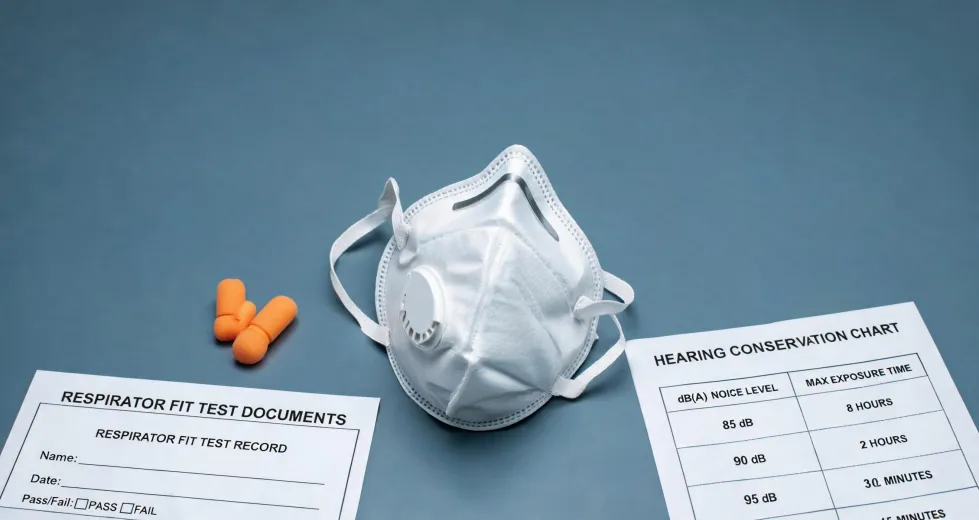
If you've been handed the PPE purchase order "because you're good at logistics," this checklist is for you.
I'm the office administrator for a 200-person manufacturing company. I manage our entire PPE procurement—roughly $80,000 a year across eight vendors, most of it in respiratory and hearing protection. I report to operations and finance, which means I'm accountable for safety compliance and the budget at the same time. When I took over this purchasing role in 2020, I assumed the lowest quote was always the best choice. Three budget overruns and one expired-filter discovery later, I learned to buy differently.
Who This Checklist Is For
This is for anyone who suddenly finds themselves responsible for ordering respirators, filters, and hearing protection for a team—admin buyers, office managers, warehouse leads, maintenance supervisors. The good news: buying Moldex respirators isn't complicated. The bad news: skipping any of these five checks will cost you time, money, or a very uncomfortable conversation with your safety manager.
The 5-Step Moldex PPE Purchasing Checklist
Step 1: Pin down the actual hazard before you pick a filter
When I first started ordering respirators, I assumed the highest protection rating was always the right call. I requested P100 filters across the board because it sounded the most impressive. Then our safety consultant pointed out an uncomfortable truth: P100 is the right choice for oil-based particulates and certain specific hazards, but for plain nuisance dust and non-oil particulates, an N95 can be the better technical fit. Over-specifying filters isn't just wasteful—it can give workers a false sense of security if the real hazard is actually a gas or vapor that particle filters don't stop at all.
Before you order any Moldex P100 filter, answer these three questions:
- What is the specific contaminant? Find it on the SDS, not from memory.
- Is it a particulate, gas, or vapor hazard? Particle filters only address particles.
- Is oil present in the work area? That determines whether you need N, R, or P series.
Checkpoint: the filter class matches the hazard assessment on file, not the most expensive option on the supplier's shelf.
Step 2: Confirm filter-to-mask compatibility by model number
This is the mistake that cost me a restocking fee and a week of wasted time. I sent an email that said "we need P100 filters for our Moldex masks." The supplier heard "any P100 filter will do." What arrived was 240 filters that didn't fit anything we owned. We were using the same words but meaning different things, and we didn't realize it until the box showed up and nothing clicked into place.
Moldex filters are model-specific. The P100 filter that fits the 9000 series full-face respirator isn't necessarily the one that fits a 7000 or 8000 series half-mask. Moldex publishes compatibility charts, and most product pages list compatible masks directly. The fix is boring: check the chart, put the exact model number on your PO, and ask the vendor to confirm compatibility in writing before they ship. That 30-second email saves a restocking conversation.
Checkpoint: every filter model number on your PO appears on the compatibility chart for the mask model your workers actually wear.
Step 3: Verify NIOSH approval numbers yourself
NIOSH approval is one of those things people assume is true and never check. The Moldex 9000 series full-face respirator and Moldex P100 filters carry NIOSH TC approval numbers. But counterfeit PPE is real enough that both NIOSH and Moldex have published warnings about it, and a knockoff "P100" filter can look right from a distance while offering a fraction of the protection.
Per the NIOSH Certified Equipment List (CEL), every approved respirator and filter carries a unique TC approval number. Verify current listings at www.cdc.gov/niosh/npptl/topics/respirators/cel/ before purchasing.
I check TC numbers on every new product we bring in and keep a copy in our PPE compliance folder. It takes two minutes: look at the number on the box, look it up in the NIOSH CEL, confirm the model and company match. If an OSHA inspector ever asks, you can show them the paperwork in seconds instead of making excuses.
Checkpoint: the TC approval number matches the NIOSH Certified Equipment List entry, and the record is saved in your compliance files.
Step 4: Fit-test a sample before you buy in bulk
This is the step most teams skip, and the one that hurts the most when skipped. A tight-fitting respirator only protects a worker if it seals to their face. That means a fit test before first use, and another every 12 months after that. It also means the size and model that works for one person may not work for the next.
When our operations manager asked me to order 50 full-face respirators in one go "to get a better unit price," I did. Then the fit-test results came back: 14 of our 50 workers couldn't get a seal with that model. Those units sat in storage while we scrambled to re-order from a different line. The "savings" from bulk pricing disappeared into restocking fees and rush shipping.
Now I order two or three sample units first, fit-test the people who'll actually wear them, confirm the sizes that work, and only then place the bulk order. And if you're looking at the 9000 series full-face respirator specifically, check that replacement parts—lenses, straps, exhalation valves—are still available before committing to one model.
Checkpoint: fit-test records exist for every worker wearing a respirator, and the model you're ordering matches exactly what they were tested on.
Step 5: Ask "what's NOT included" before you compare prices
I've learned to ask this question before asking "what's the price." Several years ago, a vendor quoted me a unit price 15% lower than our regular supplier. Turned out they added split-shipment fees, freight, and a minimum-order surcharge—the final invoice was barely 3% cheaper, with twice the lead time. And that's not even the worst scenario. A different vendor once handed our accounting team a handwritten receipt. Finance rejected the $2,400 expense report, and I ate it out of the department budget. Now I verify invoicing capability before placing any order.
When comparing Moldex quotes, get everything on the table:
- Shipping to each of your locations—we have three, and that changes the math completely
- Mixed-box quantities; you don't always need a full case of one SKU
- Replacement filter costs over 12 months, not just the first order
- Invoice format and payment terms that work for your finance team
Retail pricing for Moldex P100 filters varies noticeably by channel and volume—as of early 2025, I've seen quotes ranging from about $10 to $18 per filter depending on quantity. Always request current quotes, because PPE pricing moves with freight costs.
Checkpoint: the total landed cost—including all fees and freight—is written down and the supplier can explain it line by line.
Hearing Protection: The "Earplugs Near Me" Side of the Order
Most people searching "earplugs near me" aren't thinking about industrial procurement. But if you're placing a Moldex order anyway, hearing protection belongs in the same requisition. Our last noise survey in 2024 showed the machine floor at 92–96 dB, so we standardized on Moldex high-visibility foam earplugs with an NRR 33 rating and installed dispensers at the booth entrance.
Same discipline applies: check the NRR against your noise exposure data, confirm the earplugs work with the gloves your workers wear, and verify that your dispenser refills match the dispenser model. That last one is a mistake you only make once.
Common Mistakes I've Seen (and Owned)
1. Buying full-face respirators and letting them sit in storage
Respirators don't age gracefully. Lenses scratch, straps stretch, and exhalation valves crack—especially after months in a warm storage closet. Add a visual inspection step to your PPE rotation schedule, and rotate stock instead of hoarding it.
2. Stockpiling P100 filters until they expire
Moldex P100 filters have a finite shelf life, typically about five years from the manufacturing date printed on the packaging. Humid warehouses shorten that. Use a first-in-first-out system and check dates before you reorder.
3. Skipping fit-test documentation
Handing out respirators without fit tests isn't just a safety risk—it's an audit failure waiting to happen. An OSHA inspector will ask for fit-test records, and "we did it but didn't write it down" doesn't count. Budget for the fit-test service when you budget for the respirators.
4. Treating last year's price as this year's price
PPE pricing moves with raw materials and freight. I re-quote our Moldex orders once a year—not to switch vendors, but to know what current pricing looks like with all fees included. A transparent quote is worth the 20 minutes it takes to request.

Maeve Callahan
Maeve Callahan is a head-protection analyst covering Type I and Type II hard hats, climbing-style safety helmets, bump caps, chin straps, suspensions, liners, and face-shield carriers. She applies ANSI Z89.1, EN 397, and EN 12492 criteria while comparing impact attenuation, penetration resistance, lateral deformation, electrical class, retention strength, field of vision, mass, fit range, and temperature conditioning. Her guides help EHS teams, contractors, utilities, and buyers select helmet systems for overhead hazards, work at height, electrical exposure, accessory compatibility, and worker acceptance.