Moldex 2200 NIOSH N95: Why It Beat the Cheapest Approved Mask in Our Plant
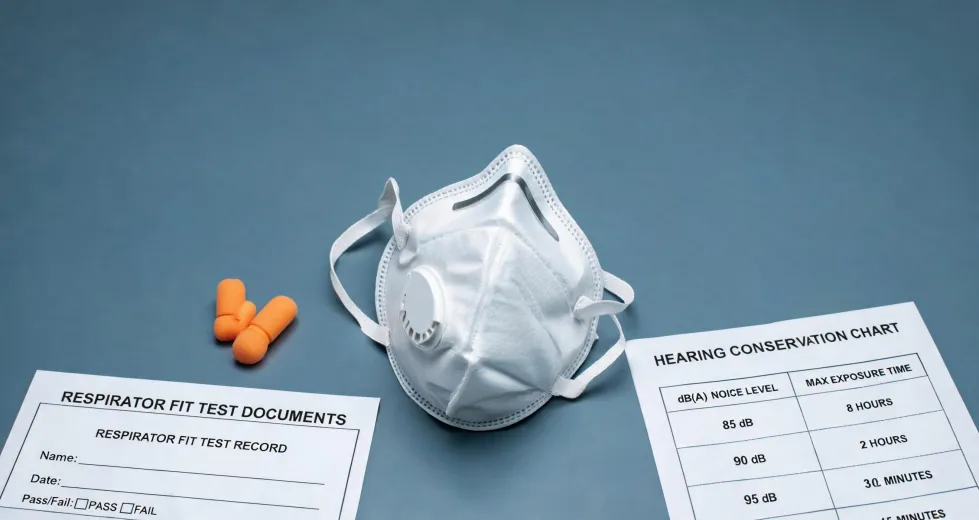
Last fall, I put two NIOSH-approved N95 respirators in front of 40 packing-line workers for a two-week trial. Both were standard cup-style masks. Both carried valid NIOSH approval marks on the shell. One quote came in about 20 percent lower per unit than the other at the volume we buy.
By the end of the trial, the cheaper mask was out of contention. The Moldex 2200 NIOSH N95 is now the standard N95 in our packing area.
I'll be direct: if that sounds like comfort won over hard data, it did—because comfort is hard data. NIOSH approval means a respirator model passed a certification test. It does not tell you what that mask will cost per worker per year once it reaches your floor. A mask can pass every lab test and still fail on a face at hour six.
I'm the quality compliance manager at a bakery-ingredient plant. I review every PPE order before it reaches the production floor—roughly 200 orders a year, including about 10,000 respirators. In 2024, I rejected roughly one in nine first PPE deliveries. Almost never because the certification was wrong. Usually because of lot codes that didn't match the boxes, straps that pulled loose under a firm tug, or shells that arrived creased. NIOSH approves a design; it doesn't test every lot, and it doesn't see what a worker does with a mask on Thursday afternoon.
What per-mask price hides
The cheap model in the trial did not fail spectacularly. It failed in small ways that added up. Over 14 days, our trial log for that mask had 20 entries: nose wires bent inward, straps slipping down, creased shells from being tossed into a bin. Three workers asked to switch to an entirely different model. The Moldex 2200 log had four entries—mostly 'different from my old mask,' not 'this hurts.'
Every entry in that log has a price. A worker with an uncomfortable mask stops to adjust it, pulls it down to talk, or walks back to the dispenser for another one. Those interruptions are small. Repeat them across 40 workers for a year and they eat into the same budget as the per-mask price.
Even bigger is the cost of model changes. OSHA's respiratory protection standard (29 CFR 1910.134) requires fit testing before first use, at least annually, and whenever the facepiece model changes. In 2024, we considered moving to a mask that was $0.06 cheaper per unit. On 10,000 masks, that looked like $600. The extra fit-test round for 40 employees would have taken about 13 hours of worker time. At our fully loaded labor rate, that's well over $600 before we counted scheduling, retraining, or the chance that some employees would not pass fit testing on the new model. The saving disappeared before we opened a carton.
We still buy on price. We just compare the right one. Since standardization, the cost per worker includes mask purchase, fit-test amortization over a stable model, replacement rates for failed straps, and supervision time. The 2200 won on that total, not on the line item.
Why the 2200, specifically
If you've never handled one, the 2200 is an ordinary N95 particulate respirator—no exhalation valve, no elaborate claims. Its advantages show up in details we check in receiving.
First, the nose area has no metal band. There is a molded bridge with a foam seal. In our trial, the most common problem with the cheaper mask was the nose wire: workers bent it to stop a leak, it creased, and the crease dug into the bridge of the nose. Then they bent it the other way, creating a channel for air. Every one of those adjustments is a moment when the mask is not sealed. The 2200 removes that specific error.
Second, the shell is stiff. Moldex calls it Dura-Mesh; I care less about the name than about the property. The shell doesn't sag, doesn't soften when the warehouse gets warm, and doesn't come out of the bottom of a pallet looking like someone folded it. For an N95 to work, it has to hold an airspace against your face. A shell that keeps its shape is not a comfort feature—it's a fit feature.
Third, consistency. In the three 2200 lots we've received since the trial, lot numbers matched the certification documents, and our receiving checks haven't flagged strap or foam defects. That consistency is what makes an incoming quality limit meaningful.
When a cheaper approved N95 is fine
If this sounds like a Moldex ad, let me add the caveats. A 2200 is not the answer for oil-based aerosols (N-series filters are not rated for oils), not for gases or vapors, and not for any situation where exposure levels require more than the assigned protection factor of 10 for an N95 filtering facepiece. Those jobs need different classes of respirators.
If respirator use is voluntary in a genuinely low-risk setting—a visitor area, occasional nuisance dust—the cheapest approved N95 might be fine. Just do not pretend that voluntary use and required use are the same situation.
And none of this changes the fundamentals. Every employee who needs an N95 still has to be fit tested on that exact model, and a written respiratory protection program still has to exist. The next time someone hands you a spec sheet and says 'approved is approved,' ask what else they know about the mask. If they only know the price, you're looking at the beginning of a conversation about total cost, not the end.

Maeve Callahan
Maeve Callahan is a head-protection analyst covering Type I and Type II hard hats, climbing-style safety helmets, bump caps, chin straps, suspensions, liners, and face-shield carriers. She applies ANSI Z89.1, EN 397, and EN 12492 criteria while comparing impact attenuation, penetration resistance, lateral deformation, electrical class, retention strength, field of vision, mass, fit range, and temperature conditioning. Her guides help EHS teams, contractors, utilities, and buyers select helmet systems for overhead hazards, work at height, electrical exposure, accessory compatibility, and worker acceptance.