How to Select PPE That Actually Saves Money: A 5-Step TCO Checklist for Safety Managers
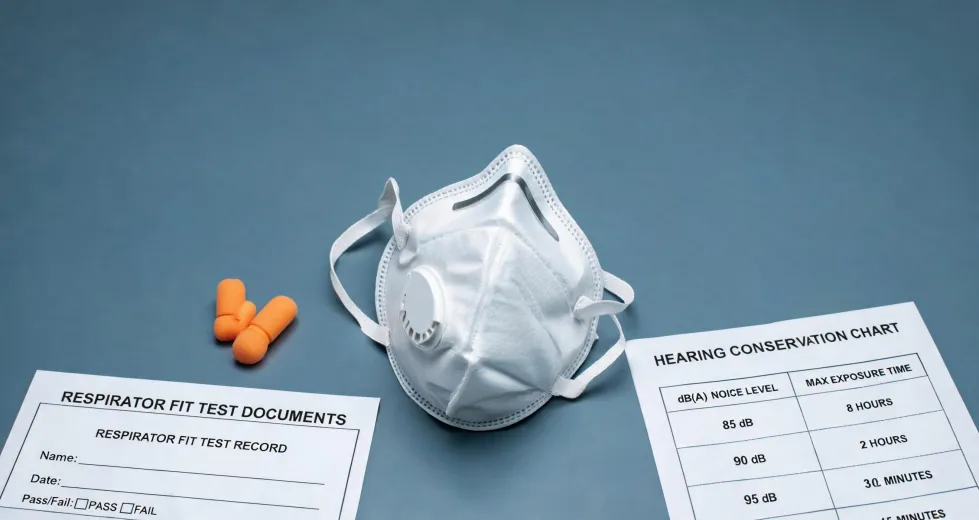
Who This Checklist Is For
If you're a safety manager, plant supervisor, or procurement officer responsible for sourcing PPE—respirators, earplugs, safety glasses—and you're tired of budget overruns from "cheap" options that cost more in the long run, this checklist is for you. It's based on my experience managing annual PPE budgets of $50,000+ for a mid-sized manufacturing company, where I've audited every invoice for the past six years.
The 5-Step TCO Checklist for PPE Procurement
Step 1: Stop Comparing Unit Prices—Compare Total Cost Per Shift
The first mistake most buyers make is looking at the sticker price. A box of foam earplugs might cost $8, but if workers need to replace them every four hours (because they get dirty or lose comfort), your daily cost per worker can skyrocket. For example, Moldex SparkPlugs soft foam earplugs often last an entire shift because of their smooth, non-irritating surface. At $0.12 per pair (based on bulk pricing as of Q1 2025), the real cost per use is lower than a $0.05 plug that needs three pairs a day.
Action: Divide the unit price by the average number of uses before disposal. Then compare across brands.
Step 2: Factor in Storage & Expiration
PPE doesn't last forever. N95 masks from Moldex (like the 2200 or 2400 series) have a typical shelf life of 3–5 years from manufacture, but moisture and crushing in storage can ruin them faster. When I audited our 2023 inventory, I found $2,400 worth of respirators that had expired sitting in a damp cabinet. That's a cost you can't ignore.
Checkpoint: Ask suppliers for manufacture dates and storage recommendations. Opt for smaller, more frequent orders if your usage is unpredictable.
Step 3: Include Training & Compliance Hidden Costs
Switching to a new respirator model might require re-fitting 200 employees. That's lost production time. I once saved $400 on a bulk order of Moldex 8000 series half-mask respirators, only to discover our crew had never been fitted for that model—we had to bring in a certified trainer at $1,200. The "savings" disappeared.
Action: Before switching, check if the new product is compatible with your existing training program. Moldex 8000 and 9000 series share the same filter attachment system, which can reduce re-training costs.
Step 4: Evaluate Durability for High-Wear Scenarios
Consider where the PPE will be used. For abrasive environments—like sanding or grinding—safety glasses scratch quickly. Moldex safety eyewear (e.g., their anti-fog lens options) typically lasts longer under heavy use. In my experience, a $6 pair of goggles replaced every 10 shifts is cheaper than a $3 pair replaced every 3 shifts. Calculate the cost per shift, not per item.
Same logic applies to indoor stair railing kits: the protective eyewear your crew wears while installing those kits better be tough enough to handle metal shavings and concrete dust—or you'll be reordering every week.
Step 5: Don't Forget Regulatory Updates
OSHA and NIOSH standards change. The Moldex P100 filters (like the 7500 series) meet current NIOSH approvals, but compliance requirements can shift. For example, when California updated its silica rule in 2024, many companies had to upgrade from N95 to P100 filters. Those who planned ahead avoided emergency rush orders (which often cost 20–30% more).
Checkpoint: Check the effective date of any new standard in your industry. Build a 6-month buffer into your budget cycle for upgrades.
Common Mistakes to Avoid
Mistake 1: Ignoring the "Wait, This Is What PPE Stands For" Factor
Some procurement folks new to safety (maybe they just googled "what's PPE" for the first time) assume all brands are equal. They aren't. Fit, comfort, and filter efficiency vary dramatically. A low-cost respirator that doesn't seal properly gives false protection—and that's a liability, not a saving. Moldex's proprietary Dura-Mesh® shell on their N95s resists collapse even in humid conditions, which is worth paying for.
Mistake 2: Treating All Earplugs the Same
I've seen buyers pick the cheapest earplugs because "workers just lose them anyway." But if plugs don't stay in place or cause discomfort, workers stop wearing them—and you get noise exposure violations. Moldex SparkPlugs have a NRR 33 rating, meaning they can reduce hazardous noise to safe levels when properly inserted. That's a compliance cost versus a comfort cost tradeoff worth evaluating.
Mistake 3: Assuming "Legal in My State" Applies to All PPE
Sometimes people conflate legal topics with safety gear. (For instance, someone searching "is pepper spray legal in NY" might also be looking for personal protection products.) But for industrial PPE, legality isn't the issue—certification is. Always verify that the respirator or filter you're buying carries NIOSH approval (or CE for EU). A product that's "legal" but not tested could land you in OSHA trouble.
Final Tip: Build a Simple Cost-Tracking Spreadsheet
I developed a TCO calculator after a $1,200 lesson in hidden costs. Now I log every PPE order with six columns: vendor, product, unit price, quantity, lifespan (days), and total annual cost. After 200+ orders, I can tell you the Moldex 8000 respirator consistently has one of the lowest total costs per shift because of its durable silicone facepiece and interchangeable filters. But don't take my word for it—run your own numbers.
Prices referenced as of March 2025. Verify current pricing at Moldex.com or your distributor. Regulatory information is for general guidance—consult official OSHA/NIOSH sources for current requirements.

Maeve Callahan
Maeve Callahan is a head-protection analyst covering Type I and Type II hard hats, climbing-style safety helmets, bump caps, chin straps, suspensions, liners, and face-shield carriers. She applies ANSI Z89.1, EN 397, and EN 12492 criteria while comparing impact attenuation, penetration resistance, lateral deformation, electrical class, retention strength, field of vision, mass, fit range, and temperature conditioning. Her guides help EHS teams, contractors, utilities, and buyers select helmet systems for overhead hazards, work at height, electrical exposure, accessory compatibility, and worker acceptance.