Don't Buy Everything From One PPE Supplier (Here's Why That Matters)
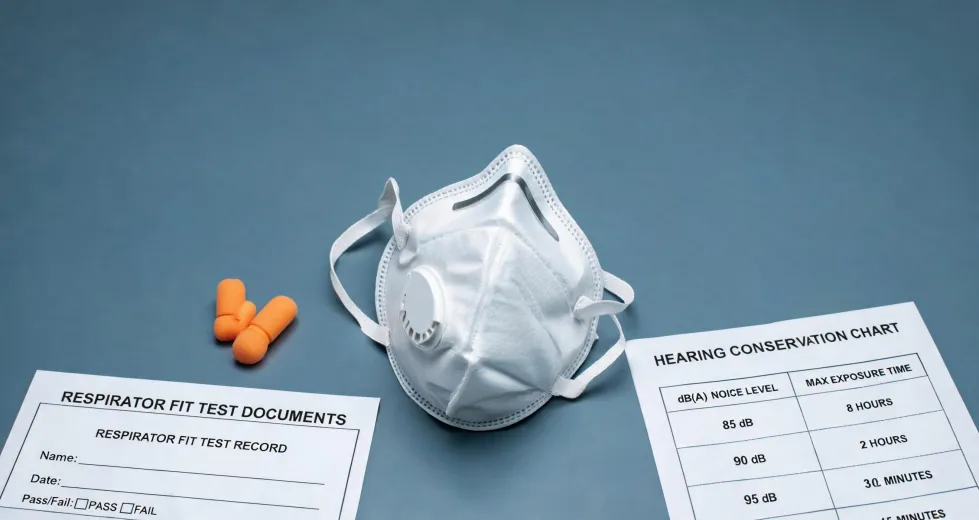
I believe the biggest mistake I see in industrial procurement is treating PPE like a commodity you can buy from any supplier. It's not. And I'll tell you why that matters.
When I first started managing our facility's safety equipment orders, I assumed that bigger catalogs meant better suppliers. A vendor who could sell us everything—from our N95 masks to the aluminum fence panels for the yard—seemed efficient. One call, one invoice, one relationship. What's not to like?
Three years and a few expensive lessons later, I've learned something completely different. The best PPE vendors are specialists who know their limits.
My Conversion: It Started With a Batche of Moldex N95 Masks
In our Q1 2024 quality audit, we received a batch of 5,000 Moldex Airwave N95 masks from a general industrial supplier. On paper, they met the NIOSH N95 standard. But here's the thing—the straps were inconsistent. Normal tolerance on strap tension in our spec is ±5%. These were hitting 11%. The sealing surface wasn't forming consistently on our test heads.
The vendor claimed it was 'within industry standard.' And they weren't wrong, technically. But for our workers who rely on those masks in dusty environments? That variability meant some masks sealed perfectly and others didn't. We rejected the batch. They redid it at their cost, but our production schedule took a hit.
That's when I started paying attention to who specializes in what. Moldex doesn't make fence panels. They make respiratory protection—N95s, P100s, half masks, full facepieces. That's their lane. And the difference between a Moldex N100 and a no-name respirator isn't subtle when you're looking at filter efficiency specs.
A vendor who said 'this isn't our strength—here's who does it better' earned my trust for everything else they did sell us.
The Three-Hat Problem: Why One Supplier Can't Do Everything Well
I'm not 100% sure on the exact business model of every distributor, but from what I've seen, trying to be everything to everyone rarely leads to depth in any one area. Here's why that matters for safety gear.
1. Certification Complexity is Real
Respiratory protection isn't like buying printer paper. A Moldex N95 mask has to pass NIOSH testing under 42 CFR Part 84. A half-face respirator like the Moldex 7000 series has to meet ANSI Z88.2 fit and performance requirements. Hearing protection like their SparkPlugs foam earplugs (NRR 33) needs ANSI S3.19 testing.
Each certification is a separate world. A supplier who's brilliant at sourcing steel panels for your cattle panel fence might not have a clue about the nuances of P100 filter certification cycles. And honestly? They shouldn't have to. That's why specialists exist.
2. The 'One-Stop Shop' Cost Premium is Real
The best part of finally getting our vendor process systematized: no more 3am worry sessions about whether the order will arrive on spec. But I only believed in specialization after ignoring that advice once and paying for it.
We had an $18,000 project where we needed Moldex N100 filters for a silica dust remediation job, along with fall restraint vs fall arrest harnesses for our crew working at height. A general supplier quoted us a bundle deal. Convenient? Yes. Turned out the harnesses were from a no-name brand with certifications I couldn't verify. The N100s? Sold as 'equivalent' to Moldex—but they weren't Moldex.
So glad I caught that before the order shipped. Almost approved it, which would have meant sending our team into a silica environment with unverified filters. Dodged a bullet.
The question isn't whether a generalist can source safety gear. It's whether they understand what makes it safe.
3. When Compliance is On the Line, Depth Matters
There's something satisfying about a perfectly executed PPE order—right product, right spec, right certification. After the stress of that Q1 batch rejection, finally getting our respiratory protection sourcing dialed in with a specialist vendor who knew Moldex inside and out? That's the payoff.
At the end of the day, safety compliance is about knowing what you don't know. I'd rather work with a specialist who tells me 'this isn't our strength—here's who does it better' than a generalist who overpromises on everything.
So when I'm looking at fall restraint vs fall arrest systems, I'm not calling a fence supplier. When I need aluminum fence panels for site security, I'm not calling a respirator company. And when I need Moldex Airwave N95 masks with consistent strap tension and reliable sealing? I'm calling someone who lives and breathes respiratory protection.
That's not a limitation. That's professionalism.

Maeve Callahan
Maeve Callahan is a head-protection analyst covering Type I and Type II hard hats, climbing-style safety helmets, bump caps, chin straps, suspensions, liners, and face-shield carriers. She applies ANSI Z89.1, EN 397, and EN 12492 criteria while comparing impact attenuation, penetration resistance, lateral deformation, electrical class, retention strength, field of vision, mass, fit range, and temperature conditioning. Her guides help EHS teams, contractors, utilities, and buyers select helmet systems for overhead hazards, work at height, electrical exposure, accessory compatibility, and worker acceptance.