Going Cheap on PPE Almost Cost Us $2,400. Here’s What I Learned as an Office Buyer
The Shift Supervisor's Email
It started with a short email from our shift supervisor. "The masks you ordered are falling apart. Dust is getting through." That's not the kind of message you want to read at 8:15 on a Tuesday.
I'm the office administrator for a 300-person manufacturing and assembly company. I handle procurement for everything from printer cartridges to cleaning supplies to PPE. When I took over purchasing in 2020, I had no formal safety training—just a spreadsheet and a budget. That combination led to what one of my colleagues now calls "the mask incident."
How I Took Over the PPE Budget
In early 2020, everyone suddenly needed masks. My VP told me to source enough N95s and dust masks so we could start reopening. I spent a weekend searching for dust mask moldex and safety glasses near me because I thought local suppliers would be faster. But my boss also wanted to keep costs down, so I kept filtering by price.
(Note to self: never let "keep costs down" override "keep your people safe.")
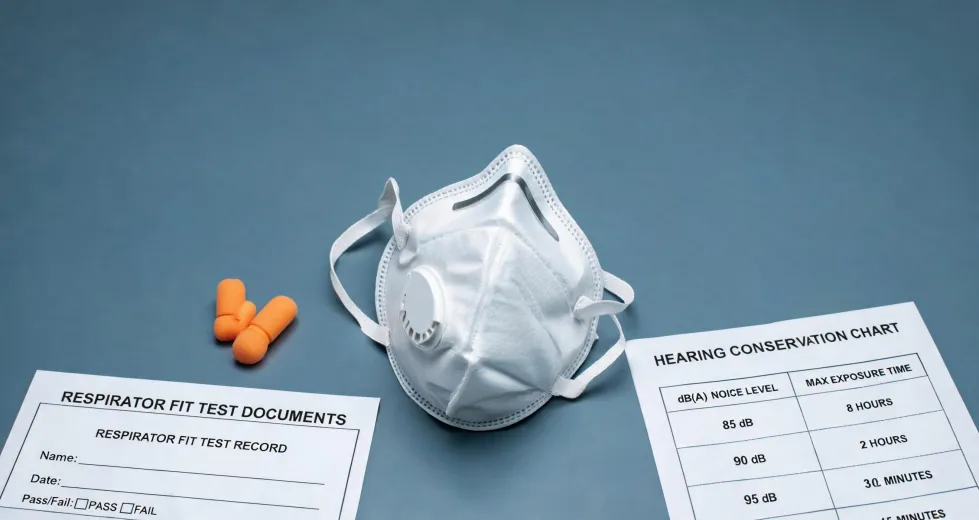
I found a vendor that was significantly cheaper than our regular supplier. Their masks looked fine in the catalog—white, pleated, ear loops. They even had a graphic claiming "high filtration efficiency." I didn't bother to verify whether they had NIOSH approval. That was mistake number one.
The Cheap Dust Mask Experiment
The delivery arrived three days late. I shrugged it off because offloading boxes took time. But within a week, the complaints started. Ear loops snapped. Metal nose strips poked through the fabric. Then the serious one: dust showed up on workers' faces after grinding jobs.
They couldn't provide a proper invoice either. The best they could do was a handwritten receipt, and our finance team rejected the expense report. I ate $2,400 out of the department budget. Worse, I had to explain to my VP why we had almost no usable masks and we were now waiting another week for replacements.
Everything I'd read about PPE said budget options were fine for basic tasks. My experience with that shipment suggested otherwise. We didn't just lose the product cost. We lost worker trust, and that's a lot harder to recover.
When I finally tried to return the masks, the vendor ghosted me. I had to ship them back myself. The USPS Priority Mail box cost me $28, and the masks still didn't get a refund. I never got any money back.
Finding a Better Approach
I went back to the drawing board. I searched for moldex after a safety consultant said they were a quieter, lighter alternative to what we'd been using. I didn't believe it at first. But then I actually held one of their dust masks.
It's tempting to think you can just compare unit prices. But the Moldex dust mask had a comfortable foam nose seal, and the straps felt like they wouldn't snap after an hour. More importantly, the NIOSH approval was printed right on the product. Per FTC guidelines, claims like "high filtration efficiency" have to be substantiated—and this time, the proof was right there.
We ordered a small batch of Moldex masks to test with the workers who complained the most. The feedback was "we can actually breathe in these." That sold me.
The Moldex 9000 Full-Face Respirator Decision
A few months later, our lab team needed more protection. Some employees were working with solvent vapors, and the half-mask respirators weren't comfortable enough for the long, repetitive tasks they had to complete. After consulting with our industrial hygienist, we decided to outfit two technicians with full-face respirators.
I looked at several options. The Moldex 9000 full-face respirator wasn't the cheapest upfront. But when I ran the total cost over two years, it actually came out ahead. The lenses were replaceable. The respirator accepted high-capacity P100 filters. And the face seal was comfortable enough that the technicians actually wore it. That last part matters more than you think. A respirator left in a locker protects nobody.
There was also a smaller hidden cost: training time. The 9000 series is simple to clean, and the low inhalation resistance meant the techs didn't get winded as quickly. For a $240 difference per unit over two years, that was an easy call.
Wet Chemical Fire Extinguisher and the "Safety in Context" Lesson
The same mindset carried over to other safety purchases. Our cafeteria manager asked me to order a fire extinguisher. I instinctively typed "fire extinguisher" into the supplier portal and almost picked the cheapest ABC model. Then I noticed the listing for a wet chemical fire extinguisher.
I remembered that wet chemical is for commercial kitchen grease fires. A regular extinguisher can actually spread a grease fire. The cafeteria manager confirmed it. So we spent a bit more, bought the right one, and skipped the potential disaster.
That clicked for me: on every safety purchase, "good enough" isn't good enough if you're matching the wrong tool to the hazard.
Which brings me to one of the strangest questions I've received as a buyer. A warehouse operator asked me, "can pepper spray kill a dog?" because a stray dog had wandered into the parking lot. I told them it might, but that was not an approved workplace solution. We called animal control. Just because a product exists doesn't mean it's the right decision for your workplace.
What I Would Do Differently
I've now been doing purchasing for five years. I process about 60 orders annually across eight vendors, and I can tell you: the lowest quoted price is rarely the lowest total cost. That $200 savings from the cheap mask order turned into a $2,400 expense rejection plus shipping and a lot of lost time.
If you're an admin buyer in a similar position, here's what I'd tell you:
- Check for NIOSH or OSHA markings before you look at the price. Certification isn't decorative.
- Ask for a sample before you buy in bulk, especially if the vendor is new.
- Factor in the cost of failed orders, worker complaints, and finance rejections. Those all count.
- Match every product to a hazard: dust, solvent vapor, grease fire, or a stray dog in the parking lot. General solutions are often false solutions.
It doesn't mean you have to buy the most expensive brand. It means you have to know the risk and buy the product that is proven to solve it. That's why I still buy Moldex today. Not because they're flashy, but because they passed the only test that matters: they work.

Jane Smith
I’m Jane Smith, a senior content writer with over 15 years of experience in the packaging and printing industry. I specialize in writing about the latest trends, technologies, and best practices in packaging design, sustainability, and printing techniques. My goal is to help businesses understand complex printing processes and design solutions that enhance both product packaging and brand visibility.