Cheap PPE Is the Most Expensive PPE: A Procurement Manager's Reality Check
Office administrator for a 350-person manufacturing company. I manage all safety equipment ordering—roughly $80,000 annually across 12 vendors—and I report to both operations and finance.
When I took over purchasing in 2020, I did what any sensible buyer would: I went for the lowest unit price. Safety glasses at $1.50 a pair. Bulk foam earplugs by the case. Whatever kept the budget lean and the finance team off my back. It took about three years—or rather, closer to four when I factor in the 2022 vendor incident—for me to realize cheap PPE is the most expensive PPE.
Why Our PPE Budget Kept Growing Despite Flat Headcount
In 2022, our safety equipment spend jumped 18% year-over-year. Headcount was flat. Operations hadn't expanded. Nobody had changed processes. Yet the purchase requisitions kept coming. I processed 60-80 orders that year alone for safety supplies.
When I pulled the data, I found something that initially made no sense. We were purchasing three times as many pairs of safety glasses as we had employees. Same story with hearing protection: we were going through somewhere between 3,500 and 4,000 foam earplugs per year for a production team of 80. Let me do that math for you—that's 40-50 pairs per person, per year.
My first instinct was to blame the workforce. "People are careless." "They lose their equipment." That's what our former safety coordinator told me, anyway, and I repeated it to my VP during the 2023 budget review. He asked one question I couldn't answer: "So what are you going to do differently?"
I didn't have an answer back then. Now I do.
The Deeper Issue: Uncomfortable PPE Doesn't Get Worn
The conventional wisdom is that workers resist wearing PPE because they're lazy or reckless. My experience with thousands of orders suggests otherwise: workers resist wearing bad PPE. And cheap equipment is almost always bad equipment.
Here's what $1.50 safety glasses do in real working conditions. They scratch within days, so the worker can't see clearly and takes them off. They fog up in humid environments, so they end up perched on a forehead. They pinch behind the ears, so they get stashed in a drawer by lunchtime. Dig through any toolbox on a job site and you'll find a graveyard of "$2 glasses" that were used for a week and discarded.
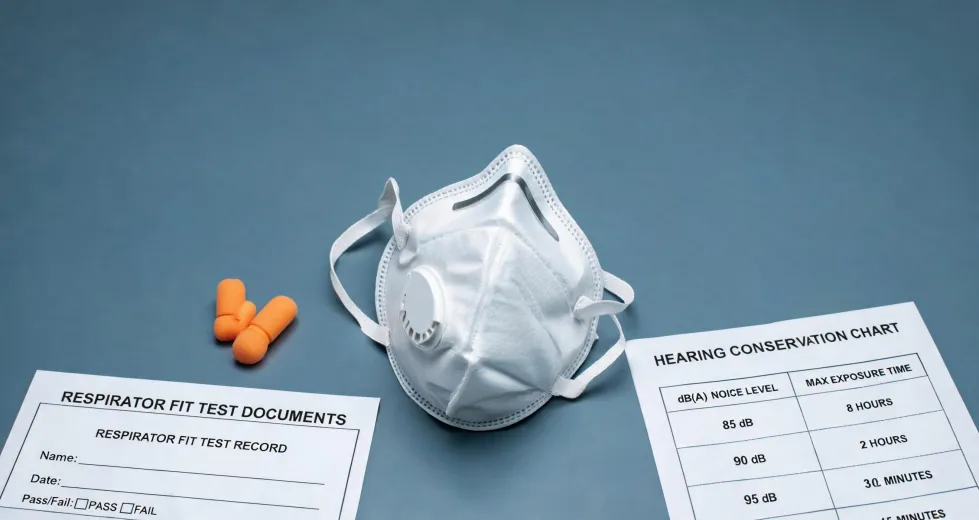
The same logic applies to earplugs. Bulk boxes of budget foam plugs seem economical at $0.15 per pair. But workers shove them in pockets, lose them, or wear them so long they become dirty and uncomfortable. Then they stop wearing them. Then we reorder more. The box gets reordered monthly, give or take.
There's a deeper insight here that took me a while to grasp: the replacement pattern was the real signal. We weren't buying PPE. We were buying the illusion of PPE—boxes of equipment that technically existed in inventory but rarely made it onto workers' faces. The purchase order was closed, but the problem remained.
The Price of Getting This Wrong
In late 2023, I compared our Q1 and Q2 purchases side by side—same departments, same headcount, different vendors. That comparison changed how I think about procurement.
The replacement math. We ordered roughly 250 extra pairs of safety glasses in 2023 at $2.20 per pair. That's $550 spent on glasses that vanished, scratched beyond use, or ended up in a landfill. Add the earplug count and the story gets worse: 4,000 pairs of foam earplugs at bulk pricing adds up to roughly $600 a year for items that functionally disappeared. Combined with other frequently reordered PPE, our total replacement spend was about $3,700 in a single year—14% of our entire safety budget going to re-buy things we'd already purchased.
The vendor trap. In 2022, I switched to a discount supplier whose per-unit quote came in 30% below our regular vendor. The first order arrived late—or rather, partially on time, then two weeks late for the rest. The packing slip didn't match the order. The invoice was a handwritten receipt. Finance rejected the expense. I had to eat $437 out of my department budget to cover the mismatch. So glad I'd kept the confirmation emails (which, honestly, was more luck than foresight). That experience taught me to ask "what's NOT included" before "what's the price." The transparent vendor who lists all fees upfront—even when the total looks higher—costs less in the end.
The compliance risk. I walked through the production floor in June 2023 and counted nine workers without eye protection. Nobody said "I refused to wear it." Every single person said some version of the same thing:
"The glasses fog up and I can't see."
A citation for inadequate PPE can run into five figures. If we'd been inspected that day, the $550 in replacement glasses would have been the least of our problems.
The cost that's hardest to quantify is the cultural one. When workers see that the company buys equipment nobody can actually use, they stop believing the company cares about their safety. That's the most expensive cost of all.
What Actually Changed: It Wasn't Just Spending More
The fix wasn't to buy the most expensive equipment on the market. It was to buy equipment that people would actually wear. That single criterion—will this get worn?—reshaped our entire procurement process.
1. Switch to anti-fog safety eyewear
We moved to Moldex safety glasses with anti-fog lenses in late 2023. The unit price increased from $2 to roughly $10-$14 depending on the model. The replacement rate plummeted by about 70% within two quarters. A $12 pair that gets worn daily for six months beats a $2 pair that gets replaced monthly—that math isn't even close.
2. Give workers their own hearing protection
We replaced the bulk foam earplug contract with Moldex Rockets reusable earplugs, which carry an NRR of 27. Each production worker now gets their own pair with a lanyard. They clean it, they keep it, they know it's theirs. Our hearing protection reorder frequency dropped from quarterly to twice a year. The cost per worker is about $3.50—roughly equivalent to 23 pairs of the foam plugs we used to lose every month.
3. Track usage, not purchases
Here's the dirty secret of safety equipment procurement: most companies measure what they buy, not what gets used. We changed that. Our safety coordinator now verifies during shift walkthroughs that workers are wearing their issued equipment. Once we started tracking usage rather than order counts, the connection between product quality and real-world compliance became impossible to ignore.
The Bottom Line
If your safety equipment budget keeps growing while your safety issues don't improve, your problem isn't the vendors. It's the equipment—and possibly the procurement criteria.
Ask yourself honestly: would you wear those $1.50 glasses for eight hours in a hot warehouse? Would you put that foam earplug in your ear more than once?
If the answer is no, the unit price doesn't matter. You're going to buy the cheap stuff anyway—you'll just buy it twice. Or three times. Or, in our case, about 4,000 pairs of earplugs a year for 80 people.
The fix isn't complicated. Buy safety equipment people will actually use. Then buy it once.

Maeve Callahan
Maeve Callahan is a head-protection analyst covering Type I and Type II hard hats, climbing-style safety helmets, bump caps, chin straps, suspensions, liners, and face-shield carriers. She applies ANSI Z89.1, EN 397, and EN 12492 criteria while comparing impact attenuation, penetration resistance, lateral deformation, electrical class, retention strength, field of vision, mass, fit range, and temperature conditioning. Her guides help EHS teams, contractors, utilities, and buyers select helmet systems for overhead hazards, work at height, electrical exposure, accessory compatibility, and worker acceptance.