Moldex PPE Procurement Guide: Respirators, Earplugs, Safety Glasses, and Nitrile Gloves (2025)
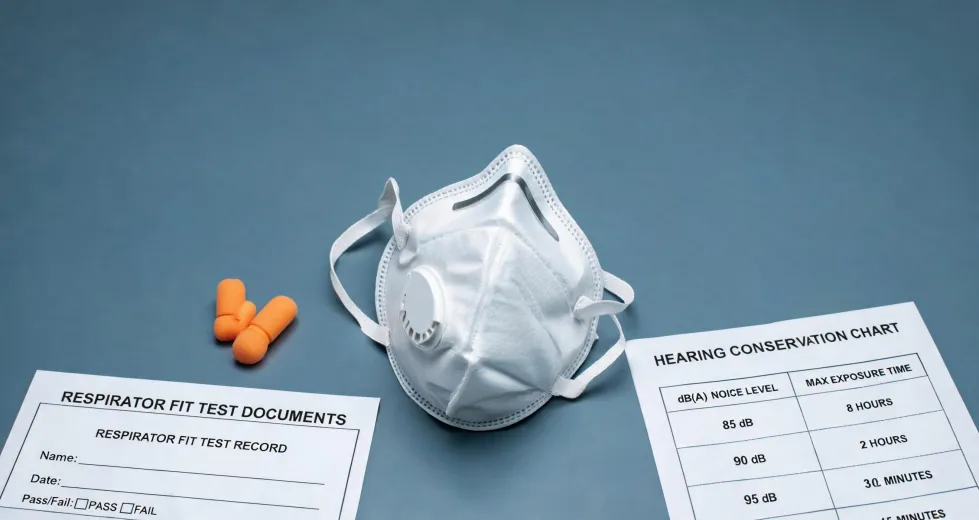
I don't have a one-size-fits-all PPE list. Anyone who tells you different is probably trying to sell you one.
My perspective comes from managing an annual PPE budget of about $180,000 at a 140-person specialty chemical manufacturer. I've been in that seat for 8 years, tracked every order in our procurement system, and compared at least 8 vendors in the last 3 months. The lesson that sticks: your protection program should match your exposure profile, not a product catalog.
Here's the boundary of my experience: it's based on roughly 200 mid-range industrial orders with small and mid-size manufacturers. If you're buying for a 5,000-person construction giant or a hospital network, your pricing, compliance, and packaging needs will differ.
Three Exposure Profiles, Three Different Budgets
Instead of asking which product is “best,” start with a simpler question: what are your people exposed to?
- Scenario A: Light Industrial / Assembly — dust, nuisance particles, intermittent noise, occasional glove use.
- Scenario B: Chemical and Particle Heavy — solvents, acids, fine dust, splash risk. This is where full-face respirators enter the conversation.
- Scenario C: Mixed Noise, Dust, and Wind — road crews, utilities, outdoor maintenance. Noise is constant, and debris gets blown into faces.
If you're not sure which group you're in, jump to the last section before you spend anything.
Scenario A: Light Industrial / Assembly
If your work is mostly packing, assembly, or light maintenance, resist the urge to buy “industrial heavy” gear.
Respirator: A half mask with P100 filters is probably enough. I like the Moldex 7000 series for this, but the exact model matters less than a proper fit test. The Moldex 9000 full face respirator is overkill here—or rather, overkill for 90% of the tasks. For nuisance dust and particles, a full facepiece adds cost and weight without changing the protection level.
Hearing: If your noise exposure sits between 85 and 90 dBA, the highest NRR isn't automatically the right answer. To be fair, the Moldex Pura-Fit earplugs NRR 33 product page is the one I bookmark for high-noise areas, but in this scenario I'd spec a lower-profile foam plug that's easier to fit. What most people don't realize is that extreme NRR can overprotect in moderate noise, isolating workers from alarms and announcements.
Gloves: If you've ever asked what are nitrile gloves, here's the short answer. They're synthetic rubber gloves made from nitrile butadiene rubber, and they resist oils, solvents, and punctures better than latex or vinyl. For assembly and light handling, a standard 6-mil disposable nitrile glove is fine. You don't need 15-mil chemical gauntlets to pack boxes.
Eyewear: Basic anti-fog safety glasses. Don't overthink it.
Scenario B: Chemical and Particle Heavy
This is where a full-face respirator earns its place. If your workers handle acids, solvents, or fine dust that can irritate their eyes, a half mask leaves a gap. The Moldex 9000 full face respirator with P100 filters is the first thing I'd evaluate.
I have mixed feelings about full-face units. They're bigger, hotter, and workers complain. On the other hand, one acid splash to the eyes can cost more than the respirator plus the medical paperwork and lost time. If you ask me, that trade is worth it when splash risk is real.
Here's something vendors won't tell you: the facepiece is only half the cost. Filters and cartridges are where the real money goes. When I audited our 2023 spending, our respirator filters accounted for about 40% of PPE line items—actually 37%, but close enough. Before you standardize on a full-face respirator for an entire crew, count the annual filter cost per worker.
According to NIOSH, a P100 filter must capture at least 99.97% of airborne particles and is oil-resistant. That sounds reassuring, but the weak link in most programs is fit, not filter media. Under OSHA 29 CFR 1910.134, respirators must be NIOSH-approved, and fit testing isn't optional.
If your only airborne hazard is particle dust, I'd argue a half mask with P100 filters does 80% of the job at a fraction of the TCO. If you're dealing with chemical splash, the Moldex 9000 full face respirator is a justifiable expense. It's not about brand loyalty. What I mean is, I'd buy the same type of sealed facepiece from any manufacturer that passes fit testing and meets NIOSH approval.
Scenario C: Mixed Noise, Dust, and Wind
This scenario is common in municipal utilities, road crews, and outdoor maintenance. The hard part is that no single product is designed for all three hazards.
Hearing: My first stop is still the Moldex Pura-Fit earplugs NRR 33 product page. I've been tracking that product for years, and NRR 33 is among the highest foam earplug ratings I've seen. When noise pushes past 100 dBA, that extra attenuation matters. But NRR is only as good as insertion. Handing out earplugs at the timeclock doesn't work; we now schedule a 10-minute fitting refresher every year.
Eyewear: This is where I split between two frames. Nemesis safety glasses have a low-profile design and a foam gasket that seals against wind and dust. They're my pick for grinding, chipping, and dusty utility work. Bolle safety glasses offer a wider wrap and good anti-fog coatings, which helps when workers move between cold outdoor air and warm indoor areas. I don't see them as direct competitors; they solve different face shapes and tasks.
Gloves: In this scenario, workers often handle oily parts, so an 8-mil nitrile glove is a good middle ground. It gives more puncture resistance than a 4-mil exam glove without the stiffness of a 15-mil chemical glove.
How To Tell Which Scenario You're In
I've given three different lists, so here's the judgment guide.
- Start with noise. If your 8-hour TWA is under 85 dBA, OSHA doesn't require a hearing conservation program (29 CFR 1910.95), though hearing protection is still smart near loud equipment. If it's above, you're closer to Scenario C.
- Look at chemical splash risk. If there's a chance of liquid hitting the face, a full-face respirator isn't a luxury—it's the missing barrier.
- If the biggest nuisance is dust in the wind, prioritize sealed eyewear like Nemesis safety glasses over general-purpose anti-fog styles.
If you're doing hazmat response or firefighting, ignore this whole guide. That's a specialty procurement category with different standards and much higher costs.
Final Thoughts
The PPE market keeps pushing “higher protection levels,” but procurement is about matching protection to actual exposure. In my experience, the cheapest policy isn't the one with the lowest unit price—it's the one with complete coverage that workers actually wear.
I still kick myself for choosing a cheaper safety glass once because the frame specs looked identical on paper. Six months later, a worker's pair fell off during a grinding task. No injury, but it shook my confidence in cutting corners. Now I test gear on the floor for two weeks before adding it to a purchase order.
If you're buying for a similar operation, I hope this helps. If you're in the other 20% with unusual exposures, don't take my word for it. Get a certified safety professional to review your hazard assessment.

Maeve Callahan
Maeve Callahan is a head-protection analyst covering Type I and Type II hard hats, climbing-style safety helmets, bump caps, chin straps, suspensions, liners, and face-shield carriers. She applies ANSI Z89.1, EN 397, and EN 12492 criteria while comparing impact attenuation, penetration resistance, lateral deformation, electrical class, retention strength, field of vision, mass, fit range, and temperature conditioning. Her guides help EHS teams, contractors, utilities, and buyers select helmet systems for overhead hazards, work at height, electrical exposure, accessory compatibility, and worker acceptance.