Why Your Smoke Detector Keeps Beeping: An Emergency Manager’s Take on Prevention
Stop Fixing the Beep. Fix the System.
In my role coordinating safety equipment for industrial clients, I've handled over 200 emergency orders in the last four years—including same-day turnarounds for OSHA-cited facilities. But here's what keeps me up at night: most of those emergencies were preventable.
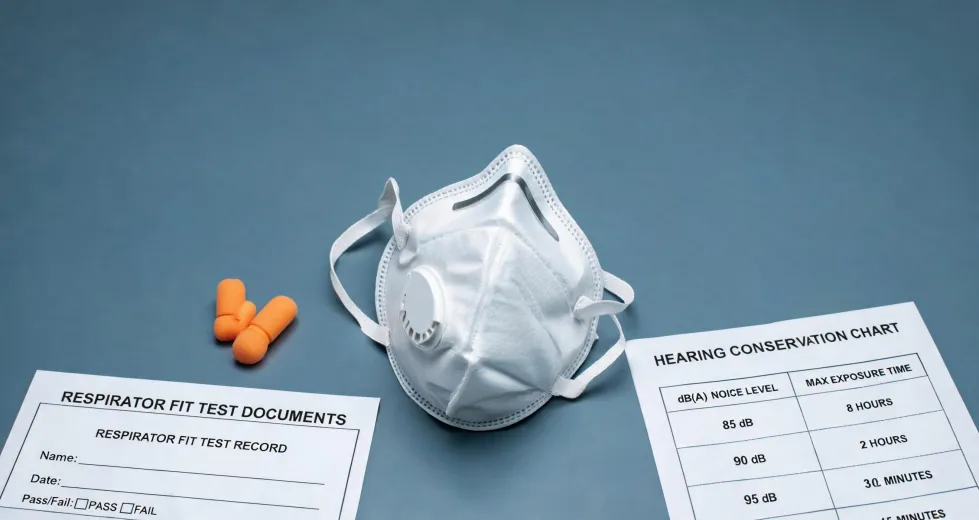
I'm not talking about the dramatic stuff—the full brim hard hat that fell off a scaffold or the filter that got clogged with crystalline silica. Those happen. I'm talking about the mundane, maddening, totally predictable failures: the N95 that doesn't seal, the half-face respirator that won't pass a fit test, the storage case that's full of dust.
The conventional wisdom says a good safety program is about having the right equipment on hand—stock enough Moldex N95s (like the 2200 or 2400 series), rotate your Moldex N100 control filters quarterly, and make sure everyone has a pair of SparkPlugs handy. But that's not enough. You can have the best PPE in the world and still fail a certification audit if you're running a reactive program.
The Initial Misjudgment: I Chased the Wrong Metric
When I first started managing PPE procurement, I assumed the biggest risk was running out of stock. I focused on fill rates and delivery times. Get the gear to the site within 48 hours. Keep the bins full. Easy, right?
My first major wake-up call came in March 2023. A client's manufacturing facility failed its annual OSHA inspection—two violations for improperly stored respirators and a stack of expired moldex n95 respirator boxes that someone had stacked against a heater. The fire marshal had been through a week earlier and flagged the whole corner. The client's safety manager called me at 4 p.m. on a Thursday, needing a complete storage system—cabinets, bins, labels, the works—by Monday morning.
Normal turnaround for that kind of order is 5 business days. We paid a 60% premium in rush fees ($1,200 on top of a $2,000 base cost) to get it there by Saturday. The client's alternative was a $15,000 fine and a stop-work order. We saved the $15,000, but the client still had to eat $3,200 for the equipment plus the premium. And the root cause? Nobody had walked the floor in six months.
The Argument: Prevention Is the Only Efficient Emergency Strategy
Here's my view: the most expensive mistake in safety management is putting out fires instead of preventing them. Not because fires are expensive—they are—but because each put-out fire teaches the wrong lesson. It reinforces the idea that you can fix a crisis with a checkbook.
But emergency response is not free. It costs 3X to 5X more than routine maintenance. And that's just the monetary cost. The hidden cost is the erosion of trust with your workforce. When your team walks into a facility and sees a half-face respirator hanging on a nail next to a P100 filter that's been used for six months, they learn that PPE is optional.
Why I'm Not Talking About Product Quality
Before someone says it: This isn't about choosing a bad product. Moldex offers a full line of NIOSH-approved respirators—from the disposable N95 (like the 4600 series) to the reusable 7000/8000/9000 series half-mask respirators. Their P100 filters are among the best in the industry for high-heat and high-humidity environments. Their NRR 33 foam earplugs (like the Pura-Fit) are industry standards.
But hardware is just hardware. You can fail an audit with a $50 respirator just as easily as you can with a $5 one. The difference is maintenance, storage, and training.
The Evidence: What Actually Happens in the Field
Let me give you two data points from my own experience.
Data Point 1: The Disposable N95 That Never Got Replaced
A wastewater treatment plant I worked with bought 5,000 Moldex N95 respirators (the 2700 series, with Nuisance Odor Relief). Good equipment, appropriate for their job. But the crew kept using the same respirator for a full shift, not realizing that the N95 rating assumes you change it after every use. By week two, the straps were stretched, the nose foam was compressed, and one foreman was using a respirator with a hole where the exhalation valve had popped out. He said, "It's fine—it's still Moldex." The product wasn't the problem. The culture was. We fixed it by implementing a simple visual check at the start of every shift: (1) check the strap tension, (2) inspect the foam, (3) look for holes. It took 30 seconds per person. Prevented at least 5 failures a month.
Data Point 2: The P100 Filter That Saved a $50,000 Project
A chemical processing client needed Moldex N100 control filters for an emergency asbestos abatement. The job was scheduled for 48 hours, but on Day 1, the HEPA vacuum filters clogged. The project was about to be shut down—$50,000 in penalties. The supervisor didn't panic. He had a backup plan: a pre-inspected selection of P100 filters (Moldex 8293 series, P100/HEPA-rated) that he'd already staged at the job site. He swapped the filters, the abatement continued, and the job finished within the deadline. The only cost: an extra $800 in filter inventory. The savings: $50,000. That's prevention.
The Counter-Argument: But Prevention Takes Time
I hear this a lot. "We don't have time to do a 30-second inspection every shift. We have too many lines running." I get it. Everything looks like an emergency when you're reactive.
But think about what you actually spend time on when something goes wrong. A fit-test failure for a half-face respirator can eat 45 minutes of a supervisor's time—finding the employee, locating the proper respirator or new cartridge, re-running the test. A storage violation can mean a 2-hour walkthrough with the safety officer. A regulator inspection can eat an entire morning. Five minutes of verification beats five days of correction.
I'll be honest: I used to think that the cost of premium PPE was mostly marketing. But after seeing what happens when you compromise on the condition of even the best equipment, I changed my mind. The real cost isn't the product—it's the failure to treat that product as part of a system.
That's why my team now uses a 7-point pre-use checklist for any PPE gear that hasn't been checked in the last 30 days. It includes checking the expiration date on P100 filters, inspecting the gasket on the half-face respirator, and verifying that the full brim hard hat isn't cracked (even one crack compromises integrity). We caught a batch of aged storage cases last quarter—the plastic had become brittle from UV exposure. Refreshed them for $500 instead of replacing them for $4,000 after failure.
Bottom Line
I'm not saying that every problem in safety is preventable. You can't predict every job site hazard. But the most common failures—the ones that cost you audits, fines, and credibility—are the ones you can see coming.
The guy who changes his Moldex N95 respirator on schedule and inspects his P100 control filters every month is going to spend less money in the long run than the guy who waits for a failure. Not because the equipment is better. Because the system is.
So the next time your smoke detector starts beeping, don't just yank the battery. Ask yourself: what else have I been ignoring?

Maeve Callahan
Maeve Callahan is a head-protection analyst covering Type I and Type II hard hats, climbing-style safety helmets, bump caps, chin straps, suspensions, liners, and face-shield carriers. She applies ANSI Z89.1, EN 397, and EN 12492 criteria while comparing impact attenuation, penetration resistance, lateral deformation, electrical class, retention strength, field of vision, mass, fit range, and temperature conditioning. Her guides help EHS teams, contractors, utilities, and buyers select helmet systems for overhead hazards, work at height, electrical exposure, accessory compatibility, and worker acceptance.