Why Your Respirator Choice Matters More Than You Think: A Field Specialist's Perspective on Moldex N95 2200 and 7000 Series
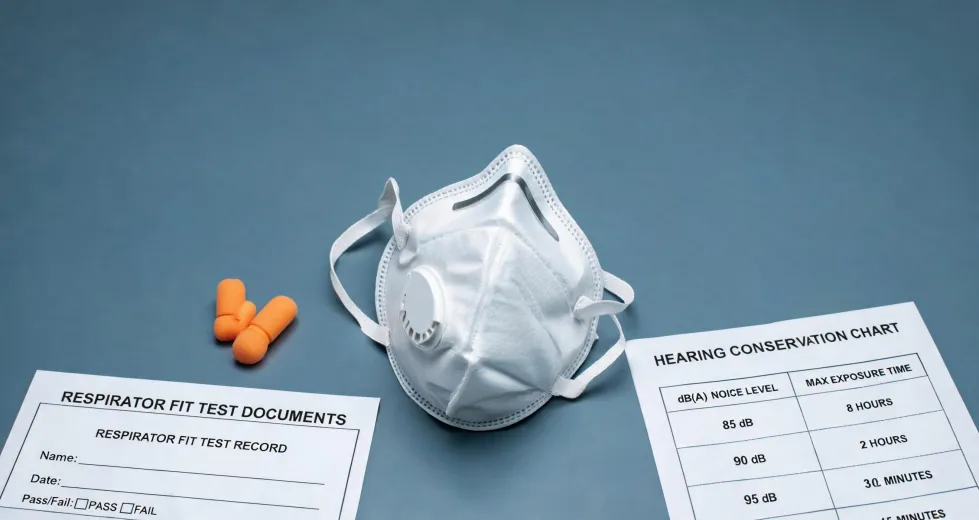
I Thought I Knew What 'Good Enough' Looked Like
When I first started coordinating emergency PPE orders for industrial clients, I assumed the cheapest N95 was the smartest move. Budgets were tight, deadlines were shorter, and a box of masks was just a box of masks, right? Wrong.
In March 2024, I had 36 hours to equip a crew of 45 for an unexpected asbestos remediation job. The client's purchasing manager had already ordered a generic flat-fold respirator from a discount supplier. It arrived with no NIOSH certification markings. We had to scrap the entire order, call in a rush from a certified supplier, and eat $1,200 in expedited shipping. The alternative—sending workers into a hazardous environment with substandard gear—wasn't just illegal; it was dangerous.
That's when I stopped treating respirator selection as a commodity purchase and started digging into what actually matters. This article is about what I learned—and why the Moldex N95 2200 and 7000 series half mask respirator reviews you've been reading might be missing the point.
The Surface Problem: Price and Comfort
Most people searching for respirators start with two questions: How much? and Is it comfortable? Those are valid—but they're surface-level. I've had clients spend hours comparing prices on the Moldex N95 2200 versus a generic brand, only to discover later that the cheaper option didn't have a proper seal for their face shape.
Comfort matters, but not as much as fit. A mask that feels great but leaks is a false sense of security. The Moldex 7000 series half mask respirator, for example, uses a different sealing design than the N95 2200. Some users love it; others find it doesn't work with their facial structure. The real question isn't which is cheaper—it's which fits you.
The Deeper Cause: Why We Misjudge Protection
Here's the part I only figured out after dozens of rushed orders and a few near-misses: we overestimate our ability to spot a bad respirator. The visual difference between a certified N95 and a counterfeit can be tiny—a missing stamp, slightly thinner elastic, a different nose wire feel. You won't notice until it fails a fit test. Or worse, until someone gets sick.
Another hidden layer: most buyers don't understand the difference between filtering facepiece (like the N95 2200) and elastomeric half mask (like the 7000 series). They see both as 'respirators' and pick based on price. But the two designs have completely different use cases. The N95 2200 is disposable, lightweight, and works for short-term use. The 7000 series is reusable, accepts multiple types of filters (including P100), and costs more upfront but less per use over time. If you're doing daily tasks, the 7000 series pays for itself in six months. If you need one-time emergency gear, the 2200 is the smarter pick.
The Real Cost of Getting It Wrong
Let me put some numbers on this. In a recent project, a client chose a non-certified 'N95-like' mask to save $0.30 per unit on a 500-unit order. The savings: $150. The consequences:
- One worker developed respiratory irritation because the mask didn't seal.
- OSHA inspected the site, found non-compliant PPE, and issued a $4,500 fine.
- Work was delayed by two days while proper Moldex N95 2200 masks were sourced.
The $150 'saving' turned into a $4,500+ hit plus lost productivity. That's the hidden cost.
And it's not just respirators. I've seen similar patterns with hearing protection. Someone asks "can you sleep with earplugs?" and grabs the cheapest foam pair from a drugstore. Those earplugs may have an NRR of just 22, when a Moldex SparkPlugs NRR 33 could reduce noise by 11 more decibels. For people working in industrial environments—or even trying to sleep near a highway—that difference matters. I've had shift workers tell me their sleep quality improved dramatically after switching to higher-NRR earplugs. The wrong choice costs you rest, health, and productivity.
The Simple Fix: Think Like a Safety Specialist, Not a Shopper
I'm not saying you need to become an expert. But here's what I've learned from processing over 200 rush orders for PPE: the cheapest option is rarely the most cost-effective, and the most expensive isn't always the best. You need to match the product to the specific hazard, the duration of exposure, the user's face shape, and the regulatory requirements.
For respiratory protection, start with NIOSH certification. Then consider whether you need disposable (like Moldex N95 2200) or reusable (like 7000 series). For hearing, look at the NRR rating and test different models. For eye and face protection, think about impact resistance and anti-fog coatings.
And if you're searching for pepper spray or insulated coveralls for men—those are different categories altogether. Don't lump respiratory PPE with general safety gear. Each piece serves a distinct purpose, and cutting corners on one won't be compensated by overspending on another.
A Quick Note on Sleeping with Earplugs
Since I get asked this often: yes, you can sleep with earplugs, but choose carefully. Soft foam earplugs with a high NRR (like Moldex SparkPlugs) are comfortable for side sleepers if you insert them correctly. Don't push them too deep, and clean them regularly. And never reuse disposable earplugs more than a few times—they lose their seal and can carry bacteria.
Bottom Line
The deepest problem isn't choosing between Moldex and another brand. It's understanding that PPE is not a commodity. It's an investment in safety and efficiency. A small upfront effort to select the right product can save you fines, health issues, and downtime. Next time you're reading Moldex 7000 series half mask respirator reviews, ask yourself: does this reviewer's face shape match mine? Are they using it for the same tasks? Do they understand the filter requirements? If not, take the review with a grain of salt—and do a fit test yourself.
That's the lesson I learned the hard way, with a missed deadline and a hefty rush fee. Now I make better choices. You can too.

Maeve Callahan
Maeve Callahan is a head-protection analyst covering Type I and Type II hard hats, climbing-style safety helmets, bump caps, chin straps, suspensions, liners, and face-shield carriers. She applies ANSI Z89.1, EN 397, and EN 12492 criteria while comparing impact attenuation, penetration resistance, lateral deformation, electrical class, retention strength, field of vision, mass, fit range, and temperature conditioning. Her guides help EHS teams, contractors, utilities, and buyers select helmet systems for overhead hazards, work at height, electrical exposure, accessory compatibility, and worker acceptance.