Why Buying a Moldex 2400 N95 Mask Was Harder Than It Looked
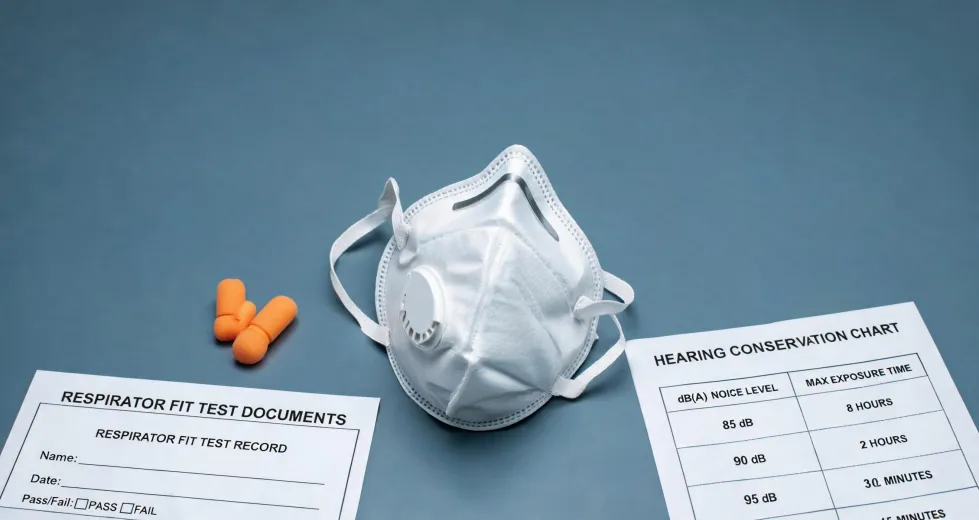
At 9:15 on a Tuesday, the production supervisor asked for Moldex 2400 N95 masks for the sanding crew. It sounded simple. I typed the phrase into a search engine. Then I had two tabs open, three supplier emails, and a list of questions I was not qualified to answer alone.
I am the office administrator at a 90-person manufacturing company. I handle around $80,000 in purchase orders a year. Last year it was closer to $92,000, but I would have to pull the report to quote that. I am not the safety manager and I do not pretend to be. I am the person who orders PPE, manages vendor files, and sits in the uncomfortable space between operations and finance.
The first thing I learned is that the surface problem was never finding a mask. There are plenty of Moldex 2400 N95 masks in stock at any given moment, and most listings show the same official moldex logo. The problem is deciding which supplier has the right documentation and traceability. That takes longer than a consumer expects.
What looks like a purchasing problem is usually a standards problem
When I took over purchasing in 2020, our process for safety products was informal. A department head would say N95 masks and I would search by product name. It took three mistakes and one rejected invoice to see the difference between a product request and a compliance request.
An N95 filter is not just a comfortable piece of foam. It is a NIOSH-approved particulate filter that captures at least 95% of test particles under specific conditions. It is not a rating for gases, vapors, or oil aerosols, and it is not a rating for fit. A mask can look perfect on paper and still leak on a specific face. If respirators are required by policy, the employer has to have a respiratory protection program under OSHA's standard, 29 CFR 1910.134, and it should include fit testing. A listing that says NIOSH-approved is the start, not the finish.
The same logic shows up in other safety requests I handle. One afternoon I might search for a Moldex 2400 N95 mask, compare a bulletproof vest for a security contractor, or order a pair of Keen work boots for a maintenance tech. The categories look unrelated. But each one has a standard behind it. If I pick by brand, style, or seller review, I am skipping the step that makes the purchase defensible. A bulletproof vest has to match a threat level. Work boots have to match the hazard, not just the brand. A respirator has to match the airborne hazard and the wearer's face.
The moldex logo shortcut did not solve the real problem
I understand the temptation to search for moldex logo. When you need a genuine safety product, a logo feels like visual proof. In 2022, I almost ordered from an unfamiliar reseller because the product photo had the official logo and the price was about 20% lower than our regular source. If I remember correctly, the price was around $9.70 per box versus $12.10 from our distributor. I want to say the quantities matched, but do not quote me on that. The logo looked right. The product looked right. The invoice and lot traceability were not right.
That supplier could not provide a clean purchase-order reference. The invoice did not identify a lot or batch, and finance rejected the payment because the documents did not match. I spent three days resolving it. We paid return freight and still bought from an authorized source. The masks themselves might have been fine. That is not the point. If I cannot connect a product to the exact NIOSH approval and a documented supply chain, then I have not actually bought a safety product. I have bought a gamble.
Now I check a different set of clues. Does the supplier list an approval number? Can they show a lot number on the packing list? Do they accept a purchase order with line items that name the standard and the model? If the answer is no, I move on. Period.
The cost of treating a safety order as a simple order
The real cost is not always the sticker price. In 2021, we lost about six hours of administrative time on a rush delivery because we had no internal process for verifying products when they arrived. We did not have a formal approval chain for new suppliers. Cost us when an unauthorized rush fee showed up on the invoice. That $185 fee was small compared to the damage it did to trust.
There is also a quieter cost: the safety manager stops trusting the purchasing process. If I bring in a box of masks without a vendor packing slip, the safety manager has to decide whether to issue it. If the product is an N95 mask under an established respiratory protection program, those masks are not candy. They have to be traceable, stored, and accounted for. A person who orders by brand name alone creates a pile of stuff that no one can confidently sign for.
The third time we ordered the wrong quantity, I finally built a verification checklist. It should have been done after the first mistake. The checklist is simple: product ID, current NIOSH approval, quantity, lot/reference number, and expected delivery date. It took less than a day to build and saved more time than I can count.
The fix: process before product
The answer was not a better mask or eliminating all traditional vendors. Some older distributors still operate quite well. The answer was to make the process digital enough that the buyer cannot skip the important fields.
In 2024, we consolidated PPE vendors from eight to three. We used a shared digital order form with the required fields above. The form cut our usual ordering turnaround from five days to two days, and it eliminated the verbal orders that used to cause missing records. Most of the product questions can be answered before the order: Who is this for? What is the hazard? Is the respirator required or voluntary? What is the approved model? Those four questions force a better conversation.
If that sounds too process-heavy for a small company, I understand. I was the one who said we do not need that much structure. But a simple field on a form saved me from becoming the bottleneck. I no longer have to remember what the previous order looked like. The system remembers.
One of the best mental reminders I got was not about PPE at all. Someone asked how to build a fence gate. The video was helpful, but the gate was not the real problem. The post, hinges, ground clearance, and expected use were the problem. Buyers who search for a Moldex 2400 N95 mask are not actually looking for a product name. They are looking for a way to keep people safe. The product name gets the pressure, but the process does the protecting.

Maeve Callahan
Maeve Callahan is a head-protection analyst covering Type I and Type II hard hats, climbing-style safety helmets, bump caps, chin straps, suspensions, liners, and face-shield carriers. She applies ANSI Z89.1, EN 397, and EN 12492 criteria while comparing impact attenuation, penetration resistance, lateral deformation, electrical class, retention strength, field of vision, mass, fit range, and temperature conditioning. Her guides help EHS teams, contractors, utilities, and buyers select helmet systems for overhead hazards, work at height, electrical exposure, accessory compatibility, and worker acceptance.