Why a 33 NRR Rating on the Moldex SparkPlugs Foam Earplugs Wasn't the Real Fix
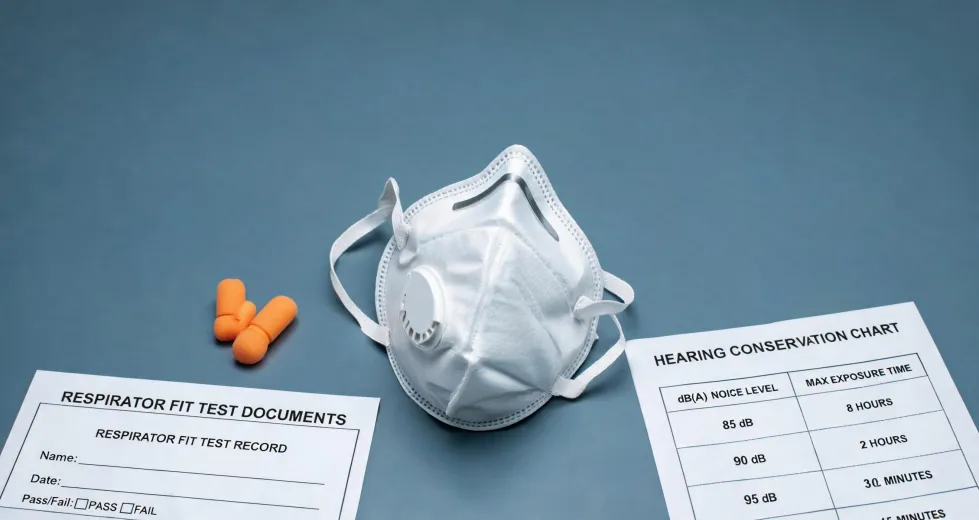
I once stood next to a punch press while an operator pulled a foam earplug out of his ear and said, “These hurt after 40 minutes.” The box in my hand was the Moldex SparkPlugs foam earplugs (33 NRR). I had chosen that product specifically because the number on the box was the highest I could find. And in that moment, I realized I had been solving the wrong problem all along.
I’m an office administrator for a 320-person manufacturing company across three locations. I handle all ordering for safety supplies—roughly $90,000 a year across respirators, earplugs, safety glasses, gloves, and other PPE. My decisions get reviewed by operations and by finance, so I’ve learned to pay attention to both compliance and total cost. This isn’t a product review. It’s a look at why a high NRR rating doesn’t automatically make a hearing protection program work.
The Wrong Goal: Buying the Highest NRR
For years, my approach to hearing protection was simple. Look at the NRR (Noise Reduction Rating), pick the highest one we could afford, and move on to the next item on the safety checklist. It felt responsible. It was not.
NRR is a lab measurement. The EPA requires hearing protectors to be tested using the same standard that NIOSH developed, and the test is done by trained listeners who know exactly how to insert the product. The resulting rating represents the best-case attenuation, not what a typical employee will get after a long shift in a noisy plant. OSHA’s enforcement guidance often applies a 50 percent derating factor to account for real-world conditions. So a 33 NRR earplug might effectively deliver somewhere around 16 dB of protection in the field. That’s still meaningful, but it’s not 33.
Even more important: attenuation only counts when the earplug is actually in the ear. Noise exposure is cumulative, and each 3 dB increase cuts the safe exposure time in half. If an employee takes out their earplugs for just 15 minutes while they talk to a supervisor, that small gap can erase much of the benefit from wearing them the rest of the day. This is why “wearing them at all” matters more than “wearing the highest-rated pair.”
The Deeper Problem: People Are Not Test Fixtures
What I didn’t appreciate for a long time is that comfort and user experience dictate whether that earplug stays in. Stiff foam, a hard seam, or a shape that doesn’t fit a particular ear canal will turn a 33 NRR product into a pocket ornament. The employee won’t use it. That’s not a failure of the employee. It’s a failure of the system that didn’t account for human beings.
I remember going back and forth between the Moldex SparkPlugs and a cheaper 33 NRR plug for two weeks. The cheaper one looked fine on paper. But when I handed out samples, people said the SparkPlugs felt softer and were easier to roll down. The price difference was small, but the potential benefit seemed big. I ordered the SparkPlugs and then spent the next two weeks second-guessing myself. What if the softer foam didn’t expand enough? What if I had just spent part of the safety budget on a marketing gimmick? I didn’t relax until week three, when I saw line workers still wearing them.
Another hidden issue is that a lot of buyers assume all foam earplugs are the same. They are not. The polymer consistency, shape, surface texture, and even how quickly the foam expands can affect comfort. The Moldex SparkPlugs use a softer polyurethane foam and a smooth, tapered shape. Some of our employees liked that; others preferred a smaller-diameter plug. That’s why offering more than one option is key.
That gave me the first clue: the real measure of a hearing protector is whether it becomes a habit, not whether it scores well on a specification sheet.
What Bad Fit Costs Beyond the Box
If earplugs sit unused, a hearing conservation program is mostly paperwork. That creates compliance risk and, more importantly, irreversible health consequences for workers. OSHA’s occupational noise standard (29 CFR 1910.95) requires a hearing conservation program when average noise exposure reaches 85 dBA over an 8-hour shift. NIOSH estimates that about 22 million U.S. workers are exposed to hazardous noise on the job (Source: NIOSH, cdc.gov/niosh, accessed April 2025).
The financial picture is uncomfortable. Workers’ compensation claims for hearing loss are not cheap. One severe claim can cover the lifetime cost difference between budget earplugs and higher-quality foam earplugs many times over. That’s before you count administration, retraining, OSHA records, and the time I spend investigating why compliance numbers keep dipping.
There’s also a quieter cost: employee trust. When employees see that you bought the cheapest option that just meets a regulation, they read it correctly as “we’re not the priority.” The quality of PPE functions as a proxy for the quality of the employer. In that way, the product you provide is the brand you present. When we switched from budget-only earplugs to a model people actually liked, our internal safety culture improved—and it showed up in lower turnover and better engagement scores.
My experience is based on three manufacturing locations in the Midwest. In construction, food processing, or other industries, the challenges may be different. But I suspect the human part is universal.
What Actually Worked (And It’s Not Just the Brand)
Buying the Moldex SparkPlugs was step one. The bigger fix was changing how we introduced PPE and how we defined success.
- Offer options instead of one “best” model. Ear canals vary. We stocked two foam earplugs in high-noise areas, plus a corded version for people who work around moving machinery and want to take them out quickly. Giving people a choice made them feel like participants rather than subjects.
- Show people how to insert foam earplugs correctly. Most people don’t realize you need to roll the plug into a thin crease, pull the ear up and out, insert, and hold it until it expands. Our safety coordinator did a five-minute toolbox talk and used a small mirror so each operator could check the fit. That alone improved how often earplugs stayed in.
- Put the dispensers near the actual noise. We mounted a Moldex wall dispenser at the entrance to the production floor. When earplugs are available within arm’s reach, people are less likely to “forget” them.
- Review monthly, not once a year. We started tracking complaints, fit issues, and noise exposure data. If a model started showing up in the trash can more often than in people’s ears, we swapped it.
By October 2024, our compliance observations in production areas improved from 76% to 93%. Noise-related complaints dropped by nearly half. We didn’t switch to a better NRR. We switched to an earplug that people would actually wear—and then we taught them how to wear it correctly.
The same principle applies to the rest of PPE. A Moldex N95 only protects if it seals, which is why we fit-test respirators. Even when I’m reviewing a safety goggles drawing or spec sheet, the real test is whether the lenses stay clear after an hour of work. The written spec tells you what the product should do. The employee’s experience tells you what it actually does.
If you’re using NRR as your only KPI, you’re missing the point. Our hearing conservation program now tracks fit testing, wear time observations, complaints, and annual audiometric testing. NRR is still part of the picture—it sets a floor for protection—but it’s not the whole picture.
The Takeaway
If you’re responsible for buying safety products, don’t stop at the data sheet. Buy samples. Put them in the break room. Watch how people use them and ask why they don’t. That feedback will tell you more than any NRR number or manufacturer claim.
As for the Moldex SparkPlugs, they became one of our standard options. Not because 33 NRR is magic, but because they were comfortable enough to make compliance easier. The best hearing protector isn’t the one with the highest rating. It’s the one that’s actually in someone’s ear when the noise starts.
That’s the number worth chasing.

Maeve Callahan
Maeve Callahan is a head-protection analyst covering Type I and Type II hard hats, climbing-style safety helmets, bump caps, chin straps, suspensions, liners, and face-shield carriers. She applies ANSI Z89.1, EN 397, and EN 12492 criteria while comparing impact attenuation, penetration resistance, lateral deformation, electrical class, retention strength, field of vision, mass, fit range, and temperature conditioning. Her guides help EHS teams, contractors, utilities, and buyers select helmet systems for overhead hazards, work at height, electrical exposure, accessory compatibility, and worker acceptance.