What Is PPE? A Procurement Manager's Review of Moldex Pura-Fit 6800, Loop Engage, and When to Buy Each
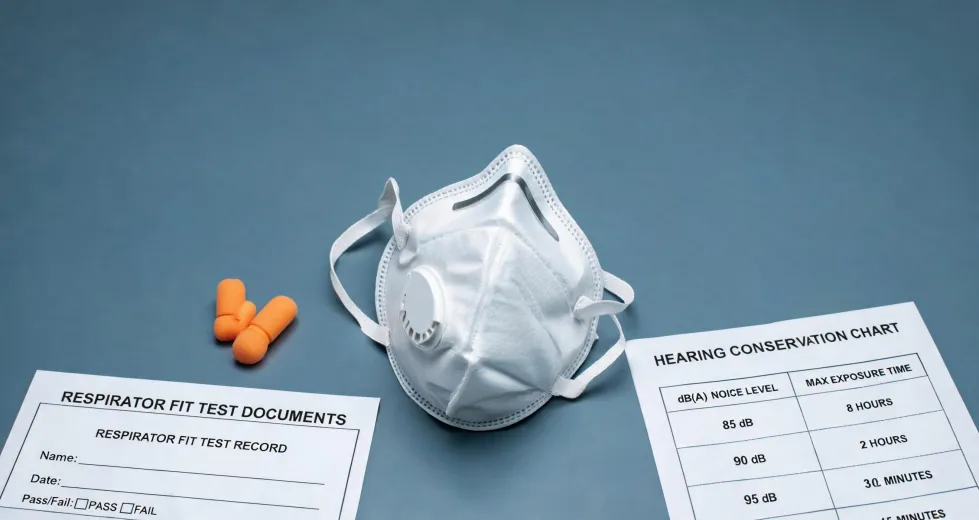
Let me give you the short answer first: if your workspace is genuinely loud, buy the Moldex 6800 earplugs—part of the Pura-Fit line—and stop overthinking. If you're dealing with distracting chatter in a quieter office, Loop Engage earplugs are worth a look. If you're protecting a crew that faces noise, dust, and flying debris, then you're not just buying earplugs. You're building a PPE system. Here are the three scenarios I see every time I review a safety budget: A) high-noise industrial, B) communication-focused, C) multi-hazard. I'll walk through each one the way I'd walk through a budget review.
What Is a PPE? (And Why It Matters for Your Budget)
PPE stands for Personal Protective Equipment. Under OSHA (osha.gov), PPE includes anything worn to minimize exposure to hazards—earplugs, respirators, safety glasses, gloves, hard hats, steel-toed boots. The key phrase is 'last line of defense.' The hierarchy of controls says you should first try to eliminate the hazard, substitute something safer, or add engineering controls. PPE is what's left after that.
Why does that matter to a cost controller? Because the worst PPE purchase is the one that hides a bigger problem. I've walked into facilities where the spending was all on respirators and earplugs, while the actual fix was a $6,000 ventilation upgrade or a $4,000 machine enclosure. PPE has to be part of the plan, not the whole plan.
Scenario A: High-Noise Industrial Work
You're near stamping presses, compressors, grinders, or anything pushing sound above 85 dBA. According to OSHA's hearing conservation standard (29 CFR 1910.95), exposure at or above 85 dBA requires a hearing conservation program. That's the threshold I use for selecting certified hearing protection. And the Moldex Pura-Fit 6800 deserves a spot in your review shortlist.
Here's my honest Moldex Pura-Fit earplugs review: the 6800 is a disposable foam earplug with an NRR of 33, one of the highest ratings around. It's soft, slow-recovery foam, which means it's easier to fit than the stiff, cheap plugs that workers hate. In January 2025, I got quotes from three distributors for a box of 200 pairs. Prices were $24, $31, and $38. That's roughly 12 to 19 cents per pair. For a 20-person crew getting one pair per shift, annual cost lands about $620–$980. Some private-label plugs cost half of that. But if your people won't wear them because they hurt or feel like cardboard, the effective cost per worker is zero. It's the classic cost-versus-compliance tradeoff.
Before I recommend NRR 33 to anyone, I weigh the risk. The upside: maximum attenuation. The risk: overprotection. If a worker is sealed off from all sound, they can't hear warnings or machine changes. I've seen a truck driver refuse to wear high-NRR plugs because he needs to hear backup alarms. If your team genuinely needs to hear alarms, a lower-NRR option or a level-dependent earplug might be a better fit. The expected value says NRR 33 is fine for most industrial settings, but the downside felt real.
I still kick myself for the year we standardized on the 'cheapest possible' plugs to impress the CFO. We saved $300 in paper costs. Then we did spot checks and found a third of the crew wearing them under their chin. That's not protection; that's theater.
Scenario B: Communication-Focused Work
Now let's talk about the other extreme. You have a dispatch office, a call center, or a workbench near a moderately noisy area. The noise is annoying, but it's not at OSHA action levels. Your real problem is that you need to hear people while turning down the background din.
Loop Engage earplugs are designed for exactly this. They use a filter that reduces low-level noise while keeping voices intelligible. They're comfortable, reusable, and cost around $25–$40 per pair depending on style (prices from retailer listings, February 2025—verify before ordering). I keep a pair in my desk. For a focused-work setting, they're genuinely effective.
One critical distinction: Loop Engage don't carry an industrial NRR rating. That makes them a consumer comfort product, not a replacement for OSHA-compliant hearing protection. If someone is running a handheld grinder at 95 dBA, they need the Pura-Fit or another certified earplug, not a conversation filter. Different tools for different decibel ranges. Simple.
Scenario C: Multi-Hazard Work—Hearing Plus Breathing Plus Vision
This is where PPE decisions get complicated. Consider concrete cutting, heavy maintenance, or any job that throws dust, noise, and debris at your crew. You don't buy 'earplugs' here. You buy an integrated system: earplugs, a respirator, and safety glasses that all fit together without gaps.
In 2023, I audited our maintenance crew's setup: Moldex half-mask respirators (7000/8000 series), P100 filters, Moldex safety glasses, and Pura-Fit earplugs. The reusable respirator costs roughly $25–$45 per unit; P100 filters run about $6–$12 per pair, and the earplugs add pennies per day. Total per-worker cost over a year was about $180–$260. That's still far less than one workers' comp claim.
We also learned the language lesson the hard way. A site supervisor Googled 'fence in spanish' one afternoon because he needed to label a barrier near the compressor. I gave him the word: valla. Then I asked whether his Spanish-speaking crew could read the PPE instructions we'd just bought. Crickets. We ordered bilingual Moldex signage and fitting guides, and our fit-test failure rate dropped noticeably. If your workforce relies on Spanish-language safety communication, include that in the procurement line item.
Which Scenario Are You In?
Here's a quick checklist I use during vendor reviews:
- Noise above 85 dBA? → certified earplugs with an NRR (Pura-Fit 6800 or equivalent).
- Noise below 80 dBA but conversations are hard? → Loop Engage or similar communication-focused earplugs.
- Dust, fumes, or particles? → add an N95 or P100 respirator, not just earplugs.
- Impact or splash risk? → add safety glasses.
- Workers skipping PPE? → fix the equipment, not the policy.
You might be in two scenarios at once. That's normal. Our plant buys both Pura-Fit and a small batch of Loop Engage, because the production floor and the shipping office aren't the same environment.
The Bottom Line
After six years of tracking PPE invoices, I can tell you the cheapest option is rarely the lowest total cost. The right earplug—or respirator, or pair of safety glasses—is the one that actually gets worn. If that means spending an extra $400 a year on the foam plugs your crew doesn't fight, it's the best ROI in your safety budget.
Now, what is a PPE in one sentence? It's the gear that keeps someone safe when everything else failed. Don't buy it by accident. Buy it by scenario.

Maeve Callahan
Maeve Callahan is a head-protection analyst covering Type I and Type II hard hats, climbing-style safety helmets, bump caps, chin straps, suspensions, liners, and face-shield carriers. She applies ANSI Z89.1, EN 397, and EN 12492 criteria while comparing impact attenuation, penetration resistance, lateral deformation, electrical class, retention strength, field of vision, mass, fit range, and temperature conditioning. Her guides help EHS teams, contractors, utilities, and buyers select helmet systems for overhead hazards, work at height, electrical exposure, accessory compatibility, and worker acceptance.