The Real Cost of PPE: Lessons from a Six-Year Safety Budget
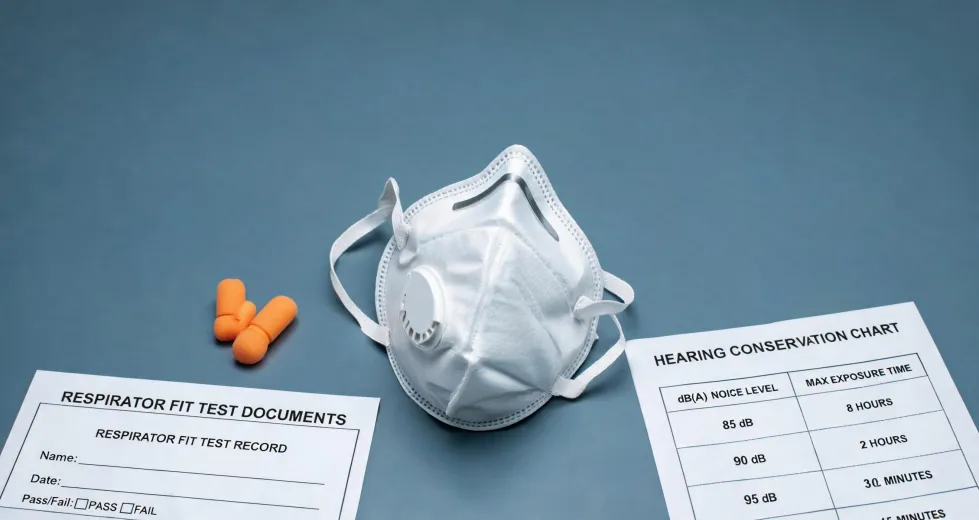
Last April, I sat down with a stack of invoices that added up to $18,400 in respirator spending. The plant manager walked past, looked at the pile, and asked, "Are we buying the right stuff?"
That question turned into a six-week audit of every PPE line we buy. I've been the procurement manager at a 220-person industrial painting and fabrication company for six years, and I manage about $180,000 in annual safety spending. My job is not to buy the cheapest gear. My job is to buy the gear that protects people and doesn't blow the budget.
Here's the honest version of what I learned.
The first mistake: unit price
In my first year, I ordered 5,000 cheap N95 respirators because they were $0.14 cheaper per unit than the Moldex N95 2200 respirators we use now. I still kick myself for that. The foam nose pad flaked off during the first week, the straps were too tight, and workers started leaving them on their toolboxes. We didn't save money. We just wasted $650 and lost a month of trust with the crew.
After that, I stopped looking at unit price and started looking at total cost of ownership. TCO includes shipping, minimum order requirements, return policies, disposal, training time, and the cost of workers actually wearing the thing. If a respirator is uncomfortable, it ends up in a drawer. That's a hidden cost that never shows up on an invoice.
Why the Moldex N95 2200 made the cut
During the audit, I compared quotes from four distributors for a full year of Moldex N95 2200 respirators. One national distributor quoted $29.90 per box of 20. A regional supply house quoted $24.60. I almost went with the regional price until I added freight, a $4,500 minimum order, and a 15% restocking fee if we returned any unopened boxes. Total cost for the regional quote? About $380 more than the national distributor, even at the lower sticker price.
That's the trap. At the time, the cheaper quote looked like an obvious win. Looking back, I should have run the TCO calculation before asking for samples. Now I do it for every line item.
The Moldex 2200 is NIOSH-approved as an N95 under 42 CFR Part 84. You can verify current listings on the NIOSH Certified Equipment List (cdc.gov/niosh/npptl, accessed April 2025). The approval isn't a marketing phrase—it's a legal requirement. If a distributor can't show you the TC approval number, that's a red flag.
Approval alone doesn't mean fit. We trained twenty workers in the paint booth and tried three different brands. The Moldex 2200 won because it fit the majority of faces without digging in. Fit test results in our 2024 annual respirator fit testing program showed 21 of 25 workers passed with that model. That's real-world data, not a brochure claim.
Earplugs: NRR is not a guarantee
Noise exposure is a quieter problem. Our band saw area measured 96 dBA on a recent sound survey, so hearing protection is non-negotiable. We use Moldex Pura-Fit earplugs. They carry an NRR of 33, which is the highest rating I've seen for a disposable foam earplug as of April 2025. But NRR is a laboratory number. Under OSHA's enforcement guidance for hearing protection, earplugs are derated by 50% for compliance purposes (Source: OSHA Technical Manual, accessed April 2025). That means a 33 NRR plug is effectively 16.5 dB on paper. That's why instruction matters as much as the product.
If you put a Pura-Fit plug in halfway, you're not getting NRR 33. You're getting whatever the fit happens to give you. We now do a five-minute earplug training session twice a year. It costs almost nothing and it's worth more than the difference between a 32 NRR and a 33 NRR plug.
Hard hats and coveralls: the softer side of PPE
Outside the respirator program, the biggest argument I've had with my own crew was about head protection and work pants. We tested six hard hats before choosing the LIFT hard hat. It wasn't the cheapest option. It was the one workers actually wore.
The LIFT hard hat meets ANSI/ISEA Z89.1 Type I requirements, and the ratchet suspension makes a real difference if you're wearing it for ten hours. Our welders liked the low-profile shape; the inspector liked that it didn't fall off when he looked up at a flange. We paid about $6 more per unit than the baseline hard hat. That's $1,200 per year for our crew. I'd call that cheap insurance.
Coveralls are another lesson. My mechanics asked why we don't buy Carhart coveralls for everyone in the welding shop. The honest answer: Carhart coveralls are durable workwear, but they're not necessarily flame-resistant PPE. If a job requires FR-rated clothing, you buy FR-rated clothing and you read the label—brand doesn't matter. We cover FR-rated outerwear as a separate line item, and personal clothing stays outside the PPE budget. That distinction has saved us from both overpaying and under-protecting.
The Body Armor drink question
While we're on the subject of things that sound like PPE but aren't: someone on our production floor asked me once, "are body armor drinks good for you?" I'm not a nutritionist, so I gave the only honest answer I can give: it depends. Body Armor drinks are sports beverages. They are not body armor. If you're sweating inside Carhart coveralls and a hard hat, hydration is part of staying safe. But some of those drinks have a lot of sugar, and if you want my procurement-style advice, read the label the same way you'd read an SDS. The answer is in the numbers.
What the audit actually saved
At the end of six weeks, we cut our annual safety supply budget by about 12%—roughly $21,600—without lowering protection levels. We did it by consolidating orders with one distributor, stopping the habit of chasing unit-price discounts, and switching to products people didn't avoid wearing. The Moldex N95 2200, Pura-Fit earplugs, and LIFT hard hat are now the defaults. That doesn't mean they're the best for every workplace. Let me be clear about that.
If your job involves abrasive blasting, a disposable N95 is not enough. If you're working in an atmosphere that's immediately dangerous to life or health, you need supplied-air respirators, and no half-mask or filter cartridge is going to cut it. Those aren't Moldex's limitations; they're the limits of the hazard class. The right tool is the one rated for the hazard you actually have.
I recommend Moldex for our paint shop, for our metal fabrication floor, and for most of the light assembly tasks we run. But if you have high-heat welding with full-face hazards or chemical splash risks that a half-mask can't cover, buy for the hazard, not for the brand. That's not a brand debate. It's a hazard analysis.
There's no best PPE. There's the right PPE for the hazard, and there's the PPE you can get workers to wear. Both matter.
The bottom line
If I could redo my first procurement year, I'd spend less time comparing sticker prices and more time in the shop watching how workers use equipment. I'd ask which respirator makes them sweat the least, which earplug stays in past lunch, and which hard hat they're willing to buckle. Then I'd run the numbers on the full cost, not the unit cost.
And I'd remember that the cheapest purchase is not the same as the lowest cost. Sometimes the expensive option is the one that gets worn. That's the lesson that changed how I buy everything.

Jane Smith
I’m Jane Smith, a senior content writer with over 15 years of experience in the packaging and printing industry. I specialize in writing about the latest trends, technologies, and best practices in packaging design, sustainability, and printing techniques. My goal is to help businesses understand complex printing processes and design solutions that enhance both product packaging and brand visibility.