The Costly Safety Compliance Mistakes I Made (So You Can Avoid Them)
-
There's no universal safety checklist – it depends on your situation
-
Scenario A: Respiratory protection – don't assume N95 is always enough
-
Scenario B: Hearing protection – the NRR 33 vs. comfort trade-off
-
Scenario C: Eye protection – don't ignore fogging and impact ratings
-
Scenario D: Fire extinguisher tags and smoke detector installation – the 'easy' things you'll forget
-
How to determine which scenario fits you
There's no universal safety checklist – it depends on your situation
I've been handling PPE and safety equipment orders for five years. In that time, I've personally made (and documented) 12 significant mistakes that cost roughly $8,000 in wasted budget, rework, and compliance fines. Now I maintain our team's pre-order checklist to prevent others from repeating my errors.
Here's the thing: safety compliance isn't one-size-fits-all. The right choice depends on your industry, work environment, and budget. I've organized the most common mistakes into four scenarios. Find yours, and you'll save money, time, and maybe a violation.
Scenario A: Respiratory protection – don't assume N95 is always enough
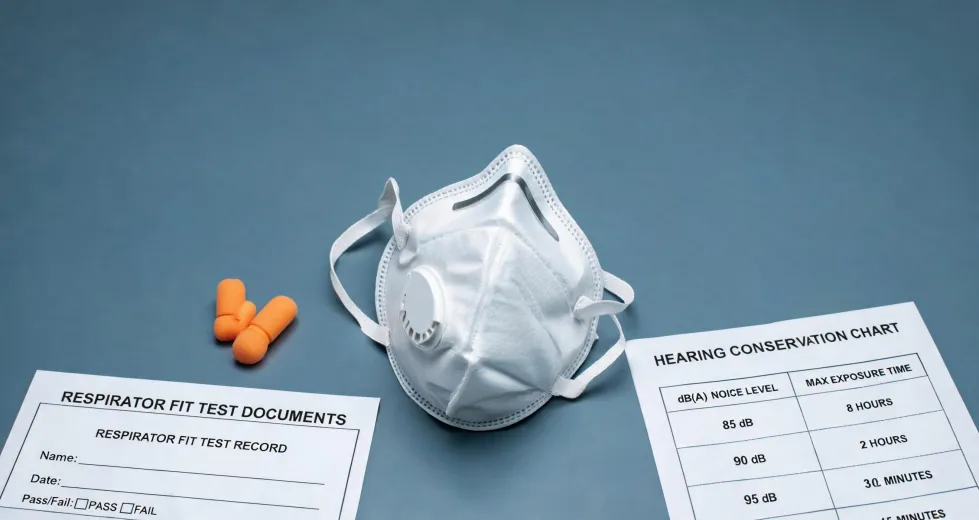
In my first year (2017), I ordered Moldex N95 masks – the 2200 series – for a team that did light grinding. I assumed 'N95 is N95, it'll filter everything.' Didn't verify. Turned out the grinding generated fine silica dust, which requires at least a P100 rating. We caught the error when an OSHA inspector asked for our exposure assessment records. That mistake: 400 masks, straight to donation, and a $3,200 reorder with Moldex 7000 series half-face respirators and P100 filters.
If you're dealing with:
- Particulates only (dust, pollen, mold): N95 (e.g., Moldex 2200 or 2400) is fine. NIOSH 42 CFR Part 84 approves these for up to 10x the permissible exposure limit.
- Oil-based aerosols or fine silica: You need at least N100 or P100. Moldex's P100 filters (e.g., 8000 series) or the 4600 N95 masks with exhalation valves still won't cut it if silica is present.
- Gases/vapors: You need a half-face or full-face respirator with combination cartridges. Moldex 7000/8000/9000 series with appropriate cartridges.
How to decide: Check your OSHA 29 CFR 1910.134 exposure assessment. If you haven't done one, do it before buying any respirators. I kick myself for skipping that step.
Scenario B: Hearing protection – the NRR 33 vs. comfort trade-off
I went back and forth between Moldex SparkPlugs (NRR 33) and the Pura-Fit (NRR 32) for about a week. The SparkPlugs offered the highest NRR on the market, but my gut said workers would hate them because of the firmness. Every spreadsheet pointed to the SparkPlugs – better specs, same price. Something felt off.
I went with my gut: ordered both, asked ten workers to try each for a day. Turns out six hated the SparkPlugs because they pressed too hard on their ear canals. The Pura-Fits were comfortable and worn consistently. The lesson: compliance requires actual use. A soft foam earplug that workers wear is better than a high-NRR plug that sits in its case.
If you're dealing with:
- High-noise environments (above 105 dBA): Get NRR 33 plugs like SparkPlugs, but budget for a trial period. Maybe 80% of workers will tolerate them.
- Moderate noise (85-100 dBA): Comfort is king. Moldex Pura-Fit or Rockets (NRR 29) might be better. Check the fit test results.
- Intermitent noise or workers who remove plugs often: Consider banded earplugs or earmuffs. Remember: hearing protection is only effective if worn correctly for the full exposure period.
How to decide: Run a fit-test on a sample group. If over 30% complain about comfort, switch to a softer foam.
Scenario C: Eye protection – don't ignore fogging and impact ratings
I once ordered 200 pairs of Pit Viper safety glasses because the price was unbeatable and they looked cool. The mistake: they didn't have anti-fog coating. In a humid warehouse, everyone wiped them on their shirts, scratching the lenses. Within two months, 50% were unusable. Cost: $450 wasted plus replacement orders with Marcello anti-fog models (ironically also from Moldex).
If you're dealing with:
- Temperature transitions (e.g., moving from cold to warm areas): Anti-fog coating is non-negotiable. Pit Viper makes some models with it, but verify.
- Flying debris or chemicals: Must meet ANSI Z87.1 impact rating. Almost all safety glasses do, but check for the Z87+ mark.
- Extended wear (full shift): Lightweight frames with adjustable temples. Pit Viper's classic wraparound style works well for most, but try a few pairs first.
How to decide: Ask workers what they hate about their current glasses. Fogging and scratches are the top complaints. Spend $2-3 extra per pair on anti-fog coatings – it pays for itself.
Scenario D: Fire extinguisher tags and smoke detector installation – the 'easy' things you'll forget
Real talk: I've been so focused on PPE that I nearly missed a fire code violation. We didn't have a formal inspection tagging process. Cost us when the fire marshal walked through and found four extinguishers with expired tags. $2,500 fine. I instantly created a monthly checklist: each extinguisher gets a new fire extinguisher inspection tag (monthly visual, annual by pro). Now I order tags in bulk from a local supplier and assign a technician to check every floor on the first Monday of each month.
If you're dealing with:
- Multiple buildings or floors: You need a central tracking system. A simple spreadsheet with locations, last inspection date, and next due date works.
- How to install smoke detector correctly: This one bit me too. I assumed any ceiling location works. NFPA 72 says detectors should be at least 4 inches from walls, not near air vents, and at least 10 feet from cooking appliances. I installed one too close to an HVAC vent – it never triggered during a small fire. That's a $5,000 reinstall and a serious safety gap.
How to decide: Break it down by building age and layout. For new construction, work with an alarm contractor who follows NFPA 72. For existing buildings, do an audit: check every smoke detector's location against code. If any is within 4 inches of a wall or within 3 feet of a vent, move it.
How to determine which scenario fits you
Look, I can't tell you exactly which one to pick – that's why I wrote this. But here's a quick self-diagnosis:
- If you're buying N95s for a new task and haven't done air monitoring → You're in Scenario A. Stop ordering, get an exposure assessment first.
- If you're choosing hearing protection based solely on NRR → Scenario B. Get a trial pack.
- If your workers constantly complain about foggy or scratched safety glasses → Scenario C. Upgrade to anti-fog.
- If you haven't looked at your fire extinguisher tags in six months or don't know where your smoke detectors are → Scenario D. Audit now before the inspector does.
The common thread? Quality matters. Moldex builds gear that performs, but the best equipment in the world fails if it's the wrong type for your environment. I've wasted thousands learning that. Use my list, and you'll avoid the mistakes I already paid for.

Maeve Callahan
Maeve Callahan is a head-protection analyst covering Type I and Type II hard hats, climbing-style safety helmets, bump caps, chin straps, suspensions, liners, and face-shield carriers. She applies ANSI Z89.1, EN 397, and EN 12492 criteria while comparing impact attenuation, penetration resistance, lateral deformation, electrical class, retention strength, field of vision, mass, fit range, and temperature conditioning. Her guides help EHS teams, contractors, utilities, and buyers select helmet systems for overhead hazards, work at height, electrical exposure, accessory compatibility, and worker acceptance.