The $8,400 PPE Lesson: Why I Switched to Moldex Dust Masks and SparkPlugs Earplugs
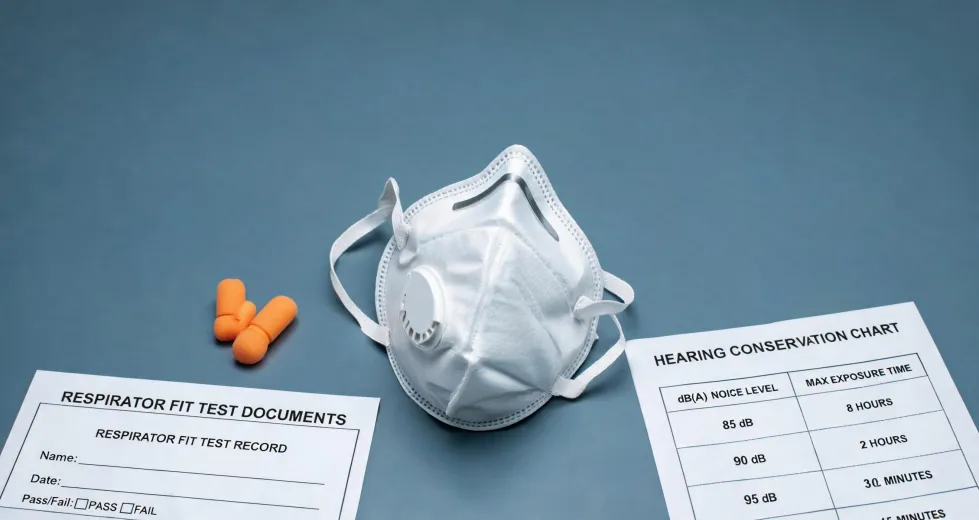
Let me start with a scene: a Tuesday morning in July 2024, sitting in our storage room with three open boxes of dust masks. Not testing them. Just staring at them.
I've managed PPE buying for a 220-person industrial maintenance company for six years. Our safety budget runs about $50,000 a year — maybe $48,000, I'd have to check the latest P&L. In that time, I've documented every invoice and purchase order in our cost tracking system. I've compared quotes from more than 30 vendors. And that morning, I realized I had been optimizing the wrong number.
The Box That Made Me Rethink Everything
We were buying dust masks from a distributor who looked great on paper. Low unit price. Fast delivery. But the safety manager kept flagging complaints: workers were taking two masks at a time because one didn't feel like it was doing anything, or they'd wear the top strap under their chin because the strap hurt.
I assumed 'N95 certified' meant the same experience across brands. Didn't verify. Turned out the cheap masks had weaker nose foam, thinner head straps, and less breathing room. From the outside, a dust mask looks like a dust mask. The reality is that fit and comfort drive whether people actually wear them.
That's not a luxury issue. It's a compliance issue, and compliance issues show up on the bottom line.
What 'Cheap' Actually Cost Us
When I audited our 2024 PPE spending, I found something I didn't expect. About 21% of our budget overruns came from PPE reorders caused by poor usage, lost masks, and double-masking. Workers would grab two masks because the first one felt flimsy. They'd throw out masks that didn't seal. We were paying for convenience we never got.
'The cheapest option is the cheapest option' comes from an era when purchasing had no data. Today, I can see the full trail in our system. I can track how many masks were issued, how many were used, and how many were returned. The numbers didn't lie: the so-called budget mask cost more than a better one would have.
I should mention, we didn't switch on a whim. I pulled itemized quotes from four distributors. I built a total cost of ownership spreadsheet. Not just unit price: shipping, minimum order quantities, lead time, restocking fees, sample panels, and the cost of a compliance failure.
I've learned to ask 'what's NOT included' before 'what's the price?'
That question changed everything. The lowest quote came from a regional distributor. A distributor that carried Moldex had a slightly higher unit price. On unit price alone, the regional distributor won. On full quote, the Moldex distributor had no minimum order fee, included delivery, and offered free samples. The other charged freight on every order and required a $500 minimum. The difference worked out to about 17% of our annual PPE budget — roughly $8,400. Maybe $8,100? No. I checked twice. $8,400.
Over six years, that's the kind of money that pays for a new exhaust fan in the welding area.
Why Moldex Dust Masks and SparkPlugs Earplugs Made the Cut
If you search for a Moldex dust mask, you'll see a lot of model numbers. Don't start there. Start with the hazard. For grinding and sanding, we standardized on the Moldex 2200 series N95. For hot jobs, the 4600 series with an exhalation valve kept the crew from feeling like they were suffocating, so they kept them on. For painting, we use a half-mask respirator with P100 filters.
Let me be precise, because safety descriptions matter: N95 means it filters at least 95% of airborne particles under NIOSH test conditions. It doesn't mean you're invincible, and it's not for chemical vapors. According to NIOSH (cdc.gov/niosh-npptl), a proper fit and seal are required every time. P100 filters at least 99.97%.
The Moldex masks cost a little more upfront. But they have a contoured nose area and sturdy straps. Our crew stopped double-masking. That cut our mask consumption by two masks per worker per week. The hidden cost of cheap masks was that people used twice as many to feel safe — and still didn't get a good seal.
For hearing, we switched to Moldex SparkPlugs corded earplugs 6654. These have an NRR of 33, which is one of the highest foam plug ratings I've seen. But NRR is a laboratory number. Real-world protection depends on insertion and seal. The corded version keeps the pair together and reduces loss in the work area.
If you've looked up 'how to wear Loop earplugs,' you already know the hard part is the seal. The same mechanics apply to industrial foam plugs: roll the plug into a tight crease, reach over your head, pull your ear up and back, insert, and hold it until it expands. For work, the rating matters as much as the comfort.
The Fire Extinguisher in My Truck
I know 'fire extinguisher for car' sounds unrelated. But the same total cost thinking made me buy one last year after a truck caught fire near our shop. The cheap $12 extinguisher from a discount store might have worked, maybe. The one I chose cost twice as much and had a clear pressure gauge and a metal valve. I don't want to find out the cheap one failed when I need it.
The one I keep in my truck is rated ABC, which means it's designed for ordinary combustibles, flammable liquids, and electrical fires. That's exactly how PPE procurement works. You pay for reliability before you need it, not after.
What About the Weird Search Queries?
Once in a while, someone searches for something like 'was Charlie Kirk wearing a ballistic vest?' I don't know. I can't verify that. But the question is a reminder that safety gear covers completely different standards. A ballistic vest is rated against bullets; a dust mask is rated against particles; a fire extinguisher is rated by fire class. Mixing them up is a mistake.
We don't use a ballistic vest in normal maintenance work. But our supply system now lists the standard and the hazard for every item. That way, people don't buy a mask for a hazard that needs a respirator, or an earplug for a noise level that needs a different solution.
The Lesson From Six Years of Spreadsheets
I don't have a perfect system. We've made plenty of mistakes. A vendor missed a delivery deadline by two weeks because we didn't ask about their inventory. We paid for expedited shipping once, and the masks sat in our mailroom for three days because no one told receiving. (Should mention: we now send the PO receipt to the whole team.)
But the core lesson is simple: total cost is more important than unit price, and transparency is worth paying for. When a vendor lists all the fees upfront — even if the total looks higher — they usually cost less in the end. The vendor who hides costs until the invoice is the one I don't trust anymore.
That's why I switched part of our supply stack to Moldex for masks and earplugs. Not because they're the most famous brand, and not because they're the cheapest. Because their quote was transparent, their product fit our people, and the numbers made sense over a year, not just on one purchase order.
If you're still buying PPE by lowest unit price, I hope you run the total cost before the next audit. The hidden costs are there. They always are. It's just a matter of looking at the right column.

Maeve Callahan
Maeve Callahan is a head-protection analyst covering Type I and Type II hard hats, climbing-style safety helmets, bump caps, chin straps, suspensions, liners, and face-shield carriers. She applies ANSI Z89.1, EN 397, and EN 12492 criteria while comparing impact attenuation, penetration resistance, lateral deformation, electrical class, retention strength, field of vision, mass, fit range, and temperature conditioning. Her guides help EHS teams, contractors, utilities, and buyers select helmet systems for overhead hazards, work at height, electrical exposure, accessory compatibility, and worker acceptance.