PPE Selection Guide: The Framework I Wish I Had Before Wasting $12,000 on the Wrong Gear
-
There's No "Best PPE" — Only What Fits Your Hazards
-
Ask These Three Questions Before You Spend a Dollar
-
Scenario A: Particle Hazards (Dust, Mist, Fibers)
-
Scenario B: Chemical Vapors and Gases (Where I Lost $3,200)
-
Scenario C: High Noise — and the "Loop Earplugs Controversy" Everyone's Asking About
-
Scenario D: Gloves, Boots, and the Nitrile vs. Latex Question
-
How to Tell Which Scenario You're In
-
My Pre-Purchase Checklist (and the Mistakes It Catches)
There's No "Best PPE" — Only What Fits Your Hazards
If you've searched for "best respirator" or "best earplugs" hoping to find one universal answer, here's the uncomfortable truth: it doesn't exist. I learned this the expensive way.
I've been handling PPE procurement for a mid-sized manufacturing plant for 7 years now. In that time, I've personally made (and documented) 14 significant purchasing mistakes, totaling roughly $12,000 in wasted budget. That's a conservative number — it doesn't include the overtime and production delays those mistakes caused.
Here's the thing: the products I bought weren't bad. They were wrong for the application. PPE selection is a decision tree, not a quick Google search. The only way to choose correctly is to know which branch you're on.
Ask These Three Questions Before You Spend a Dollar
From the outside, PPE selection looks simple — just match a product to a hazard on a chart. The reality is that hazard assessment is the hard part, and products matter less than fit testing and proper use. People assume the best-brand equipment is enough. What they don't see is that brand loyalty doesn't fix a mismatch between the hazard and the product category.
Before you buy anything, answer these three questions:
- What specific hazard are we facing? Dust and particles, chemical vapors, noise, and impact each require a completely different category of PPE.
- How much exposure is there? A 20-minute weekly task and an 8-hour daily task may call for different levels of protection — and different price points are justified.
- What does the user need to do while protected? Communication, visibility, and dexterity requirements affect which products workers actually keep on.
Scenario A: Particle Hazards (Dust, Mist, Fibers)
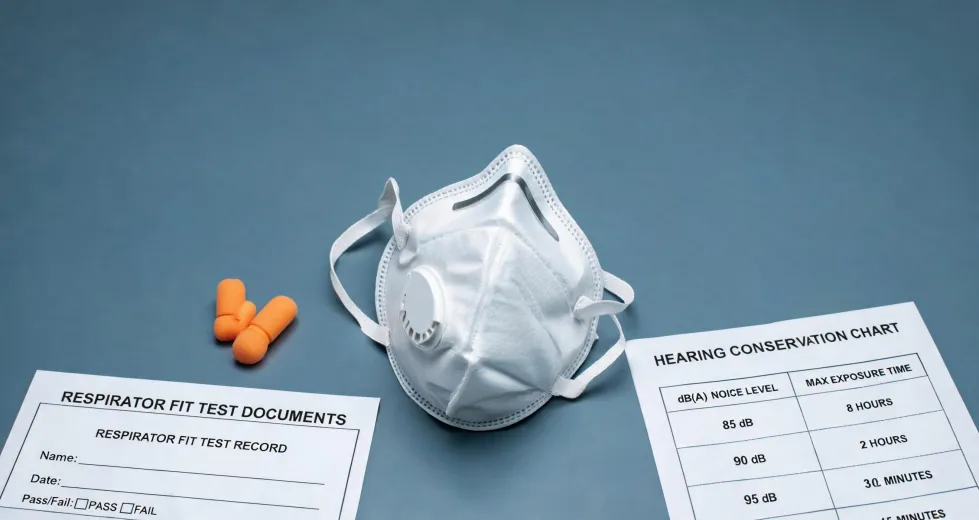
If the hazard is airborne particles — nuisance dust, grinding dust, welding fume, even biological aerosols — you're in N95 or P100 territory. This is where brands like Moldex are strongest, and where I started out making the classic error of assuming "NIOSH-approved" meant "right for us."
In my first year (2017), I ordered 500 half-mask respirators for our paint shop. They were perfectly good respirators. Perfectly wrong ones — the paint line's main hazard was solvent vapor, not particles. The P100 filters I paired with the masks did nothing for the actual exposure. That mistake cost about $3,900 in reorders plus a 2-week delay.
What I should have asked: does this job need filtering facepieces (like Moldex N95 disposables, the 2200 or 2400 series) or reusable elastomeric half-masks (the Moldex 7000 or 8000 series)? The deciding factors:
- Frequency of use: Daily 8-hour exposure justifies a reusable half-mask. On a per-worker-year basis, it's roughly $625 for 250 disposable N95s (at $2.50 each) vs. about $285 for a reusable half-mask with 25 filter changes (at roughly $10 per filter pair). The reusable is also more comfortable after a proper fit test.
- Portability and storage: If workers need to carry protection "just in case" or squeeze into tight equipment, disposables are more practical. No belt pouch, no cleaning, no spare parts.
- Hygiene: In dirty environments, a reusable mask that isn't cleaned properly becomes a liability. Disposables solve that, though they do create waste.
So glad we moved to fit testing in 2021 — we almost bought 5,000 N95s from the first vendor quote without checking face-seal compatibility. A tested alternative saved us from what would have been a $12,500 mistake.
Scenario B: Chemical Vapors and Gases (Where I Lost $3,200)
This is the branch I got tragically wrong. In September 2022, I ordered $3,200 worth of P100 particulate filters for our solvent handling area. They were heavy-duty, top-tier filters. I checked them myself, approved them, and we spent a full day training staff.
Three weeks later, our compliance consultant asked, "So, what cartridge are you using for the toluene exposure?"
Toluene is a vapor. P100 filters only stop particles. The solvents were passing straight through.
That error was on a bulk-quantity order where every single item ended up mismatched to the task. We caught it when the follow-up air monitoring report came back showing workers still exposed. $3,200 wasted, credibility damaged, and a 1-week delay while we sourced the correct organic vapor cartridges. If I remember correctly, the replacement cartridge order arrived just before the compliance deadline — don't quote me on the exact day, but it was tight.
The lesson: for paint, solvents, adhesives, or any chemical that evaporates, you need respirators with cartridges matched to the specific chemical — organic vapor, acid gas, or combination. The Moldex 9000 series is our current standard for full-face coverage and handles both particles and vapors depending on cartridge choice. But any NIOSH-approved respirator matched to the chemical works — the key is reading the Safety Data Sheet (SDS) and selecting accordingly. This was true in 2022, and it remains true as of January 2025.
Here's a mildly controversial opinion: for occasional chemical exposure, a half-mask with the right cartridge is usually sufficient. You don't need a $600 powered air-purifying respirator (PAPR) for a 15-minute parts-washing task twice a week. I've seen consultants push PAPRs for jobs where a $45 half-mask was completely adequate. Over-protection isn't just expensive — it's often counterproductive, because workers who find equipment overkill or uncomfortable tend to take it off at the worst moments. Match the protection to the actual exposure, not the theoretical worst case.
Scenario C: High Noise — and the "Loop Earplugs Controversy" Everyone's Asking About
Hearing protection is the category with the most confusion, and lately the Loop earplugs controversy has made it worse.
Context: Loop makes stylish consumer earplugs marketed for concerts, sleep, and focus. The controversy involves questions about whether consumer earplugs' marketing claims are verified under standardized testing protocols like those used for occupational PPE — and whether lifestyle brands have overstated how much noise they actually block in real-world conditions.
The problem I see: people read about the Loop controversy and conclude that all earplugs are marketing fluff. That's the wrong takeaway.
The real lesson is: consumer earplugs and occupational earplugs are different products made for different contexts. An employer doesn't need trendy consumer earplugs — you need earplugs with a documented Noise Reduction Rating (NRR) measured under NIOSH protocols. We use Moldex SparkPlugs and Pura-Fit in our plant. They carry a certified NRR 33, one of the highest you'll find, and that number is independently verified under a recognized standard — not a marketing claim.
I have mixed feelings about the consumer earplug trend. On one hand, anything that gets more people thinking about hearing protection is good — I'd rather see someone at a concert wearing something than nothing. On the other hand, when consumer products are positioned as substitutes for workplace-grade protection without proper testing behind them, that's dangerous. It gives the wearer a false sense of security.
The "higher NRR is always better" assumption deserves a second look too. That thinking comes from an era when hearing protection was one-size-fits-all. Today, we know overprotection can backfire: workers who can't hear alarms, approaching forklifts, or coworkers will pull the plugs out "just for a minute." That's worse than wearing a slightly lower-rated plug consistently.
Scenario D: Gloves, Boots, and the Nitrile vs. Latex Question
"Nitrile gloves vs latex" is one of the most common questions I get. The simple breakdown: nitrile gloves resist a wider range of chemicals (especially oils, fuels, and many solvents), contain zero latex protein (so no latex allergy risk), and hold up better to punctures in industrial tasks. Latex gloves offer better elasticity and tactile sensitivity, which matters in medical procedures or precision assembly — but latex allergies are common and serious. In a general industrial setting, I default to nitrile.
What might be more controversial: the glove material matters far less than the removal procedure. I've watched workers touch exit doors and shared keyboards while wearing chemically contaminated gloves, because "they're disposable" created a mental shortcut that made contamination invisible. Whatever glove you choose, train removal first.
And then there's eyewear and boots. Safety glasses meeting ANSI Z87.1 should be a baseline for impact, dust, or chemical splash. For work boots, the honest answer is: it depends on the floor, the load, and the task. We standardized on three approved ASTM F2413 steel-toe options after realizing no single boot worked for everyone. In 2019, 60% of our foot injuries came from people wearing the wrong category of boot for their task. We fixed that by offering choices within a safety standard — not by finding the mythical "best boot ever."
If you're searching "work boots near me," filter by your specific requirements first (ASTM rating, slip resistance, waterproofing, metatarsal guard if needed), then find a retailer who stocks those specs. Distance doesn't matter if the spec is wrong.
How to Tell Which Scenario You're In
Alright — practical time. Here's how to determine which category applies to you:
- Pull the Safety Data Sheets (SDS) for every chemical in your facility. Each SDS lists the required PPE. It's not paperwork — it's your answer key.
- Sample the air. If you've never done air monitoring, you're guessing. In 2021, we hired an independent consultant to sample our work areas. The results changed our purchasing decisions and revealed that we'd assumed wrong for years about a couple of workstations. (If I'm honest, this should have been done a decade earlier.)
- Measure noise levels. If the sound meter reads above 85 dBA over an 8-hour shift, you need a hearing protection program. If it reads below, you may not need hearing PPE — though you might still offer it for comfort.
- Check if fit testing applies. Per OSHA 29 CFR 1910.134, tight-fitting respirators require fit testing before first use and annually. If you haven't tested, your program isn't complete.
- Talk to the workers who wear the gear. Ask: "Do you wear it all shift? If not, what makes you take it off?" The answers will improve your purchasing more than any spec sheet.
My Pre-Purchase Checklist (and the Mistakes It Catches)
This checklist looks boring, but it's caught 47 potential safety missteps in the past 18 months — and cut our wasted PPE spending from roughly $8,000 a year to under $800. I run every order through it now.
- Specific hazard identified and documented (no "it's probably fine")
- Air monitoring or exposure assessment completed within the last 12 months
- Respirator and cartridges specifically NIOSH-approved for the hazard (particles vs. vapors — my $3,200 lesson)
- Fit testing completed and documented for any tight-fitting respirator
- Hearing protection NRR verified and sufficient for the measured noise level
- Gloves compatible with the chemicals in use — check the SDS
- Eyewear meets ANSI Z87.1 for impact/splash hazards
- Work boots meet the relevant ASTM standard and fit the terrain/load
- Worker feedback collected after a pilot run — not just during annual reviews
If you're researching moldex products for your facility, look at three things: the NIOSH approval number, the fit-test data for your workers, and the per-worker annual cost. Those numbers will tell you more than any marketing page.
I'd rather spend 10 minutes explaining options than deal with mismatched safety equipment later. An informed customer makes better decisions — and for PPE, better decisions save more than money. If this framework helps you avoid one mistake I've already made, that's a win.

Maeve Callahan
Maeve Callahan is a head-protection analyst covering Type I and Type II hard hats, climbing-style safety helmets, bump caps, chin straps, suspensions, liners, and face-shield carriers. She applies ANSI Z89.1, EN 397, and EN 12492 criteria while comparing impact attenuation, penetration resistance, lateral deformation, electrical class, retention strength, field of vision, mass, fit range, and temperature conditioning. Her guides help EHS teams, contractors, utilities, and buyers select helmet systems for overhead hazards, work at height, electrical exposure, accessory compatibility, and worker acceptance.