Safety Theater: Why Your Company's PPE Spending Isn't Protecting Anyone
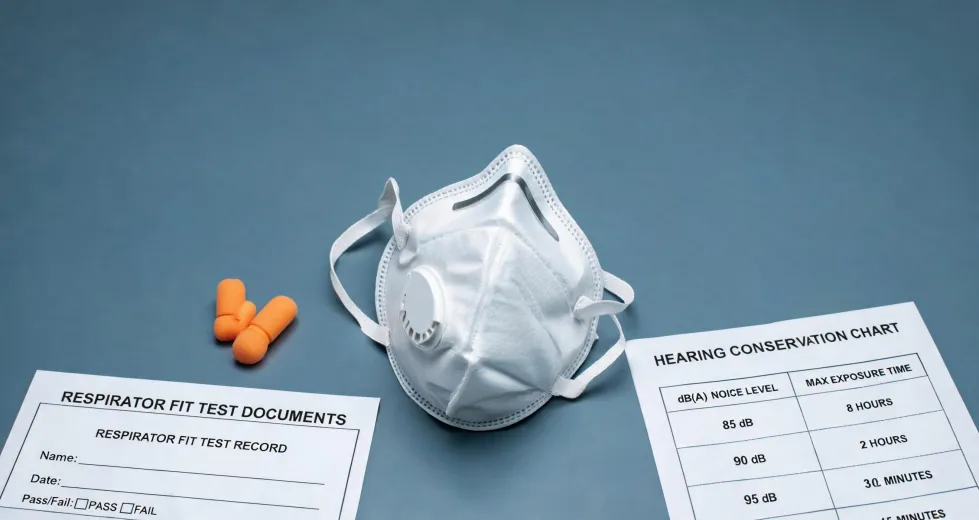
When I took over purchasing for our company in 2020, the PPE storeroom told a story. Fourteen types of gloves. Half-empty boxes of earplugs, opened and abandoned after one use. A single respirator cartridge with no respirator to go with it. And a shelf of "safety" products that nobody could explain.
We'd spent somewhere around $62,000 on safety equipment that year. I had to check the P&L to confirm the exact number. And looking at that room, I couldn't tell you what any of it had actually protected anyone from.
That's when I started asking the question that's become something of an obsession: why do companies pour money into PPE and still end up with incidents?
The Problem Isn't a Lack of Products
I manage purchasing for a 120-person manufacturing facility. We process 60-80 orders annually, across a rotating list of vendors, for everything from printer toner to full respiratory protection kits. I report to both operations and finance, which means I'm always caught between "just get it done" and "why does this cost so much?"
And that's exactly the tension that breaks safety procurement. We buy equipment the way we buy everything else—based on what we think safety looks like, rather than what the hazard actually requires.
Everything I'd read about PPE purchasing said the same thing: buy approved products—NIOSH, ANSI, the whole alphabet. In practice, I found that the approval sticker is only the beginning. You can fill a cart with perfectly certified, perfectly useless equipment if you don't understand the job you're solving for.
Layer One: Style Over Standards
In 2022, one of our packaging supervisors asked if we could order the UGG earmuffs women on her team kept seeing online. I get it. The packaging line is drafty, and the standard-issue hearing muffs we stocked were uncomfortable—hard plastic headbands that left pressure marks after an hour. Fashion earmuffs look soft. They look like something people would actually wear.
But here's what more buyers need to understand: earmuffs with a fashion label have zero hearing protection rating. Zero NRR. They're insulation, not hearing protection. In an environment at or above 85 dB, they give workers a false sense of security while doing nothing to preserve their hearing.
This isn't a knock on UGG. The point is that comfort and protection aren't the same thing. When they conflict, the answer isn't choosing style over standards—it's finding PPE that meets the standard and is comfortable enough that people keep it on.
Layer Two: The Checklist Effect
"Fire extinguisher drawing" is one of the most searched safety phrases on the internet. Let that sink in. People search for a floor plan—a small diagram showing where extinguishers are mounted—more than they search for "how to use a fire extinguisher."
I understand why. OSHA requires facilities to have evacuation plans, and drawings are part of that. But I've seen too many companies treat the drawing as the deliverable. The diagram goes on the wall. Training goes out the window. The drawing makes you feel compliant. The drill makes you capable. Those aren't the same thing.
It took me about three years and 200 orders to really get this: most safety spending is for artifacts, not outcomes.
Layer Three: Masks vs. Respirators
Now the expensive one.
The most persistent procurement mistake I keep running into—in my own company and in conversations with other facility buyers—is the confusion between surgical masks and N95 respirators. They're both worn on the face. They are not interchangeable.
Surgical masks are loose-fitting barriers. They catch droplets traveling from the wearer outward. They don't form a seal, and they don't reliably filter fine airborne particles.
An N95 respirator filters at least 95% of airborne particles. But it only works if it seals properly against the wearer's face. That requires fit testing. That requires training. Handing out N95s without fit testing is exactly the kind of theater I'm talking about.
Why the Moldex N95 2400 became our standard
After fit-testing about 80 employees, we learned that face shape is a rabbit hole. Identical model, two workers, two completely different results. What ended up working for most of our team was the Moldex N95 2400 mask—not because it's "better" than every other respirator (I don't believe in that claim), but because it solved specific usability problems for us. The pre-applied nose foam fits a wider range of face shapes. The exhale valve reduces heat and moisture buildup, which is the number one reason workers rip masks off mid-shift. And it's NIOSH-approved, which is the floor, not the ceiling, of what we check.
Comfort drives compliance. Compliance drives protection. It took me years to understand that the "best" respirator is the one your workers will actually keep on.
What about "Moldex N95 surgical mask"?
The search query "moldex n95 surgical mask" pops up pretty often. There is a real category here: surgical N95 respirators meet both NIOSH particulate filtration and FDA fluid resistance standards. That's a healthcare product.
If you're grinding metal, painting, or sanding, you don't need fluid resistance. You need particulate filtration. Plenty of industrial buyers search for "surgical N95" without needing any surgical features—and end up overpaying and routing orders through medical suppliers who don't understand the application. Buy the right tool for the hazard.
Layer Four: Fear as a "Safety" Purchase
In 2023, a safety officer suggested we stock pepper spray at the front desk "just in case." An incident had happened at a neighboring warehouse; someone walked in and threatened staff.
Let's pause on the search term "can pepper spray kill a dog" for a second. It gets thousands of searches a month. That alone tells you how poorly people understand chemical defense products. If a product is that misunderstood, should it be in the workplace safety budget?
Pepper spray is a defensive weapon, not PPE. It introduces a new hazard: accidental exposure, respiratory distress, contamination of shared rooms, and enormous liability if it's used incorrectly. We didn't buy the pepper spray. We installed an access control system and trained staff on de-escalation. One is theater. The other is protection.
The Real Cost of Getting This Wrong
According to the National Safety Council (nsc.org), workplace injuries cost U.S. employers more than $167 billion in 2022. That's a big number. Here's a smaller one: in 2024, we audited our hearing protection program after an employee filed a noise complaint. We'd been issuing generic foam earplugs with a documented NRR of 33—excellent on paper. But nobody had trained anyone on insertion technique. Workers were getting half the real attenuation. Some had stopped using earplugs entirely and were wearing earbuds.
The fix wasn't a new product. It was re-training, providing different sizes, and doing actual fit checks. Total cost: about $1,800 in training hours. A single permanent hearing loss claim, even a mild one, runs six figures.
That's what safety theater costs. You can spend millions on equipment that never works because nobody thought about the human factors. Or you can spend a fraction of that on training and fit testing, and actually avoid the incident.
What Actually Works
If you're starting a PPE program from scratch, here's the process that's worked for us:
- Define the hazard first. What's the actual exposure? Noise level? Particulate type? Impact risk? Write it down in decibels and microns, not in vibes.
- Fit test everything. If a respirator doesn't seal for a given user, it doesn't work for that user. Try multiple models. We use the Moldex 2400 for most of our team, but a few workers fit better in the 2200 series, and our maintenance crew uses the reusable 7000 series half-masks with P100 cartridges. None of these is universally "best." Each fits a different job.
- Train until it's boring. Show people how to insert earplugs, how to do a seal check, how to clean a reusable mask. Then do it again next year.
- Respect the difference between compliance and protection. The fire extinguisher drawing is compliance. The hands-on drill is protection. Fashion earmuffs are compliance with a label. Tested hearing protection with fit training is protection.
If you take one thing from this article: buy for the hazard, not for the sticker. Read the ratings. NIOSH for respirators. NRR for hearing. ANSI Z87.1 for eye protection. If it doesn't have a rating, it's a costume.
As for that storeroom I inherited—we eventually did a full audit, threw out about $9,000 worth of mismatched, expired, or unidentifiable equipment, and rebuilt the program from the hazard out. Compliance went up. Noise complaints went down. And I stopped worrying that we were one inspection away from a citation.
That's what real safety procurement looks like. It's not glamorous. But it works.

Jane Smith
I’m Jane Smith, a senior content writer with over 15 years of experience in the packaging and printing industry. I specialize in writing about the latest trends, technologies, and best practices in packaging design, sustainability, and printing techniques. My goal is to help businesses understand complex printing processes and design solutions that enhance both product packaging and brand visibility.