My PPE Buying Screw-Ups: A 5-Step Checklist So You Don't Repeat Them
-
Who This Is For (And Why You Might Need It)
-
Step 1: Lock Down the Exact Hazard
-
Step 2: Match the Protection Level to the Job
-
Step 3: Don't Forget the Wear-Time Reality
-
Step 4: Watch Out for the Hidden Costs (Don't Get Burned)
-
Step 5: Verify the Standards (Don't Assume)
-
Common Warnings (Learn From My Pain)
Who This Is For (And Why You Might Need It)
If you're a year or two into buying safety gear for a manufacturing floor or a construction crew, you've probably already had a moment where an order showed up and you thought, "Wait, that's not right." Or you got a call from the safety manager who was not happy. I've been there.
A year into my role as a safety coordinator (this was 2020), I ordered 500 half-face respirators for a new project. They looked fine on the spec sheet. They were priced right. But the cartridges? Completely wrong for the job. We had to send them back, eat $400 in return shipping, and wait another two weeks. That was the moment I started building the checklist I still use today.
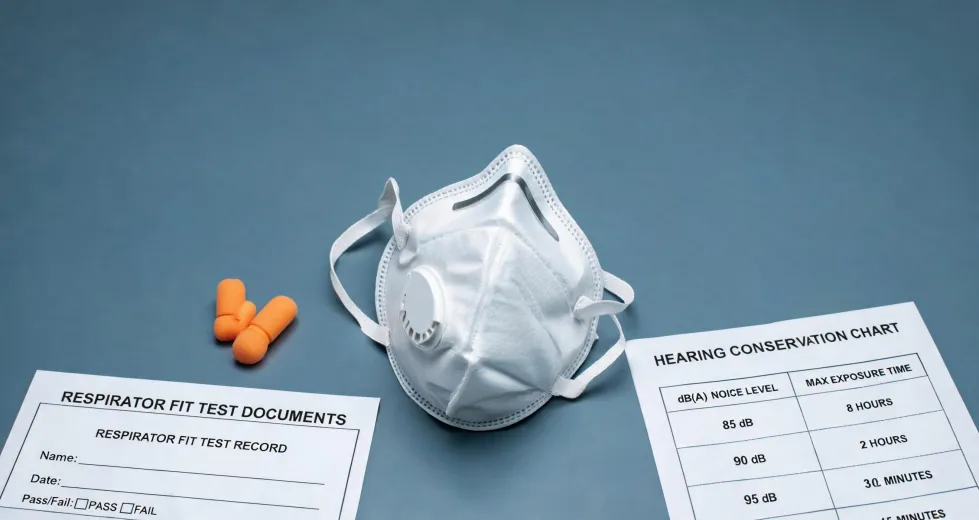
This guide covers the 5 steps I check before approving any PPE order—respirators, ear plugs, or safety glasses. It's designed to catch the stupid, expensive mistakes before they happen.
Note: Prices and specs mentioned are based on what I've seen from major suppliers (as of early 2025) and from my own purchase orders. Always verify current rates before you buy. Things change fast.
Step 1: Lock Down the Exact Hazard
The classic mistake: Buying "general purpose" protection because the hazard isn't clearly defined.
I did this on my very first big order. The project lead said, "We need respirators for the paint booth." I bought N95s (most common, cheapest). Turns out, they were using isocyanates. N95s don't stop isocyanates. That was a $600 mistake (the return shipping plus the proper order).
Here's what you actually need to do:
- Ask for a SDS (Safety Data Sheet). If they can't get you one, don't order. The SDS tells you exactly what chemical you're facing and what type of cartridge or filter it requires.
- Check the airborne contaminant. Is it a particulate (dust, mist) or a gas/vapor (paint fumes, solvents)? N95s (like the Moldex 2200) are only for particulates. For vapors, you need a cartridge-based respirator (like a Moldex 7000 or 8000 series with the right cartridge).
- Verify the concentration. If it's above the OSHA PEL (Permissible Exposure Limit), you might need a full-face respirator or even a supplied air system. A half-mask (like the Moldex 9000 series) is only good up to 10x the PEL.
Quick check: If the person requesting the PPE can't answer "What chemical are we protecting against?" in one sentence, stop the order. Get them to look it up.
Step 2: Match the Protection Level to the Job
The mistake people make: Buying the highest protection level available because "more is better." More is not better when it makes workers uncomfortable or interferes with communication.
I once specified a full-face respirator for a job that only needed basic dust protection. The workers hated it—too hot, too heavy, fogged up. Turnover rate on that crew was insane until I swapped them to half-masks with P100 filters.
Here's what to match:
- Respirators: N95 (for non-oil aerosols), R95 (oil-resistant), P100 (oil-proof, highest filtration). Moldex makes all three. For most construction dust, N95 is enough. For spray painting or chemicals, go for a half-mask with a P100 or combo cartridge.
- Earplugs: NRR rating matters, but so does comfort. The Moldex Pura-Fit earplugs have an NRR of 33, which is high. But if your workers are in a moderate-noise environment (85-95 dB), a lower NRR (like 28-30) is easier to wear and still compliant. Comfort = consistent use.
- Safety glasses: Check for ANSI Z87.1 impact rating. That's the standard. Some glasses are also anti-fog or have a UV coating. Don't pay extra for stuff nobody needs.
Checklist point: Don't just ask "What level?" Ask "What will the worker actually tolerate for a full shift?" The best protection is the one that gets worn.
Step 3: Don't Forget the Wear-Time Reality
This is the one most people skip.
I ordered a pallet of N95s once—great price, high filtration. But they had a metal nose clip. Workers in a hot, humid environment complained they pinched and left marks. Refusal rate was almost 30%. I had to reorder a different style (foam nose clip). That was a $1,200 mistake, including rush shipping.
What to check:
- Respirator fit. Get a fit test done for everyone. Don't assume one size fits all. Moldex offers multiple sizes in their 8000 series.
- Earplug insertion. The Moldex Sparkplugs have a cord (nice for drop prevention), but they're foam plugs that require rolling down. Some workers prefer no-roll plugs (like the Pura-Fit). If they can't insert it properly, the NRR doesn't matter.
- Glasses compatibility. If workers wear their own prescription glasses under the safety glasses, you need a larger frame or a goggle-style. I had a whole crew this year that could only wear Moldex Wildland style glasses because of their oversized Rx frames.
Quick test: Hand a sample to 3 workers. Ask them to wear it for 10 minutes. If more than one complains about comfort within that time, pick a different option. Seriously. Trust me on this one—I've learned the hard way.
Step 4: Watch Out for the Hidden Costs (Don't Get Burned)
I went back and forth between an established vendor and a cheaper new one for about a week. The established vendor listed all fees upfront: $80 for setup, $25 per color, $15 for packaging. The new supplier's quote was lower by 25%. But when the invoice arrived, they added a $60 "expedite" fee (they never told me it was optional), a $35 "documentation" charge, and $40 for "special handling."
Lesson learned: The vendor who shows you the full cost from the start—even if they look higher—often ends up cheaper.
What to look for specifically in PPE orders:
- Shipping & handling. Some suppliers charge a flat rate; others add a percentage. For heavy orders (like a case of respirators), shipping can be $50-150. Get a quote for total landed cost.
- Minimum order quantities (MOQs). I once needed 200 half-masks. A supplier had an MOQ of 500 for a specific model. I either bought 500 (way over budget) or paid a "small order" surcharge of 15%. Neither was great.
- Compatibility costs. Not all cartridges fit all masks. Double-check that the Moldex 8000 series cartridges match the mask you're buying. If you order wrong cartridges, you're stuck with them.
- Rush fees. If you need it in 2 days instead of the normal 5-10, expect a premium of 25-50%. I've seen quotes jump from $500 to $850 for next-day.
So glad I started asking for the full breakdown before ordering. I almost went with that first cheap quote—would have been a $250 overpay for nothing. Now I say, "Please quote me the total cost including ALL applicable fees." If they can't give it, I go elsewhere.
Step 5: Verify the Standards (Don't Assume)
Never expected to ship a pallet of "NIOSH-approved" masks that turned out not to be approved when our inspector checked. The masks were fine—they had the right rating on the box—but the approval numbers were for a different country (China's KN95 instead of US NIOSH N95). Customer rejected the shipment, and we had to buy replacements overnight. $1,000 in rushed product + the embarrassment.
The surprise wasn't the price difference—it was the paperwork.
What to verify:
- NIOSH approval. For any respirator sold in the US, look for the NIOSH approval number (e.g., TC-84A-XXXX). Every Moldex respirator I've bought has it clearly printed on the box. If it's not there, don't accept it.
- OSHA compliance. Check your specific industry's OSHA standard. For general industry, it's 29 CFR 1910.134. For construction, it's 1926.103. Your PPE must meet the relevant section.
- ANSI ratings. For safety glasses, ANSI Z87.1 is the one to check. For earplugs, check that they're tested per ANSI S3.19 (the standard that gives the NRR rating).
- Cartridge expiration dates. This one bit me. P100 cartridges have a shelf life (usually 5-7 years from manufacture). Older stock might be worthless. Check the date on the box.
One more thing: If you're buying for a specific job site, ask the safety officer up front what standards they require. Don't assume. I've had jobs where they required a specific NIOSH approval number we couldn't meet. Catching that before the order saves everything.
Common Warnings (Learn From My Pain)
Here are a few quick things I've stopped doing:
- Don't buy in bulk without a tester. Order a sample first (many vendors, including Moldex, allow this). Let the crew try them. You'd be surprised how often a team hates the sample you thought was perfect.
- Don't skip the fit test. Even if the mask says "one size fits most," you need a real fit test. I've seen workers fail a fit test on a mask that I thought was fine. It's not optional.
- Don't assume your vendor has everything. Moldex, for example, makes great respirators and earplugs, but they might not have a specific adapter for a non-standard cartridge. Always check the compatibility matrix.
- Watch the fine print on return policies. Some suppliers charge a 20% restocking fee. Others won't accept returns on opened boxes of earplugs (for hygiene reasons). I had to eat $300 once because we bought 1000 earplugs and 200 were opened before we realized they didn't fit.
Using this checklist, I've cut down my order errors by a ton (maybe 70-80%? I'd have to check my records, but it's way more than before). No order is perfect, but I haven't had a return-for-cost reason in about 18 months. That's what I call a win.
If you're just starting out in PPE procurement, honestly, just print this out and stick it on your desk. It'll save you a headache (and a few thousand dollars).

Maeve Callahan
Maeve Callahan is a head-protection analyst covering Type I and Type II hard hats, climbing-style safety helmets, bump caps, chin straps, suspensions, liners, and face-shield carriers. She applies ANSI Z89.1, EN 397, and EN 12492 criteria while comparing impact attenuation, penetration resistance, lateral deformation, electrical class, retention strength, field of vision, mass, fit range, and temperature conditioning. Her guides help EHS teams, contractors, utilities, and buyers select helmet systems for overhead hazards, work at height, electrical exposure, accessory compatibility, and worker acceptance.