Moldex N95 vs P100: A Procurement Manager's Guide to Cost-Effective Respiratory Protection
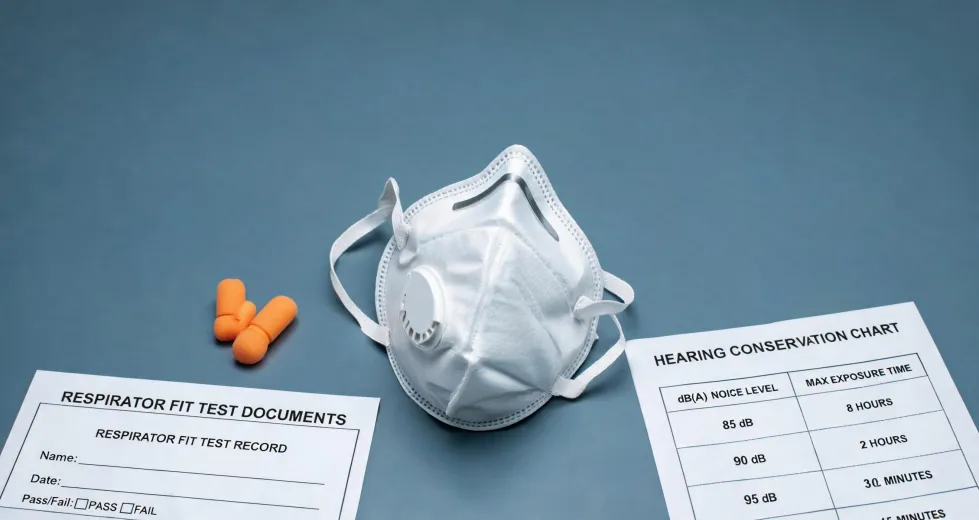
You don't need a P100 for most jobs. And an N95 isn't always the cheapest option.
That's the short version after six years of managing PPE procurement for a 300-person manufacturing facility. I've analyzed over 150 respirator orders—totaling roughly $180K—and the one mistake I see most often is buying too much protection or too little, based on what people think they need instead of what their exposure actually requires.
For general particulate protection (dust, pollen, non-oil aerosols), Moldex N95 respirators like the 2200 series are the sweet spot. You get NIOSH approval, good breathability, and a per-unit cost of roughly $1.50–$2.50. For anything involving oil-based particles, welding fumes, or higher toxicity, step up to P100 filters (like Moldex's 8000 series with P100 cartridges) — but expect to pay 3–5x more per filter and deal with heavier breathing resistance.
How I learned this the hard way
It took me about three years and 40+ vendor comparisons to realize that the cheapest N95 wasn't actually cheap. In Q2 2022, I switched to a bulk deal on a different brand's N95 that saved $0.30 per unit. Workers complained about the fit. Compliance dropped. We used more respirators per shift because they didn't seal properly. The reorder rate jumped 25%.
I switched back to Moldex after two months. The "undiscounted" price turned out to be 15% lower in total cost because workers wore them correctly and didn't waste inventory. That $0.30 savings actually cost us $3,800 in unnecessary reorders over six months.
People think expensive protection costs more. Actually, poor-fit protection costs more in hidden waste and compliance risk.
The real cost drivers you're probably ignoring
Most buyers compare only the unit price of the respirator. They miss three things:
- Filter replacement frequency. A P100 filter lasts longer than an N95, but it also costs more per filter. If your environment has low dust, the N95's disposable nature saves you from replacing cartridges. If you're in heavy metal fume exposure, the P100's longer life might lower your per-shift cost.
- Training and fit-testing. Switching respirator models requires new fit tests. Our facility spends about $35 per person on fit testing. Changing models means re-testing. That's a hidden cost most buyers don't factor in.
- Storage and disposal. N95s are one-and-done in many environments. P100 filters need to be stored in sealed bags between uses. The logistics cost of managing reusable components is real.
The question everyone asks is "what's the best price?" The question they should ask is "what's the total cost per shift per employee?"
When a specialist beats a generalist
Here's where the "expertise boundary" comes in. Moldex is a specialist in respiratory protection—they don't make hard hats or safety glasses. A vendor who says "we do everything" often does nothing exceptionally well. But a specialist who knows their limits? That's who I trust with my respiratory protection budget.
After comparing 8 vendors over 3 months using my TCO spreadsheet, I chose Moldex for N95 and P100 because they don't try to be a one-stop shop. Their fit data is consistent. Their replacement parts are standardized. When I asked about oil particle protection, the rep said, "Our P100 is great, but for that specific oil-based mist, you should also look at our R95 series." That honesty saved me from buying the wrong filter. Period.
But N95 isn't always the answer
I should be clear: there are jobs where an N95 is insufficient. Welding fumes, lead abatement, and any oil-based aerosol require at least an R95 or P100. If your workers are exposed to oil-based particles (cutting fluids, lubricants), the N95's filter degrades quickly—it's not rated for oil. In those cases, the "cheap" N95 is actually an expensive gamble because it stops working before the shift ends.
Similarly, if you need a surgical mask for a healthcare environment, Moldex's N95 surgical masks (model 2200 with fluid resistance) exist, but they're a different product from the standard industrial N95. Don't confuse the two.
And if you're working with vapors or gases (not particulates), you need a different system entirely—Moldex doesn't make chemical cartridges for that. That's not a weakness; it's a boundary. I'd rather hear "that's out of our scope" than get a product that doesn't solve the problem.
The bottom line for procurement
Total cost of ownership for respirators includes: base product price, replacement frequency, fit-testing costs, worker compliance, and potential OSHA fines for inadequate protection. The lowest quoted price per box is almost never the lowest total cost.
Start with your exposure assessment. If it's non-oil particulates and your workers are comfortable with the fit, Moldex 2200 N95 is a proven workhorse. If you need higher efficiency or oil resistance, the P100 filters (series 8000) deliver, but budget for the upfront cartridge cost and filter management. And whatever you choose, don't let the unit price fool you—measure the cost per shift, and you'll see the real picture.
I've made both mistakes. Buying too much protection is wasteful. Buying too little is dangerous. Getting it right comes down to knowing what you actually need—and asking the right questions before you click 'order.'

Maeve Callahan
Maeve Callahan is a head-protection analyst covering Type I and Type II hard hats, climbing-style safety helmets, bump caps, chin straps, suspensions, liners, and face-shield carriers. She applies ANSI Z89.1, EN 397, and EN 12492 criteria while comparing impact attenuation, penetration resistance, lateral deformation, electrical class, retention strength, field of vision, mass, fit range, and temperature conditioning. Her guides help EHS teams, contractors, utilities, and buyers select helmet systems for overhead hazards, work at height, electrical exposure, accessory compatibility, and worker acceptance.